You’ve probably heard the word tokenomics thrown around on Twitter or in Discord chats. It sounds fancy, but it’s really just the economic rules that decide how a crypto token behaves. Think of it as the DNA of a project. If the DNA is bad, the organism dies. If it’s good, it thrives.
In 2026, we’re past the hype phase where anyone could launch a token and get rich quick. The market has matured. Data from CoinGecko shows that projects with solid tokenomics survive market crashes 63% more often than those with weak models. That’s not luck; it’s math. But what does "solid" actually look like? Let’s break down real examples that are working right now, so you can spot the winners from the scams.
The Deflationary Standard: How Ethereum Burns Cash
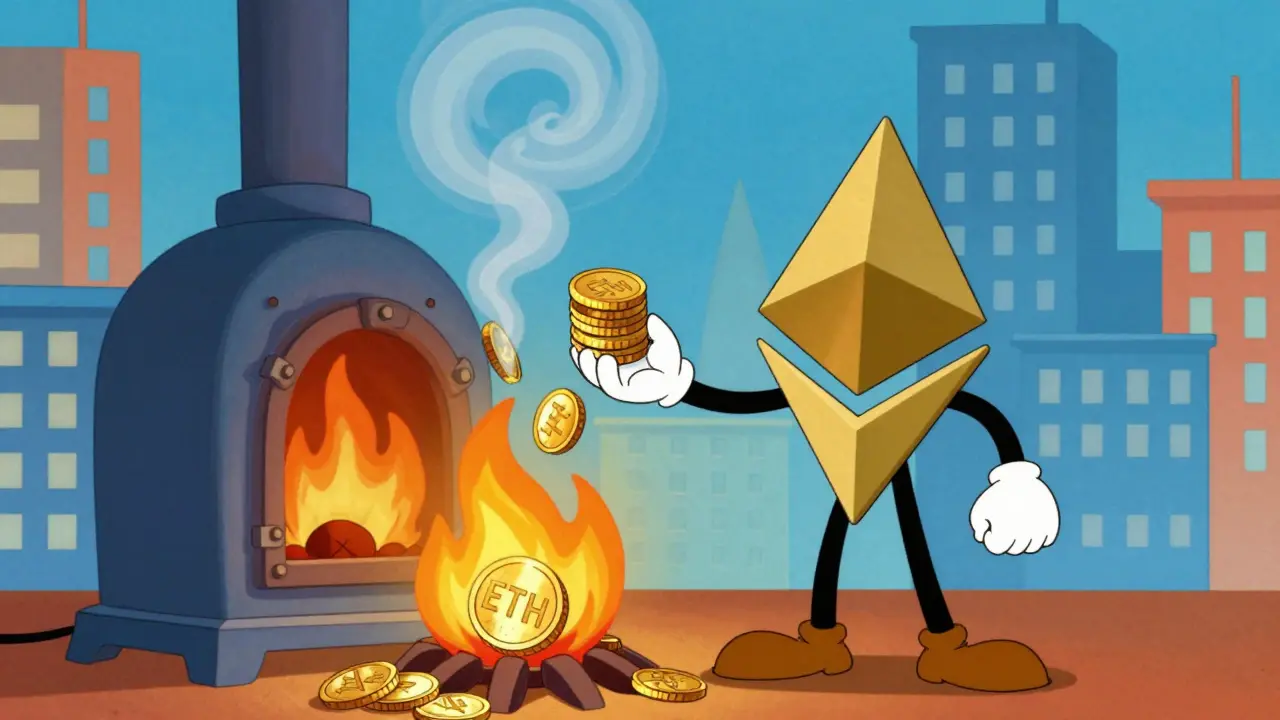
Ethereum is the leading smart contract platform that shifted from inflation to deflation through EIP-1559. Before August 2021, ETH was purely inflationary. Every block created new coins. Then came EIP-1559. This update changed everything by burning a portion of transaction fees.
Here is why this matters to you. When network activity goes up, more ETH gets burned. As of October 2025, over 4.1 million ETH-worth roughly $12.8 billion-has been permanently destroyed. This creates a natural scarcity. You aren’t relying on a team promising to buy back tokens; the protocol itself removes supply based on actual usage. It aligns incentives perfectly: users pay fees, developers build apps, and holders benefit from reduced supply. It’s a self-sustaining loop.
- Mechanism: Base fee burn on every transaction.
- Result: Net negative issuance during high activity periods.
- Score: 92/100 on Messari’s Tokenomics Grading System.
Predictable Scarcity: The Binance Coin (BNB) Model
If Ethereum is about organic demand, Binance Coin is a utility token for the Binance ecosystem with a fixed quarterly burn schedule. BNB started with a massive supply of 200 million tokens. To prevent dilution, Binance committed to burning tokens until only 100 million remain.
They didn’t stop there. They implemented an auto-burn algorithm that adjusts the amount burned based on the price and total supply. By July 2025, they had completed their 24th burn event, destroying over 20.6 million BNB worth $10.3 billion. The current supply sits at roughly 128.7 million. Why do people like this model? Predictability. You don’t have to guess if the team will dump tokens on you. The code enforces the reduction. It’s transparent, verifiable, and aggressive.
| Token | Burn Trigger | Total Burned (Value) | Supply Cap |
|---|---|---|---|
| BNB | Quarterly Auto-Burn | $10.3 Billion | 100 Million (Target) |
| ETH | Transaction Fees (EIP-1559) | $12.8 Billion | No Hard Cap |
| AVAX | Gas Fees & Subnet Creation | 36% of Initial Supply | 720 Million |
Community First: Hyperliquid’s Airdrop Strategy
Most projects give themselves 20-30% of the supply. Hyperliquid is a decentralized exchange that allocated 76.3% of its supply directly to users via airdrop. In November 2024, HYPE launched with a cap of 1 billion tokens. Instead of selling shares to venture capitalists who might dump later, they gave 763 million tokens to the community.
This is a radical shift. Only 12% went to the team, and 11.7% to ecosystem development. No VC influence means no hidden unlock dates that crash the price. The token’s value is tied directly to the loyalty and activity of the traders using the platform. It’s risky for the founders, but it builds immense trust with users. When you hold a token where the majority of supply is already in circulation with real users, you avoid the "sell wall" fear that plagues most new launches.
High Throughput, Lowering Inflation: Solana’s Schedule
Solana is a high-performance blockchain that reduces annual inflation from 8% down to 1.5% over time. Critics often point out that SOL still has inflation. As of late 2025, it’s around 5.1%. However, the key is the decay rate. The inflation drops by 15% each year until it hits a floor of 1.5%.
Why does this work? Solana processes 65,000 transactions per second at fractions of a cent. The volume is so high that even with inflation, the utility demand keeps pace. Cathie Wood of ARK Invest noted in May 2025 that this organic usage loop drives genuine network value. With over 1.2 billion monthly transactions, the token isn’t just sitting in wallets; it’s moving. The upcoming SOL 2.0 upgrade aims to introduce fee burning, which could finally tip the scales toward deflation while maintaining that low-cost advantage.
The Utility Trap: What to Watch Out For
Not all tokenomics are created equal. Take XRP, for example. While it has strong institutional backing, experts like Tim Enneking criticize its centralized control. Ripple holds a large portion of the supply in escrow. This creates a misalignment: the company controls the release, not the market. Similarly, Chainlink faces criticism for its uncapped supply, which could reach 1 billion tokens by 2030. Without a hard cap or significant burn mechanism, long-term holders face constant dilution pressure unless adoption grows exponentially faster than supply issuance.
Aave (AAVE) presents another lesson. Despite having $13.4 billion locked in its protocol, the token price stagnated. Why? Because governance tokens often lack direct revenue streams. Holding AAVE gives you voting rights, but it doesn’t automatically mean you share in the protocol’s profits. Good tokenomics must bridge the gap between usage and value accrual.
How to Spot Bad Tokenomics Yourself
You don’t need a PhD to check if a project is rigged. Look for these red flags before you buy:
- Team Allocation: If the team and insiders hold more than 15-20% of the supply, run. The r/DeFi community saw a project lose 98% of its value after a 70% team allocation unlocked.
- Vesting Cliffs: Short vesting periods (under 12 months) are dangerous. You want teams locked in for the long haul.
- Uncapped Supply: If there’s no maximum supply limit, ask yourself: what stops them from printing infinite money?
- Fake Utility: Does the token actually do something? Or is it just needed to pay for marketing? Real utility ties to gas fees, staking rewards, or governance with real economic impact.
Tools like CryptoSlate’s Tokenomics Explorer process millions of queries monthly to help investors verify these metrics. Don’t rely on whitepapers alone; check the live data on block explorers.
The Future: Restaking and Shared Security
We are entering a new era. EigenLayer is a restaking protocol that allows ETH to secure multiple networks simultaneously. By October 2025, $23.7 billion in ETH was restaked across 14 protocols. This changes tokenomics by allowing security to be a shared resource. Projects don’t need to issue their own heavy inflationary tokens to attract validators; they can borrow security from Ethereum. This trend points toward leaner, more efficient token models where value accrues through shared infrastructure rather than isolated ecosystems.
What makes tokenomics "good" in 2026?
Good tokenomics balances supply and demand. Key features include transparent burn mechanisms, fair distribution (low team allocation), clear utility beyond speculation, and sustainable inflation rates below 3% after initial phases.
Is Ethereum currently deflationary?
Yes, during periods of high network activity, Ethereum burns more ETH than it issues due to EIP-1559. Over 4.1 million ETH has been burned since the upgrade, creating net deflationary pressure.
Why is Hyperliquid’s distribution considered innovative?
Hyperliquid allocated 76.3% of its supply to users via airdrop, minimizing venture capital influence and preventing large sell-offs from early investors, which aligns incentives with the community.
What is the biggest risk in XRP’s tokenomics?
The primary risk is centralization. Ripple controls a significant portion of the supply through escrow accounts, which can create supply shocks if released rapidly, unlike decentralized models.
How does Solana manage inflation?
Solana starts with 8% annual inflation but reduces it by 15% each year until it reaches a 1.5% floor. Recent upgrades aim to add fee burning to further reduce circulating supply growth.
Should I avoid tokens with uncapped supply?
Be cautious. Uncapped supplies can lead to perpetual dilution. Unless the project has a robust burn mechanism or exponential utility growth that outpaces issuance, your holdings may lose purchasing power over time.