
Imagine finding a $1.5 billion check in your pocket, but you can never cash it. That’s the reality for the Bitcoin genesis block reward. On January 3, 2009, at 18:15:05 UTC, Satoshi Nakamoto mined the very first block of the Bitcoin network. This inaugural block, known as Block 0, generated 50 BTC. Yet, these coins remain permanently locked in address 1A1zP1eP5QGefi2DMPTfTL5SLmv7DivfNa, visible to everyone but spendable by no one.
Why does this matter? Because understanding why these specific coins are dead tells you how Bitcoin actually works under the hood. It’s not just a glitch; it’s a fundamental rule of the consensus mechanism. If you’re new to crypto, you might think all mined coins go into circulation immediately. The genesis block proves otherwise. It serves as a technical anchor and a symbolic monument to the project’s origins.
The Technical Glitch or Design Choice?
Let’s cut through the noise. Most people assume the genesis block is unspendable because Satoshi forgot to include a private key. But the real reason is deeper. In Bitcoin Core software, the validation rules treat Block 0 differently than every other block. Standard blocks reference a previous block hash. Block 0 has no parent. To handle this, developers hardcoded exceptions into the client code.
Specifically, the coinbase transaction (the reward payout) in the genesis block fails standard verification checks if treated like normal transactions. The code explicitly excludes the genesis block’s output from being used as an input in subsequent transactions. This isn’t a bug that was fixed later; it’s a permanent feature. If you try to spend these 50 BTC today, the network rejects the transaction instantly. It’s like trying to use a photo of a dollar bill to buy coffee. The value exists on paper, but the system doesn’t recognize it as valid currency for exchange.
| Feature | Genesis Block (Block 0) | Standard Block (Block 1+) |
|---|---|---|
| Reward Amount | 50 BTC | Variable (Halving schedule) |
| Spendability | Unspendable | Spendable after 100 confirmations |
| Previous Hash | All zeros (Hardcoded) | Hash of prior block |
| Validation | Special exception in code | Standard consensus rules |
| Embedded Text | Newspaper headline | None required |
The Newspaper Headline Timestamp
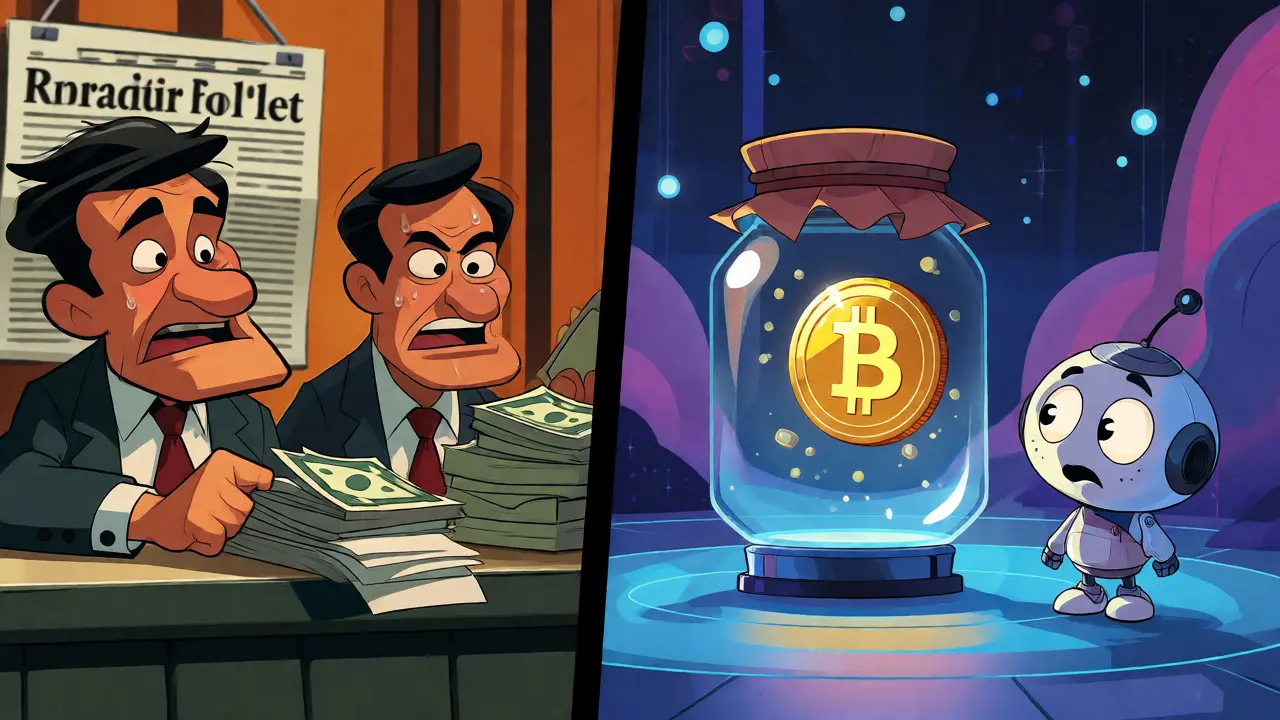
You can’t talk about the genesis block without mentioning its most famous artifact. Embedded in the coinbase parameter is the text: "The Times 03/Jan/2009 Chancellor on brink of second bailout for banks." This wasn’t just decoration. It served two critical purposes.
First, it proved the block was created on or after January 3, 2009. You can’t fake a timestamp with a newspaper headline that hadn’t been published yet. Second, it signaled Satoshi’s intent. Bitcoin wasn’t just a tech demo; it was a response to the 2008 financial crisis. By locking these coins, Satoshi emphasized that the first units weren’t meant for immediate speculation. They were a cornerstone, literally and figuratively.
Impact on Bitcoin’s Supply
Does this affect Bitcoin’s economics? Technically, yes. Practically, barely. Bitcoin’s hard cap is 21 million coins. Since the genesis block’s 50 BTC can never enter circulation, the true maximum supply is slightly lower-approximately 20,999,999.9769 BTC when accounting for lost keys and dust. However, this difference is negligible. No trader cares about losing 0.00000001% of supply.
But here’s the interesting part: the unspendable nature reduces the total circulating supply available for trading. If those 50 BTC were liquid, they’d add significant volume to the market. Instead, they sit in digital limbo. This creates a unique scarcity effect. As analysts like Willy Woo have noted, these coins are effectively removed from the monetary base forever. They don’t inflate, they don’t deflate, and they don’t move.
Was It Intentional?
This is the million-dollar question-or rather, the billion-dollar question. Did Satoshi mean to lock them up? Or was it a coding oversight?
Arguments for intentionality suggest Satoshi wanted to prevent early manipulation. If the first miner could spend their reward immediately, it might create instability. By making it unspendable, Satoshi ensured the network started clean. Others argue it was a simple implementation detail. Early Bitcoin code was experimental. Handling the root of the tree (the genesis block) required special logic. Making the reward unspendable might have been the easiest way to avoid circular dependency issues in the database.
Dr. Craig Wright, who claims to be Satoshi, says it was intentional. Andreas M. Antonopoulos, a prominent educator, calls them a "digital monument." Whether it was genius design or happy accident, the result is the same: a permanent piece of history frozen in time.
What Happens If We Try to Spend Them?
If you own the private key to address 1A1zP1eP5QGefi2DMPTfTL5SLmv7DivfNa, you still can’t move the 50 BTC. Here’s why:
- Consensus Rules: Every node running Bitcoin Core validates transactions against strict rules. The genesis block’s coinbase is flagged as invalid for spending.
- Fork Compatibility: Even if you forked Bitcoin and changed the code to allow spending, you’d break compatibility with the main network. Your chain would diverge immediately.
- No Private Key Proof: We don’t even know if Satoshi ever generated a private key for that address. Some theories suggest the address was created solely to hold the output, with no corresponding key pair intended for use.
Developers working on alternative implementations must replicate this quirk exactly. If they don’t, their nodes will reject the entire blockchain history starting from block zero. This makes the genesis block the ultimate test of protocol fidelity.
Symbolic Value Over Monetary Value
At Bitcoin’s all-time high, those 50 BTC would have been worth over $1.5 billion. Today, their nominal value fluctuates, but their practical value is zero. Yet, their cultural weight is immense. They represent the moment Bitcoin transitioned from concept to reality.
For collectors and historians, the genesis block is akin to the Rosetta Stone. It contains the DNA of the entire ecosystem. Companies like Chainalysis and Glassnode use it as the baseline for all historical data. Academic papers cite the embedded headline over 300 times. It’s not just code; it’s art.
As we approach the year 2140, when the last block subsidy ends, interest in these origins will likely grow. The unspendable coins become more mythological with each passing decade. They remind us that Bitcoin didn’t start with venture capital or hype. It started with a single block, a newspaper quote, and a decision to leave the first prize untouched.
Can the genesis block reward ever be spent?
No, not under current Bitcoin consensus rules. The Bitcoin Core software specifically excludes the genesis block's coinbase transaction from being used as an input in any subsequent transaction. Any attempt to spend these coins will be rejected by all nodes on the network.
Did Satoshi Nakamoto intend for the genesis block reward to be unspendable?
It is unknown. Some experts believe it was an intentional design choice to symbolize the immutable foundation of Bitcoin, while others argue it was an unintentional consequence of how the initial code handled the lack of a previous block hash. There is no definitive statement from Satoshi confirming either theory.
What is the address holding the unspendable genesis block reward?
The 50 BTC from the genesis block are sent to the Bitcoin address 1A1zP1eP5QGefi2DMPTfTL5SLmv7DivfNa. While other outputs sent to this address may be spendable, the original 50 BTC coinbase output remains locked due to protocol restrictions.
How much is the unspendable genesis block reward worth?
While the 50 BTC have a nominal market value based on the current price of Bitcoin (potentially billions of dollars), they have no actual liquidity or tradable value because they cannot be moved or exchanged. Their value is purely symbolic and historical.
Does the unspendable genesis block affect Bitcoin's total supply cap?
Technically, yes, but negligibly. The theoretical max supply is 21 million BTC. Since 50 BTC can never circulate, the effective maximum supply is slightly less. However, this reduction is so small relative to the total cap that it has no impact on Bitcoin's inflation model or economic analysis.