Fractional Real Estate Investment Calculator
Investment Analysis Tool
Calculate your potential ownership percentage, rental income, and shares needed for fractional real estate investments.
Enter property value and investment amount to see results
Note: Based on 4% annual rental yield and standard fractional tokenization. This is a simplified estimate - actual returns may vary based on property location, management fees, and market conditions.
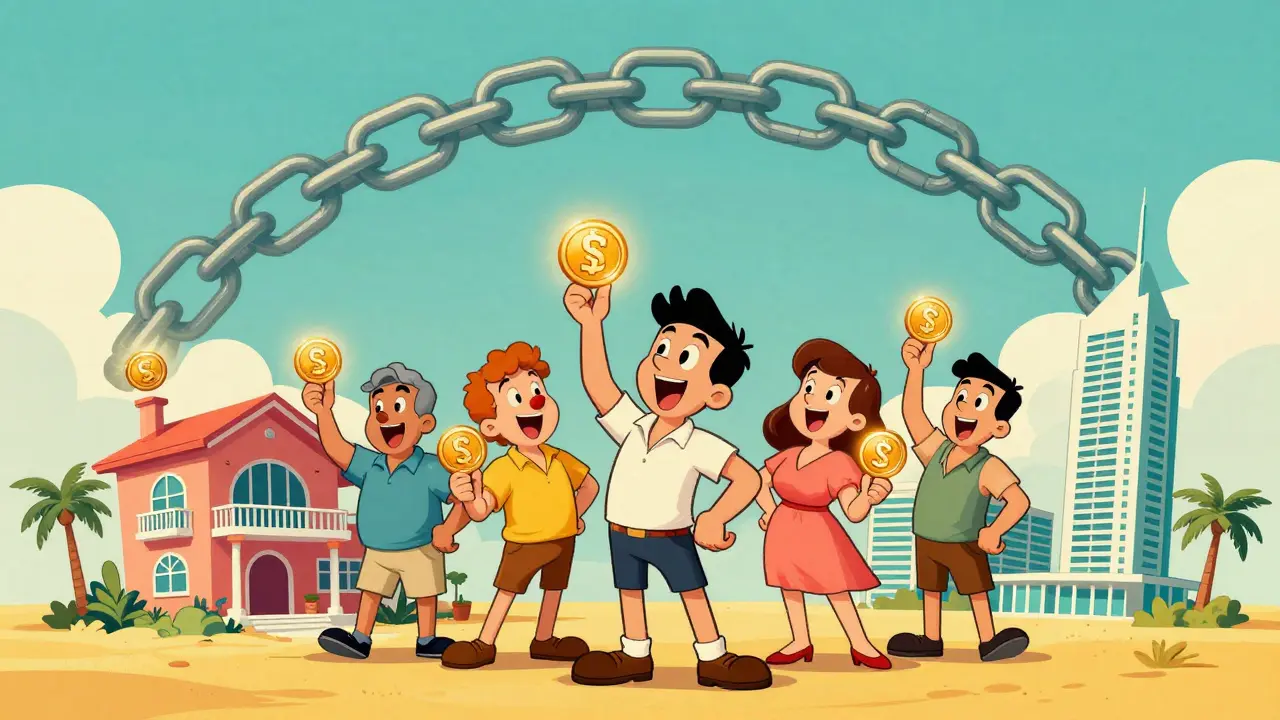
Imagine owning a piece of a beachfront villa in Dubai or a luxury condo in Miami-without needing a million dollars. That’s the promise of fractional real estate ownership via NFTs. It’s not science fiction. It’s happening right now, and you don’t need to be a billionaire to get in.
Traditional real estate has always been a game for the wealthy. You buy a whole house, pay cash or take out a 30-year mortgage, deal with property taxes, repairs, tenants, and then hope the market goes up. But with NFTs, you can buy a fraction of a property-like 1% of a $5 million penthouse-for as little as $50,000. And unlike traditional real estate, you can sell your share in days, not months.
How NFTs Turn Property Into Digital Shares
NFTs are digital tokens that prove ownership of something unique. Most people know them as profile pictures or digital art. But they’re also being used to represent real-world assets like buildings, land, and commercial spaces. The trick? You don’t trade the NFT itself. You trade smaller, divisible pieces of it.
Here’s how it works: A property owner or developer locks the original NFT-representing the entire building-into a smart contract. That contract then creates hundreds or thousands of smaller, fungible tokens (usually ERC-20). Each one is a fraction of the original asset. If the property is worth $4 million and there are 80 tokens, each one equals $50,000 and 1.25% ownership.
These tokens live on blockchains like Ethereum, Polygon, or Hedera. Hedera, for example, uses the ERC-721 standard, so it works with most wallets and marketplaces you already know. The smart contract handles everything: who owns what, how rent is split, who pays for repairs, and even when you can use the property if it’s a vacation home.
Why This Is Different From Traditional Real Estate
Traditional real estate is slow, expensive, and illiquid. You can’t easily sell half your house. But with fractional NFT ownership, your share is like a stock. You can list it on platforms like RealT, Propy, or Real Estate Token (RET), and buyers can snap it up in minutes.
Here’s a quick comparison:
| Feature | Fractional NFT Ownership | Traditional Ownership |
|---|---|---|
| Minimum Investment | $50,000 or less | $300,000-$1M+ |
| Liquidity | High-sell on NFT marketplaces | Low-takes months to sell |
| Ownership Proof | On blockchain, immutable | Deeds, county records |
| Management | Handled by third-party firms | Owner handles everything |
| Decision Power | Shared-votes among owners | Full control |
| Access to Property | Pre-scheduled usage rights | Full access anytime |
That shared decision-making is a double-edged sword. If you want to repaint the kitchen, you need approval from the other owners. If someone refuses to pay their share of repairs, the smart contract might freeze their tokens until they settle up. It’s not perfect-but it’s organized, transparent, and automated.
Where This Is Taking Off (And Why)
As of March 2025, the United Arab Emirates is the global leader in real estate tokenization. Dubai and Abu Dhabi have clear rules for how NFTs can represent property, and banks like Emirates NBD are now offering tokenized real estate funds. That’s huge. When big institutions get involved, the market stabilizes.
The U.S. isn’t far behind. Cities like Miami, Austin, and Las Vegas are seeing more tokenized luxury condos and vacation rentals. The Caribbean and Mexico are also hotspots, especially for second homes. In 2022, the fractional real estate market hit $624 million-up from $495 million the year before. Analysts expect it to cross $1 billion by 2026.
Why now? Two reasons: regulation and technology. Countries that used to ignore blockchain are now writing laws for it. And platforms like Hedera Token Service make it cheap and fast to create these tokens-fees are under a penny per transaction.
What You Need to Get Started
You don’t need to be a tech expert. But you do need to understand a few basics.
- Get a crypto wallet. MetaMask, Trust Wallet, or Coinbase Wallet work. Make sure it supports Ethereum, Polygon, or Hedera.
- Buy some crypto. You’ll need ETH, MATIC, or HBAR to pay for the tokens and transaction fees.
- Find a platform. RealT, Real Estate Token, and Propy are the most established. Check their property listings, management fees, and exit terms.
- Do your homework. Just like buying a house, location matters. Is the property in a growing neighborhood? Who manages it? What’s the rental history?
- Read the smart contract. It’s not just a formality. It says who pays for insurance, how votes are counted, and how you get your money out.
Most platforms offer professional management. They handle cleaning, repairs, tenant screening, and even tax filings. You just get your share of the rent and the option to use the property during your booked time.
The Risks Nobody Talks About
This isn’t a get-rich-quick scheme. There are real downsides.
- Regulation is still messy. The SEC hasn’t fully decided if these tokens are securities. That could change how they’re sold or taxed.
- Selling your share isn’t always easy. Some properties have few buyers. If no one wants your 0.5% share, you might be stuck.
- Smart contracts can have bugs. They’re code. If there’s a flaw, your money could be locked or lost.
- Taxes are complicated. Are you earning rental income? Capital gains? Is it treated as property or a digital asset? Talk to a CPA who understands blockchain.
And don’t forget: you’re not owning a physical house. You’re owning a digital claim to part of one. If the platform shuts down or the NFT gets hacked, you might lose access-even if the property is still standing.
Who Should Try This?
This isn’t for everyone. But it’s perfect for:
- Investors who want to diversify beyond stocks and crypto
- People who can’t afford a full house but still want real estate exposure
- Travelers who want vacation homes in multiple countries without the hassle
- Those who trust blockchain more than banks or lawyers
If you’re new to both real estate and crypto, give yourself 2-3 months to learn. Watch videos, read platform docs, and start small. Buy a $5,000 share first. See how the system works before putting in more.
And remember: this isn’t about speculation. It’s about owning a piece of something real-a home, a building, a place where people live. The blockchain just makes it easier to share.
What’s Next?
The future of fractional real estate isn’t just about owning shares. It’s about integration. Imagine your NFT property share automatically paying your rent into your bank account. Or your vacation days syncing with your calendar. Or insurance claims being processed by AI when the smart contract detects damage.
More traditional real estate firms are starting to test this. In 2025, major U.S. developers began partnering with blockchain platforms to tokenize new luxury developments. Banks are creating fractional real estate funds for their clients. The pieces are falling into place.
It won’t replace buying a house outright. But for millions of people locked out of the housing market, it’s the first real alternative in decades.
Can I live in a property I own a fraction of?
Yes, if the platform allows it. Many fractional real estate NFTs include usage rights-like 2 weeks per year at a vacation home. These are scheduled in advance, often through an app. You can’t just show up and move in, but you do get guaranteed access. Some platforms even let you rent out your unused time to others.
Are fractional NFT real estate investments legal?
It depends on where you live and where the property is. In the U.S., the SEC hasn’t given clear rules yet, but most platforms structure their tokens to avoid being classified as securities. In the UAE, Singapore, and Switzerland, they’re fully legal and regulated. Always check local laws and consult a lawyer if you’re investing large amounts.
How do I make money from fractional real estate NFTs?
Two ways: rental income and appreciation. If the property is rented out, you get a share of the rent-usually paid monthly in crypto. If the property’s value goes up, your NFT share increases too. You can sell it later for a profit. Some platforms also offer dividends from property sales or refinancing.
What happens if the property gets damaged?
Most platforms require the property to be insured. If damage occurs, the insurance payout goes into a reserve fund managed by the operator. Repairs are made using those funds. If the damage is severe and the property can’t be fixed, the platform may sell it and distribute the proceeds to owners. Always check the insurance policy and repair fund rules before investing.
Can I use my fractional NFT as collateral for a loan?
Some DeFi platforms now allow it. You can lock your fractional NFT in a lending protocol and borrow crypto against it. But this is still early-stage. Rates are high, and if the property value drops, you could get liquidated. Only do this if you understand the risks and have a backup plan.
Is this just a crypto bubble?
Some parts are speculative, but the core idea-tokenizing real assets-isn’t. Real estate has been tokenized in regulated markets for years. What’s new is making it accessible to regular people. The technology is real. The demand is real. The risk is in unregulated platforms and overhyped projects. Stick to well-known platforms with real properties, clear management, and transparent contracts.
If you’re ready to try it, start with one small investment. Learn how the system works. Watch how rent flows in. See how sales go. Then decide if this is the future of real estate-or just a flashy experiment. Either way, you’re no longer locked out of the game.
Patricia Amarante
December 15, 2025 AT 08:13Just bought my first 0.8% share in a Miami condo last week for $42k. Rent came in last Friday-$117 in USDC. Feels surreal to get passive income from something I don’t even physically touch.
Abby Daguindal
December 17, 2025 AT 02:50Oh great. Another crypto bro fantasy where you ‘own’ a piece of a property but can’t even lock the front door. You’re not an investor-you’re a digital landlord with zero control.
Kelsey Stephens
December 18, 2025 AT 09:46It’s not perfect, but for people who’ve been locked out of housing for decades, this is a real doorway. Start small, learn the contracts, and don’t treat it like gambling. You’re buying access, not magic.
Kayla Murphy
December 18, 2025 AT 20:35You don’t need a million dollars to build wealth anymore. This is the future-accessible, transparent, and democratized. If you’re scared of change, that’s okay. But don’t stand in the way of people trying to get ahead.
Florence Maail
December 20, 2025 AT 19:38SEC is already watching. They’re gonna classify these as unregistered securities and freeze everyone’s assets. Just wait. They always crush the little guy once they realize it’s working. 😈
Chevy Guy
December 21, 2025 AT 22:33So you’re telling me I can own 1% of a villa in Dubai but can’t decide if the pool gets cleaned on Tuesdays or Thursdays? Sounds like a dystopian HOA with blockchain vibes
Emma Sherwood
December 23, 2025 AT 22:11This isn’t just about money. It’s about belonging. Imagine a Filipino nurse in Chicago owning a sliver of a beach house in the Philippines. Her kid can visit. Her mom can stay. That’s not investment-that’s legacy. And it’s beautiful.
Tom Joyner
December 25, 2025 AT 11:03The math is elegant. The execution? Still in beta. Smart contracts aren’t gods. They’re code written by interns who didn’t sleep for 72 hours. Don’t be the person who loses $50k because someone forgot a semicolon.
Sue Bumgarner
December 26, 2025 AT 14:50Why are we letting foreigners control our real estate? Dubai? Mexico? This is just another way for globalists to drain American wealth. We should be tokenizing Detroit homes, not some fancy beach resort in Abu Dhabi.
Elvis Lam
December 28, 2025 AT 06:34Don’t forget the tax implications. Rental income from fractional NFTs is treated as ordinary income in the US, not capital gains. And if you sell, you might owe state taxes in the property’s location too. Talk to a blockchain-savvy CPA before you invest. I’ve seen too many people get nailed.
Amy Copeland
December 28, 2025 AT 17:03Oh wow, so now you’re a ‘co-owner’ of a property you’ve never seen, can’t enter without scheduling, and have to vote on whether to fix the AC? Congrats. You’re a shareholder in a timeshare that’s also a crypto scam.
Dionne Wilkinson
December 30, 2025 AT 09:24It’s strange, isn’t it? We used to dream of owning a house. Now we dream of owning a fraction of one. Maybe the real question isn’t whether this works-but what it says about us. We’ve traded roots for liquidity.
Craig Nikonov
December 31, 2025 AT 08:07Blockchain won’t save you from bad landlords. It’ll just make the landlord a smart contract with zero empathy. What happens when the platform goes dark? Your ‘ownership’ becomes a JPEG with no address. And guess who’s liable? You.
Donna Goines
January 1, 2026 AT 06:21They’re all gonna collapse. Mark my words. The entire fractional real estate market is a Ponzi built on hype and lazy millennials who think ‘NFT’ means ‘safe investment.’ One regulatory crackdown and it all vaporizes like FTX.
George Cheetham
January 1, 2026 AT 06:44What’s fascinating isn’t the tech-it’s the shift in mindset. We’re moving from ownership as control to ownership as access. That’s a cultural revolution. And it’s happening faster than anyone predicted.
Greg Knapp
January 1, 2026 AT 22:14So you’re telling me I can buy a piece of a house in Miami but I can’t just go there whenever I want? That’s not ownership that’s a prison with Wi-Fi
SeTSUnA Kevin
January 3, 2026 AT 19:36Let’s be precise: ERC-721 is non-fungible. Fractional ownership requires ERC-20 tokens. The article conflates standards. This is not merely sloppy-it’s intellectually dishonest. If you can’t get the fundamentals right, why should anyone trust the rest?