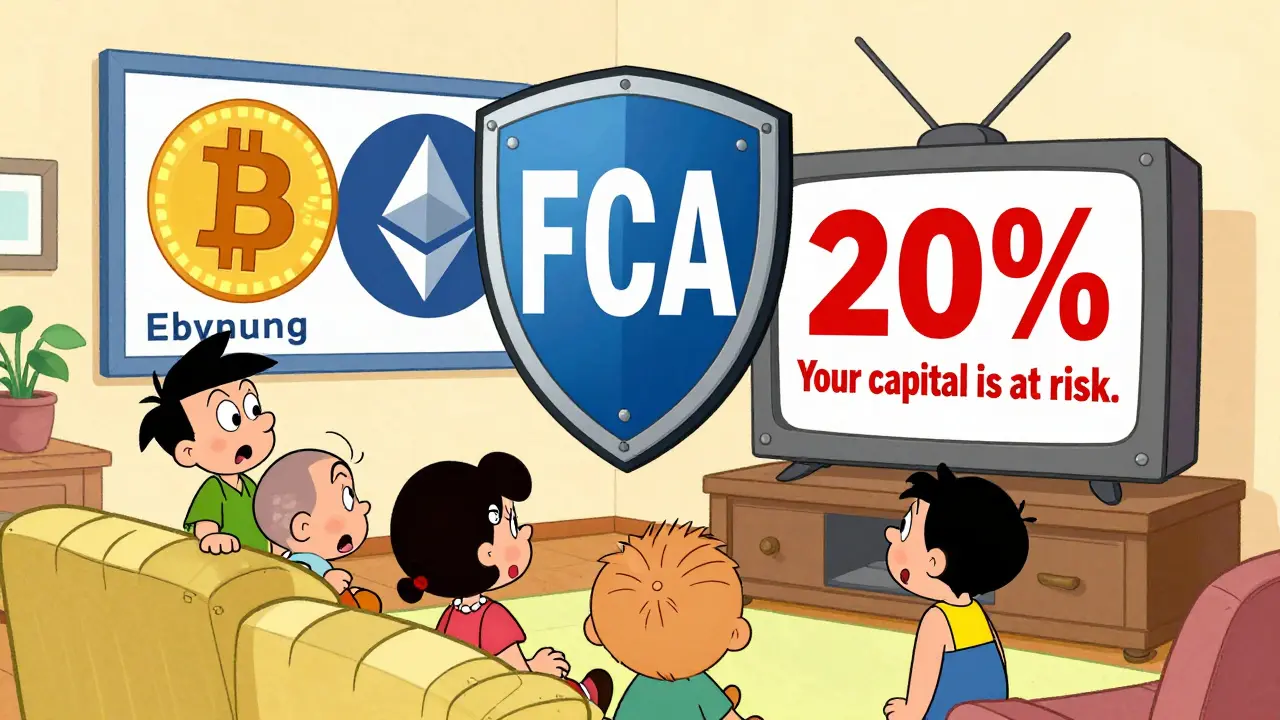
The UK has some of the strictest rules in the world for how crypto companies can advertise to regular people. If you’ve seen a crypto ad on TV, social media, or even a billboard and wondered why it suddenly disappeared, the answer is simple: the FCA made it illegal. Since October 2023, the Financial Conduct Authority has enforced hard limits on who can see crypto ads - and what those ads can say. This isn’t just a warning. It’s a full legal framework with real penalties.
What Exactly Changed in 2023?
Before October 2023, crypto firms could run ads like any other product. They used celebrities, flashy graphics, and promises of quick gains. But the FCA saw a pattern: too many people lost money. Retail investors - people without financial expertise - were being targeted with high-risk products they didn’t understand. So the FCA acted. The change came through the Financial Services and Markets Act 2000 (Financial Promotion) (Amendment Order) 2023. It didn’t ban crypto ads completely. It just made them much harder to run. Now, any ad for a fungible or transferable cryptoasset - like Bitcoin, Ethereum, or even fan tokens - counts as a financial promotion. That means it’s subject to the same rules as selling stocks or bonds. To comply, firms must now do four things:- Give each person a personalized risk warning based on their experience
- Wait 24 hours before letting someone invest
- Classify users as retail or professional
- Prove the investor understands the risks before they commit
That last one isn’t a checkbox. It’s a full assessment. Firms have to ask questions like: Have you traded leveraged products before? Do you understand how volatile crypto markets can be? And they have to keep records of every answer - for five years.
Broadcast Ads Are Now Banned - Except for One Place
In October 2024, things got even tighter. The Broadcast Committee of Advertising Practice (BCAP), with approval from Ofcom, added Rule 14.5.5. This rule bans crypto ads from appearing on mainstream TV, radio, YouTube, or social media feeds unless the audience has been pre-vetted. What does that mean in practice? You won’t see a crypto ad during the Premier League match. You won’t see one on your Instagram feed. But if you’re watching a financial news channel like Bloomberg TV UK - and you’ve already proven you’re a qualified investor - then yes, the ad can run. This rule forces crypto firms to use targeted advertising tools. They can’t just buy a banner on Google. They have to prove, through user data and login history, that the person seeing the ad has been assessed by a regulated firm. It’s not enough to say, “This is risky.” You have to prove the viewer knows what that means.What Do the Ads Actually Look Like Now?
The FCA doesn’t just say “be careful.” They give exact rules. Every visual ad - whether it’s a banner, video, or social post - must include a risk warning that takes up at least 20% of the screen. It can’t be tucked in a corner. It can’t be in tiny text. It has to be clear, bold, and in plain language. Here’s what a real warning looks like: “Your capital is at risk. Cryptoassets are high-risk, speculative investments. You could lose all your money. Don’t invest more than you can afford to lose.” That’s not optional. Firms that used vague phrases like “potential for growth” or “limited supply” got fined. The FCA has already taken action against multiple companies for using misleading language. One firm was fined for saying Bitcoin was “the future of money.” The FCA called that a “misleading implication of stability.”
Why Is the UK So Strict Compared to Other Countries?
The EU’s MiCA rules, which took effect in June 2024, allow crypto ads as long as they include a disclaimer. Singapore lets firms advertise with simple risk notices. Switzerland barely regulates crypto ads at all. The UK is different. It doesn’t trust “disclaimers.” It trusts barriers. The FCA believes if you’re going to advertise something that can wipe out someone’s life savings, you shouldn’t be able to reach them unless they’ve already passed a test. Even the U.S. - where crypto ads are everywhere - doesn’t have this level of control. The SEC focuses on whether crypto is a security, not on how it’s advertised. The UK doesn’t care if it’s a security. It cares if regular people can be tricked into buying it. This approach has a name: “consumer protection first.” The FCA’s goal isn’t to stop innovation. It’s to stop exploitation.What Happens If You Break the Rules?
Fines aren’t the worst part. The FCA can shut down your UK operations. Under the Financial Services and Markets Act 2000, firms can be fined up to 10% of their global annual turnover. That’s not a slap on the wrist. For a small crypto firm, it’s a death sentence. But enforcement isn’t just about money. The FCA has a “compliance journey” approach. They don’t punish right away. They work with firms - for months - to fix problems. According to their own reports, 40% more firms contacted them for help in early 2024 than in late 2023. That’s because the rules are complex. One firm spent six months redesigning its entire website just to meet the 24-hour cooling-off requirement. Another had to build a custom system to track each user’s risk profile and generate personalized warnings. It’s not just legal work. It’s engineering.Who’s Still Allowed to Advertise?
Only firms that are registered with the FCA - or under their temporary registration regime - can legally promote crypto in the UK. As of March 2024, only 15 out of 60 applicants had been fully approved. The rest are still waiting. Major exchanges like Coinbase and Kraken operate under temporary registration. That means they’re allowed to keep running - but they’re being watched. If they slip up, their access can be pulled immediately. There’s one exception: crypto exchange-traded notes (cETNs). These are products traded on UK-approved exchanges like the London Stock Exchange. The FCA allows retail investors to buy them - but only if the ad follows the same strict rules. No promises of profit. No celebrity endorsements. Just facts, risks, and a 24-hour pause.
What About Stablecoins and DeFi?
The FCA hasn’t stopped at advertising. In May 2025, they released Discussion Paper DP25/1, which proposes a full regulatory framework for cryptoasset trading platforms, lending, staking, and DeFi. The message is clear: crypto isn’t going away. But it’s not going to be wild west either. Stablecoins - like USDT or USDC - are next on the list. The FCA is already drafting rules for how they can be issued and promoted. DeFi protocols? They’re not regulated yet. But if they start advertising to UK users, they’ll need to comply - or face legal action. The FCA says cryptoassets will remain “high-risk, speculative investments.” That’s not going to change. Their job isn’t to make crypto safe. It’s to make sure you know exactly how dangerous it is before you touch it.Is This Working?
The FCA says yes. Since the rules took effect, they’ve seen fewer complaints from consumers. Fewer people are calling in panicked after losing money. That’s the real metric. Consumer groups like Which? praise the move. CryptoUK, the industry group, calls it overreach. But the numbers tell the story: 15 firms approved out of 60 applicants. That’s a 25% approval rate. That’s not a regulatory hurdle. That’s a wall. The FCA doesn’t care if you think the rules are unfair. They care if you’re protecting people. And right now, they’re winning.Can I still see crypto ads on YouTube in the UK?
No, not if you’re a regular user. YouTube ads targeting the general public are banned under BCAP Rule 14.5.5. The only way a crypto ad can appear on YouTube is if it’s shown to users who have already been pre-vetted by an FCA-registered firm - meaning they’ve passed a knowledge test and been classified as a professional investor. Most users won’t see any crypto ads at all.
What happens if a crypto firm ignores the FCA rules?
The FCA can fine them up to 10% of their global annual turnover, ban them from operating in the UK, or even pursue criminal charges for misleading financial promotions. They’ve already fined multiple firms for using vague language or failing to include proper risk warnings. Non-compliance is not tolerated.
Do these rules apply to NFTs and utility tokens?
It depends. Only transferable and fungible cryptoassets - like Bitcoin or Ethereum - are covered under the FCA’s advertising rules. Most NFTs and fan tokens are not considered regulated unless they’re used as investment vehicles. But if an NFT project promises returns or profit-sharing, it could fall under the rules. The FCA looks at function, not label.
Can I still invest in crypto in the UK?
Yes, but only through FCA-registered firms. You can still buy Bitcoin or Ethereum, but you must go through a platform that’s approved by the FCA. You’ll also be forced to go through a 24-hour cooling-off period and answer questions about your experience. The investment is still allowed - the advertising isn’t.
Are crypto ads banned on TikTok and Instagram?
Yes. Both platforms are considered mainstream channels under BCAP Rule 14.5.5. Any crypto ad appearing on TikTok or Instagram targeting general users is illegal. Only ads shown to users who’ve been pre-vetted by a regulated firm - and only on specialized financial channels - are permitted.
Why are crypto ETNs allowed but other crypto assets aren’t?
Crypto ETNs are traded on regulated UK exchanges like the London Stock Exchange. They’re structured products with underlying assets, transparent pricing, and oversight. The FCA allows them because they’re more like traditional securities - not wild speculation. But even these require full compliance with advertising rules, including risk warnings and cooling-off periods.
Does the FCA cover crypto ads from overseas companies?
Yes. If a foreign crypto firm targets UK consumers - even through a website or social media post - they must comply with UK rules. The FCA has extraterritorial power. If you’re advertising to people in the UK, you’re subject to UK law, no matter where your company is based.
Is there a chance these rules will change in 2026?
The FCA’s May 2025 Discussion Paper DP25/1 confirms they plan to expand regulation to DeFi, lending, and staking. But advertising rules are unlikely to loosen. The FCA has repeatedly stated cryptoassets will remain high-risk. Their focus is on tightening, not relaxing, protections. Expect stricter controls, not fewer.
Steven Lefebvre
March 6, 2026 AT 20:01nalini jeyapalan
March 8, 2026 AT 12:06Christina Young
March 9, 2026 AT 01:33Drago Fila
March 9, 2026 AT 03:32Bonnie Jenkins-Hodges
March 10, 2026 AT 02:59Melissa Ritz
March 11, 2026 AT 23:32Cerissa Kimball
March 12, 2026 AT 08:26Basil Bacor
March 14, 2026 AT 06:29Denise Folituu
March 15, 2026 AT 12:28Julie Potter
March 17, 2026 AT 03:17