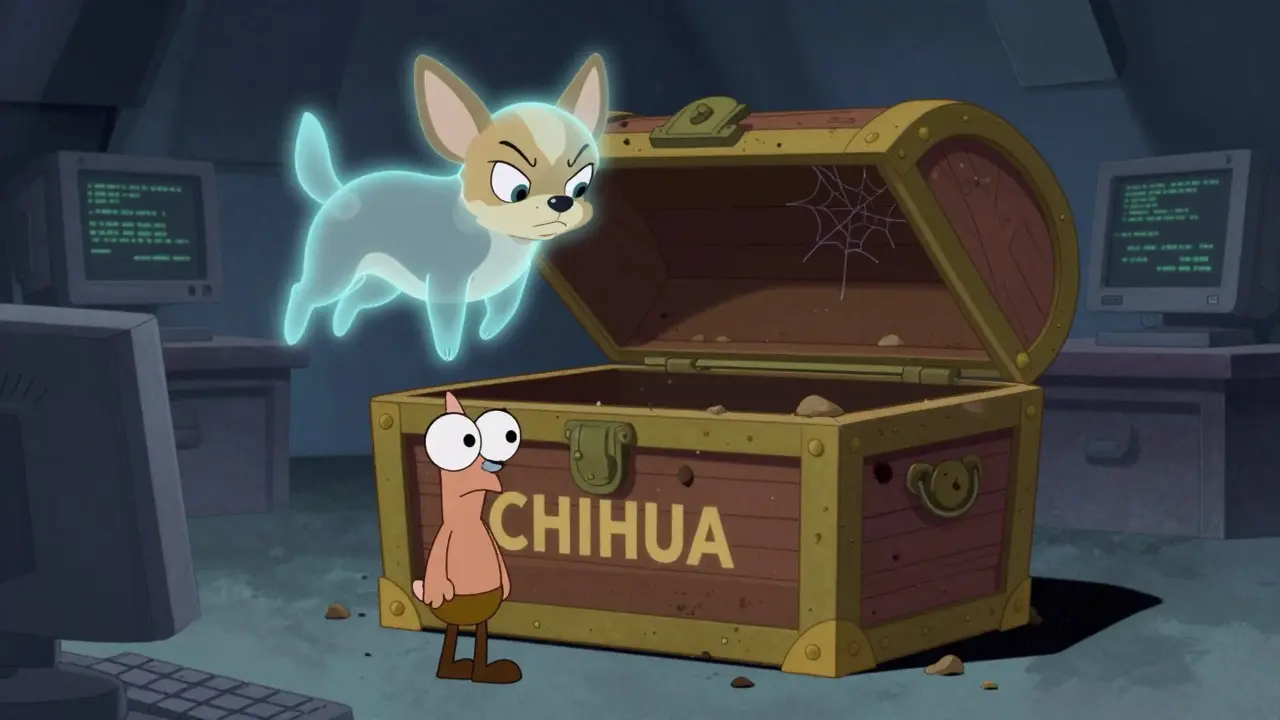
You’ve seen the chatter on social media. Someone is promising free Chihua Token rewards. The promise of easy money in crypto is always tempting, especially when it involves a cute dog theme. But here is the hard truth: if you are looking for details on an active Chihua (CHIHUA) airdrop right now, you might be chasing a ghost-or worse, walking into a trap.
The cryptocurrency landscape in 2026 is flooded with projects that sound legitimate but lack substance. When I dig into the data for Chihua Token, the picture isn’t just blurry; it’s concerning. There is no verified, active airdrop campaign from official channels. Instead, there is a mix of outdated data, inactive contracts, and potential confusion with other projects. Before you connect your wallet or spend hours farming points, let’s separate fact from fiction.
The Identity Crisis: Is This Real?
First, we need to identify exactly what you are looking at. In the world of meme coins, names are cheap, but contracts are expensive. The token ticker CHIHUA appears on major tracking platforms like CoinMarketCap, but the data tells a strange story.
According to current listings, the Chihua Token claims to have a maximum supply of 490 trillion tokens. That number is astronomical. For context, Bitcoin has a cap of 21 million. Ethereum has no hard cap but circulates in the hundreds of millions. A supply in the trillions usually indicates a low-value meme coin designed for hyper-inflationary trading. However, the real red flag is the circulating supply. Data shows zero total supply and zero circulating supply.
If a token has zero supply, you cannot hold it. You cannot trade it. And most importantly, you cannot receive it in an airdrop. This suggests one of three things:
- The project never successfully launched its smart contract.
- The token was delisted or abandoned by its creators.
- The data feed is broken, and the token exists elsewhere without proper indexing.
There is also a second token with the ticker CHIMOM associated with the name "Chihuahua." It too shows zero price and zero volume. When two variations of the same brand show no market activity, it’s a strong signal that the ecosystem is dead or dormant.
Don’t Confuse It With HUAHUA
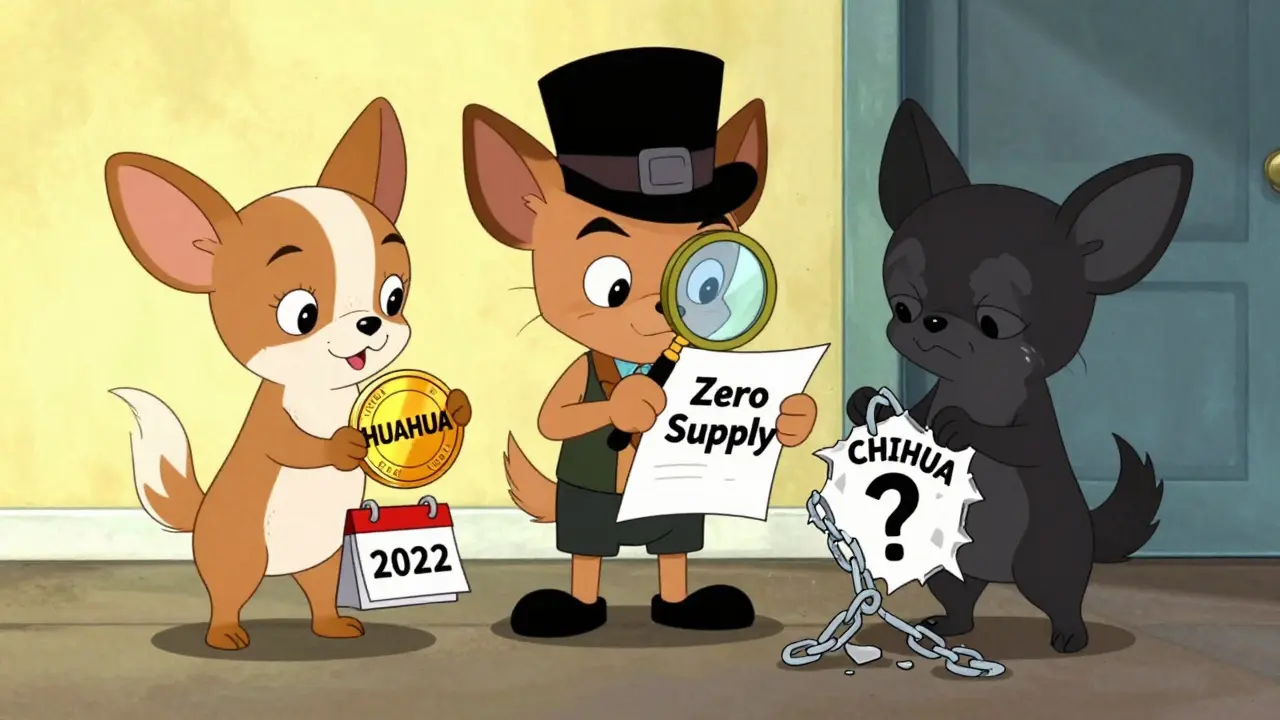
A lot of confusion stems from mixing up Chihua Token (CHIHUA) with the Chihuahua Chain (HUAHUA). These are not the same thing. HUAHUA was a legitimate project that ran a major airdrop back in January 2022.
That historical event distributed 7,200,000 HUAHUA tokens through the MEXC exchange. Users had to stake MX tokens to participate. The reference price was around $0.005 per token. That event is over. It happened four years ago. If you see someone claiming you can still claim those rewards, they are lying. If you see them claiming this history applies to the new CHIHUA token, they are misleading you.
The original Chihuahua Chain aimed to be a community-driven platform with a governance pool. It had a clear roadmap and technical infrastructure. The current CHIHUA token, by contrast, describes itself merely as a "community answer to Dogecoin and Shiba Inu." It lacks the technical depth, the chain infrastructure, and the historical proof of life that made HUAHUA noteworthy.
Tokenomics That Sound Too Good To Be True
Let’s look at the theoretical structure of the CHIHUA token, assuming it ever launches properly. The project documentation claims a "fair launch" where everyone, including founders, bought tokens on Uniswap. This is a common pitch in meme coin circles to build trust.
The proposed tokenomics include burning 51% of the total supply. Another 48% was allegedly allocated to Uniswap liquidity and then burned. This leaves only 1% of the supply for marketing and development. On paper, this sounds "rug pull proof." The logic is simple: if the team doesn’t hold tokens, they can’t dump them on you.
However, in practice, this model has significant flaws. First, burning tokens doesn’t guarantee value. If no one wants the token, the remaining 1% is worth nothing. Second, "fair launches" on decentralized exchanges often result in massive volatility. Bots can buy up the initial liquidity instantly, leaving retail investors with worthless bags. Third, without a locked liquidity pool, anyone can drain the remaining funds. The claim of being "100% rug pull proof" is a marketing slogan, not a technical guarantee.
| Feature | Chihua Token (CHIHUA) | Established Meme Coins (e.g., DOGE, SHIB) |
|---|---|---|
| Circulating Supply | Zero (per current data) | Billions/Trillions (Active) |
| Trading Volume | $0 / Non-existent | High daily volume |
| Launch Date | Unclear / Potentially Failed | Verified historical dates |
| Community Size | Minimal / Bot-heavy | Millions of active holders |
| Risk Level | Extreme (Scam/Abandoned) | High (Volatility) |
The 2026 Airdrop Landscape: Why You Should Be Skeptical
We are in 2026. The airdrop game has changed dramatically. In 2024, projects distributed nearly $15 billion across DeFi, Web3 gaming, and DePIN sectors. Projects like Meteora, Hyperliquid, and Monad gave away real value because they needed users to test their networks and build liquidity.
Today, the bar is much higher. Legitimate airdrops require:
- Official Announcements: Posts from verified Twitter/X accounts, Discord servers, and Telegram groups linked from the project’s official website.
- Smart Contract Audits: Reports from firms like CertiK or Hacken proving the code is safe.
- Clear Eligibility Criteria: Specific actions like bridging assets, providing liquidity, or holding specific NFTs.
The CHIHUA token meets none of these criteria. There are no recent announcements from credible sources. There is no audit report available for public review. There is no clear mechanism for how you would qualify for tokens that don’t appear to exist on-chain.
This silence is deafening. In the crypto world, silence usually means death. A project that is actively preparing an airdrop will be screaming about it to generate hype. A project that is quiet is either working in stealth (rare for meme coins) or it has been abandoned.
How Scammers Exploit Name Confusion
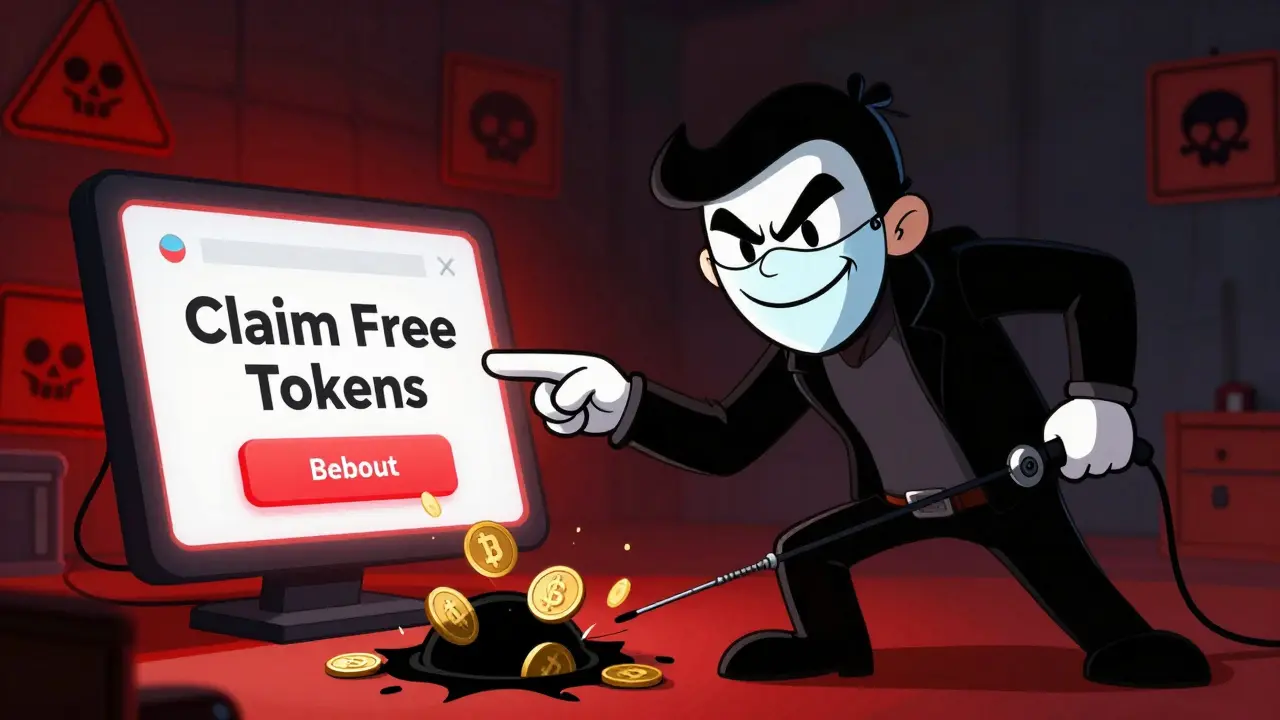
This is the most dangerous part. Because there is confusion between CHIHUA, CHIMOM, and the old HUAHUA project, scammers thrive. They create fake websites that look professional. They post fake screenshots of airdrop dashboards showing thousands of dollars in pending rewards. They ask you to connect your wallet to "claim" your tokens.
Once you connect, they don’t give you tokens. They execute a malicious smart contract that drains your existing ETH, USDT, or other valuable assets. This is called a "wallet drainer." It happens in seconds. By the time you realize the transaction went through, the funds are gone.
To protect yourself, follow these rules:
- Never click links from DMs: No legitimate project will DM you first.
- Verify the URL: Check the domain carefully. Look for slight misspellings like "chihua-token-official.com" instead of the real site.
- Check Contract Addresses: Copy the contract address from CoinMarketCap or CoinGecko. Compare it to the address on the website you are visiting. If they don’t match, walk away.
- Use a Burner Wallet: If you must interact with high-risk dApps, use a separate wallet with no funds you care about losing.
What To Do Instead
If you are interested in airdrops, stop looking for ghosts. Focus on projects that are transparent. Look for Layer 2 solutions, new blockchains, or DeFi protocols that are currently in their testing phases. These projects have budgets for user acquisition and legal frameworks for distribution.
Instead of risking your capital on a token with zero supply and zero volume, consider learning about wallet security. Understanding how to revoke permissions, how to spot phishing sites, and how to use hardware wallets is more valuable than any free token. The skills you build protecting your assets will serve you far better than chasing a mythical Chihua payout.
Is there an active Chihua Token (CHIHUA) airdrop in 2026?
No. Current data shows zero circulating supply and no active trading volume for CHIHUA. There are no verified announcements from official channels regarding an active airdrop campaign. Any claims otherwise are likely scams or misinformation.
What is the difference between CHIHUA and HUAHUA?
HUAHUA was a token associated with the Chihuahua Chain that conducted a legitimate airdrop in 2022 via MEXC exchange. CHIHUA is a different, seemingly inactive meme token with a ticker of CHIHUA. They are not related, and HUAHUA rewards are no longer available.
Why does CoinMarketCap list CHIHUA with zero supply?
This typically indicates that the token contract was never properly deployed, the project was abandoned before launch, or there is a data reporting error. A token with zero supply cannot be traded or held, suggesting the project is not operational.
Can I get rich quick with Chihua Token?
It is highly unlikely. Without liquidity, trading volume, or a functioning market, the token has no value. Attempting to buy or claim such tokens carries extreme risk of financial loss due to scams or failed contracts.
How do I verify if a crypto airdrop is legitimate?
Check for official announcements on verified social media, look for smart contract audits from reputable firms, verify the contract address against trusted aggregators like CoinGecko, and never share your private keys or seed phrase. If it sounds too good to be true, it almost certainly is.
Jan Gilmore
May 10, 2026 AT 03:01Let me get this straight because the sheer volume of misinformation here is staggering. You are looking at a token with literally zero circulating supply and expecting it to be anything other than a ghost town? That is not just bad luck, that is basic math. The CHIHUA ticker on CoinMarketCap shows zero total supply which means the contract either failed to deploy or was abandoned before anyone could even buy a single unit. People chasing these 'airdrops' are usually getting farmed by bots or scammers who know exactly how desperate you are for free money. I have seen this pattern a thousand times since 2021. A meme coin launches, hype builds on Twitter, and then silence falls like a hammer. If there is no liquidity pool locked and verified by a reputable auditor like CertiK, you are walking into a wallet drainer trap. Do not connect your main wallet to any site claiming to distribute these tokens. Use a burner if you must, but honestly, just save yourself the headache and look at projects with actual on-chain activity. The HUAHUA confusion is real but that was four years ago and those rewards are long gone. Stop drinking the Kool-Aid.
Tricia Alach
May 11, 2026 AT 04:06omg thank you for posting this!! i was so confused about all the diffrent chihuahua coins out there. its like they want us to mix them up on purpose right? 😅
i thought maybe i missed something big but reading this makes me feel better about not clicking those links in my dm. its scary how easy it is to lose everything just by one click. do you think its ever worth it to check out new meme coins or should we just stick to doge and shib forever? i feel like im always behind on the trends lol
Caique Muniz
May 12, 2026 AT 20:03another day another scam alert article. yawn. seriously though if u cant read a whitepaper or check etherscan ur doomed. simple as that.
Bijan Das
May 12, 2026 AT 20:06You Americans are so gullible. It is pathetic that you need an entire blog post to tell you that a token with zero supply is worthless. In India, we learn to spot these scams from kindergarten. The fact that people still fall for 'free money' promises in 2026 is a testament to the decline of critical thinking globally. Just ignore these trash projects and focus on building real skills instead of gambling on internet dog pictures.
Ashley Rodriguez
May 13, 2026 AT 14:03i totally agree with what you said about checking the contract addresses because i learned the hard way last year when i lost some eth to a fake site and it was such a nightmare trying to figure out what happened and now i always double check everything even though it takes longer but its worth it to keep my funds safe and i wish more people would take the time to verify things before they rush in
Bridget Coogle
May 13, 2026 AT 23:25its really important to stay safe out there everyone. dont let the fear stop you from learning though. knowledge is power!
Zara Zaman
May 14, 2026 AT 19:08This is why foreign regulations are needed. These unregulated crypto schemes prey on the weak-minded. We need strict laws to shut down these fraudulent operations immediately. No excuses.
Larry Port
May 15, 2026 AT 17:44I've been tracking this specific token for a while now. The discrepancy between the claimed max supply of 490 trillion and the zero circulating supply is the key indicator here. It suggests the smart contract deployment either failed completely or the project team lost access to the private keys required to mint the initial supply. Without a functioning mint function, an airdrop is technically impossible unless they are using a separate distribution contract, which would be highly irregular and risky for users. Most likely, it's just a dead link on aggregators.
Jocelyn Garcia
May 16, 2026 AT 18:06From a DeFi perspective, the lack of liquidity depth is the killer here. Even if tokens were distributed, without a LP pool on Uniswap or PancakeSwap, you can't swap them for ETH or USDT. The slippage would be 100%. Also, the absence of a security audit report is a massive red flag for any institutional or serious retail investor. The market has matured enough that 'fair launch' claims without transparency are viewed with extreme skepticism. Stick to L2s and established protocols.
Amit Varpe
May 17, 2026 AT 06:33Haha typical western ignorance 🤣. Learn to code or go home.
Bronwen Butler
May 18, 2026 AT 22:20Actually the concept of zero supply is often misunderstood by laymen. Sometimes tokens are held in treasury contracts for future vesting schedules. However in this case the lack of any associated website updates or social media activity confirms abandonment. The comparison to HUAHUA is irrelevant as they operate on different chains entirely.
Pauline Larocco71
May 19, 2026 AT 01:33Thank you for clarifying the difference between CHIHUA and HUAHUA! I was so confused seeing both names pop up in search results. It’s wild how many copycats exist in this space. I’m glad I didn’t connect my wallet to that suspicious site I saw on Telegram. Safety first always!
beti macedo
May 19, 2026 AT 12:23It is indeed crucial to exercise due diligence. The information provided herein is accurate regarding the current status of the Chihua Token. Investors should remain vigilant against phishing attempts.