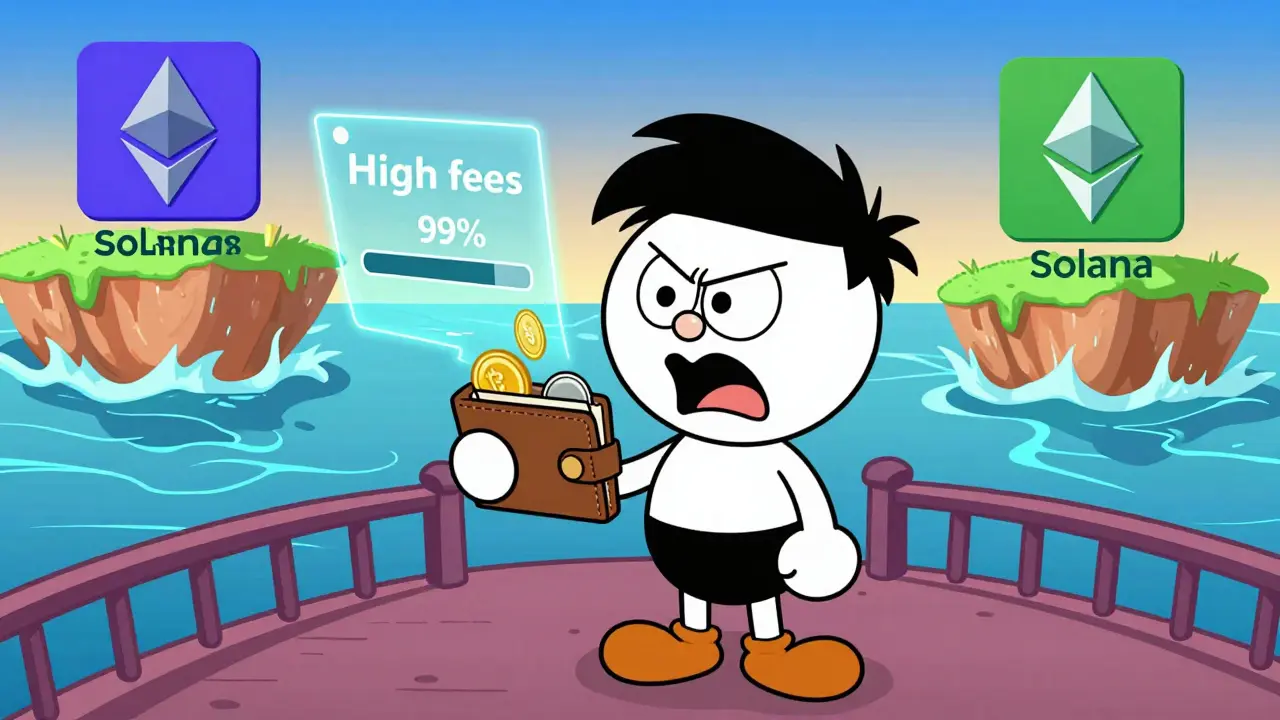
You want to move your assets from Ethereum to Solana. It sounds simple enough. You click a button, wait a few seconds, and boom-your tokens are there. But in reality, that journey is rarely smooth. Sometimes you get hit with a surprise fee that eats up half your profit. Other times, the transaction hangs in limbo for twenty minutes while you wonder if it’s stuck or failed. This friction isn’t just annoying; it can cost you real money.
Understanding bridge fees and transaction times is no longer optional for anyone serious about decentralized finance. These two factors determine whether a cross-chain swap makes economic sense or leaves you poorer than when you started. The landscape has shifted dramatically since 2023, with new protocols offering sub-second finality and others charging dynamic rates based on network congestion. Let’s break down exactly what drives these costs, how long you should expect to wait, and which bridges actually deliver on their promises.
How Bridge Fees Are Calculated
There is no single price tag for moving crypto across chains. Instead, bridge fees are composed of several layers, each adding to the final cost you see in your wallet. When you initiate a transfer, you aren’t just paying the bridge provider. You are also paying the underlying blockchains involved in the process.
The first layer is the network gas fee. This is the cost required by the source blockchain (like Ethereum) to process the initial transaction that locks your assets. If Ethereum is congested, this fee spikes regardless of which bridge you use. The second layer is the bridge service fee, which goes to the protocol operating the bridge. This covers the operational costs of running validators, maintaining liquidity pools, and ensuring security.
Most major bridges charge between 0.05% and 0.3% of the total transfer amount. However, this percentage varies wildly depending on the model the bridge uses. Some platforms, like Stargate Finance, implements a flat fee structure charging approximately 0.06% per transaction, provide predictable pricing. Others use an Automated Market Maker (AMM) model where fees fluctuate based on liquidity depth. If the pool is shallow, the fee rises to discourage large transfers that could cause slippage. If the pool is deep, fees drop, sometimes saving users up to 80% compared to competitors.
Consider this scenario: You are transferring $1,000 worth of USDC. On a fixed-fee bridge like Wormhole, you might pay less than $0.01 in service fees plus the Ethereum gas fee. On a variable AMM bridge during high congestion, that same transfer could incur higher service fees due to low liquidity, making the total cost significantly more expensive despite the lower headline rate. Always check the breakdown before confirming.
Transaction Speeds: From Seconds to Minutes
Speed is often sacrificed for security in the world of cross-chain bridges. The time it takes for your assets to appear in the destination wallet depends heavily on the architecture of the bridge and the finality time of the underlying blockchains.
Let’s look at the extremes. Stargate's light-node model achieves sub-second finality for cross-chain transfers because it relies on a shared liquidity layer and optimistic verification. In contrast, trustless decentralized bridges often require multiple confirmations on both the source and destination chains. For example, Ethereum transactions generally confirm within 5-20 seconds, but achieving full block finality can take around 13 minutes. If you are bridging from Ethereum to Binance Smart Chain (BSC), you have to wait for the Ethereum side to settle before the BSC side can mint the equivalent tokens.
BSC itself is much faster, offering 3-second block finality. However, many bridges require a minimum number of confirmations (often 60) to prevent replay attacks or double-spending. This means even on a fast chain, you might wait five minutes for the bridge to release your funds. Smaller transactions, such as a $10 transfer, can sometimes take longer due to priority batching systems used by exchanges and bridges, potentially delaying processing by 25 minutes or more.
| Bridge Platform | Fee Structure | Estimated Service Fee | Typical Processing Time | Architecture Type |
|---|---|---|---|---|
| Wormhole | Flat Fee | < $0.01 | Minutes (depends on source chain) | Decentralized / General Purpose |
| Stargate Finance | Flat Percentage | ~0.06% | Sub-second to Minutes | Liquidity Network |
| Synapse | Variable AMM | Dynamic (0.05%-0.3%) | Multi-minute routing | Decentralized AMM |
| Symbiosis | Variable AMM | Dynamic | Multi-minute routing | Aggregator/Router |
| Binance Bridge | Fixed/Low | Low (varies by asset) | Faster (Centralized) | Centralized / Trusted |
Centralized vs. Decentralized Bridges: The Trade-Off
The biggest decision you face when choosing a bridge is whether to trust a centralized entity or rely on code. This choice directly impacts both your fees and your waiting time.
Centralized bridgesoperate under centralized control requiring user trust in the managing organization, such as the Binance Bridge, offer speed and low costs. They act as intermediaries that hold your assets temporarily. Because they don’t need to wait for complex cryptographic proofs or multi-signature validator consensus across different chains, they can process transactions quickly. However, you are taking on counterparty risk. If the company holding your funds gets hacked, goes bankrupt, or decides to freeze withdrawals, your assets are gone.
Decentralized bridgeseliminate single points of authority by relying entirely on smart contracts for operational management remove this risk. You maintain custody of your funds throughout the process via locking and minting mechanisms. When you send ETH to a decentralized bridge, it is locked in a vault contract on Ethereum. Validators verify this lock, and then an equivalent amount is minted on the destination chain. This process is secure but computationally expensive. It requires more gas, more validation steps, and often results in higher fees and longer wait times compared to centralized options.
In 2026, the trend is shifting toward hybrid models and improved decentralized efficiency. Protocols are finding ways to reduce the computational overhead of trustless bridges, narrowing the gap in speed and cost without sacrificing security.

Factors That Spike Your Costs
Even if you choose the cheapest bridge, external factors can ruin your economics. Here are the three main culprits:
- Network Congestion: Ethereum is notorious for this. During periods of high activity-such as when a popular NFT drops or a major DeFi protocol launches-gas prices skyrocket. Since bridge transactions must be recorded on the source chain, you are at the mercy of Ethereum’s base fee. Always check a gas tracker before bridging from high-value chains.
- Slippage Tolerance: Slippage is the difference between the expected price of your trade and the executed price. In bridge terms, if you set your slippage tolerance too wide (e.g., 5%), the bridge might execute the swap at a worse rate if liquidity is thin. Leading platforms like Symbiosis allow you to adjust slippage settings. Tighter slippage protects your value but increases the chance of the transaction failing if conditions change slightly.
- Asset Liquidity Depth: If you are trying to bridge a niche token that has very little liquidity on the destination chain, the fee will be higher. Bridges need to have the target asset available to mint or swap instantly. Low liquidity means the bridge has to hunt for the best price across multiple sources, adding time and cost.
Optimizing Your Cross-Chain Strategy
To minimize fees and wait times, you need to be strategic. Don’t just pick the first bridge you see. Use aggregators. Platforms like Synapse and Symbiosis act as routers, scanning multiple liquidity sources to find the most efficient path. They might split your transaction, sending part through one bridge and part through another to optimize for speed and cost.
Timing matters. If you are not in a rush, avoid bridging during peak hours (typically weekday afternoons in UTC). Gas fees on Ethereum are often lower during weekends and early mornings. For small amounts, consider using Layer 2 solutions like Arbitrum or Optimism as stepping stones. Bridging from Ethereum Mainnet to Arbitrum is cheap and fast. Then, from Arbitrum to your final destination might be cheaper than going directly from Mainnet.
Finally, always read the fine print regarding token standards. Ensure you are bridging the correct version of a token. Bridging ERC-20 USDC to a chain that only supports SPL USDC requires a conversion step that some bridges handle automatically, while others may fail the transaction entirely. Verify the destination address format and the supported networks before initiating any transfer.
What is the average fee for a crypto bridge?
Most decentralized bridges charge between 0.05% and 0.3% of the transaction value as a service fee. However, you must also pay the network gas fee of the source blockchain. For example, bridging from Ethereum can cost significantly more in gas than the bridge fee itself, especially during network congestion. Centralized bridges may offer lower overall costs but carry higher security risks.
How long does a cross-chain bridge transaction take?
Processing times vary widely. Fast bridges like Stargate can achieve sub-second finality for certain assets. Most decentralized bridges take between 5 to 20 minutes, depending on the confirmation requirements of the source and destination chains. Transfers involving Ethereum Mainnet often take longer due to its ~13-minute block finality time.
Are centralized bridges safer than decentralized ones?
Not necessarily. Centralized bridges are faster and cheaper but require you to trust the operator with your funds. If the operator is hacked or acts maliciously, you lose your assets. Decentralized bridges rely on smart contracts and cryptography, eliminating counterparty risk. While they are slower and more expensive, they are generally considered safer for large amounts because no single entity controls your funds.
Why do bridge fees change so frequently?
Fees fluctuate due to network congestion and liquidity conditions. On Ethereum, gas prices rise when many users are transacting simultaneously. Additionally, bridges using Automated Market Maker (AMM) models adjust fees based on the depth of their liquidity pools. If a pool is low on funds, fees increase to protect against slippage and encourage liquidity providers to replenish the pool.
Can I reduce my bridge fees?
Yes. You can reduce fees by avoiding peak network hours, using Layer 2 rollups as intermediate steps, and choosing bridges with deep liquidity for your specific asset pair. Using aggregator bridges like Synapse or Symbiosis can also help find the most cost-effective route by comparing multiple providers in real-time.

Terry Hyland
June 18, 2026 AT 09:53the whole crypto thing is a scam designed to steal your money and the government will shut it all down soon because they are watching you right now through your phone camera
i know this for a fact because i read it on a blog that was deleted by the censors so dont trust any of these bridges they are just fronts for the deep state to track where your dirty money goes
Monica Pathammavong
June 19, 2026 AT 14:05you guys are missing the point completly its not about fees its about control
if u use stargate ur giving up privacy if u use wormhole ur trusting code that might have backdoors planted by the feds
also why r u bridging at all just hodl eth and suffer like a real degen lol
btw i saw ur wallet address in the post nice try hiding it with pseudonimity protocols they cant hide from me i can trace every tx on chain its easy actually if u know how to look at the graph data which most of u dont
Tim Lefebvre
June 20, 2026 AT 11:46hey folks just wanted to chime in here cause i been doing this for years and its true what the article says about gas fees
when eth is busy its crazy expensive so i always wait till night time or weekends to bridge stuff
also using l2s like arbitrum first helps a lot i move to arb then to solana and saves me so much cash compared to going direct
hope this helps someone out there trying to save some bucks on their transfers
ravi mahla
June 21, 2026 AT 01:00oh wow another guide on bridges how original
do you people really need an article to tell you that moving money costs money?
i bridge thousands every day and i never check the fee breakdown i just click and pray its fast enough
maybe if you were smarter you wouldnt lose half your profit to slippage but hey who am i to judge your financial incompetence
Mark Brunschwiler
June 22, 2026 AT 05:15i feel so sad reading this because everyone is so focused on the numbers and not the feeling of the transaction
when i bridge my tokens i am not just moving assets i am moving my soul across the blockchain void
why do we rush? why do we care about seconds? the universe operates on cycles not block times
my heart hurts when i see people complaining about fees instead of embracing the chaos of the decentralized dream
we are all connected even if the bridge takes twenty minutes to confirm
Sonya O'Brien
June 23, 2026 AT 23:14i completely agree with everything that has been said here and i think it is really important that we all come together as a community to understand these complex mechanisms because if we do not educate ourselves then we will continue to make mistakes that cost us valuable resources and time which is something that none of us can afford to waste in today's fast-paced digital economy where information is power and ignorance is truly blissful but also dangerous
so let us keep talking about this and sharing our experiences so that we can learn from each other and grow together in our understanding of cross-chain technologies
Amit Thakur
June 25, 2026 AT 06:12LISTEN UP YOU NOOBS
if you are not using limit orders on synapse you are getting rekt by the market makers
the spread on these amm pools is wide open for anyone who knows how to front run the liquidity updates
stop whining about fees and start learning about order book dynamics and latency arbitrage
weak hands cry about gas strong hands build bots to exploit the inefficiencies
get good or get left behind in the dust of the memecoin rally
Eric Scheinberg
June 26, 2026 AT 14:02It is imperative that one considers the security implications of centralized versus decentralized architectures before engaging in any cross-chain activity
The counterparty risk associated with entities such as Binance Bridge cannot be overstated given the historical precedent of custodial failures
Therefore I recommend utilizing only audited smart contract based solutions despite the increased temporal latency involved in the verification process
Security must always take precedence over convenience in the realm of decentralized finance
Kwon Bill
June 26, 2026 AT 15:53In the context of global financial integration, the interoperability layer serves as a critical nexus for capital flow efficiency
We must recognize that the friction described herein is merely a transitional phase in the evolution of sovereign digital asset management
As regulatory frameworks mature, we will see a standardization of bridge protocols that reduces both latency and cost structures significantly
This is not just about technology but about the cultural shift towards borderless value transfer which is inevitable
Josh Dodson
June 28, 2026 AT 05:07good luck everyone
just remeber to double check ur network before sending
i lost once cause i picked wrong chain lol
stay safe and happy bridging
u got this
Suman Patil
June 29, 2026 AT 09:33let us all come together and support each other in this journey of decentralization
i know it can be frustrating when fees are high but remember we are building something beautiful here
if anyone needs help figuring out which bridge to use for their specific token pair just ask me i am happy to share my knowledge
we are stronger when we share information and help each other avoid scams and bad deals
keep the vibe positive and let us grow our portfolios together in harmony