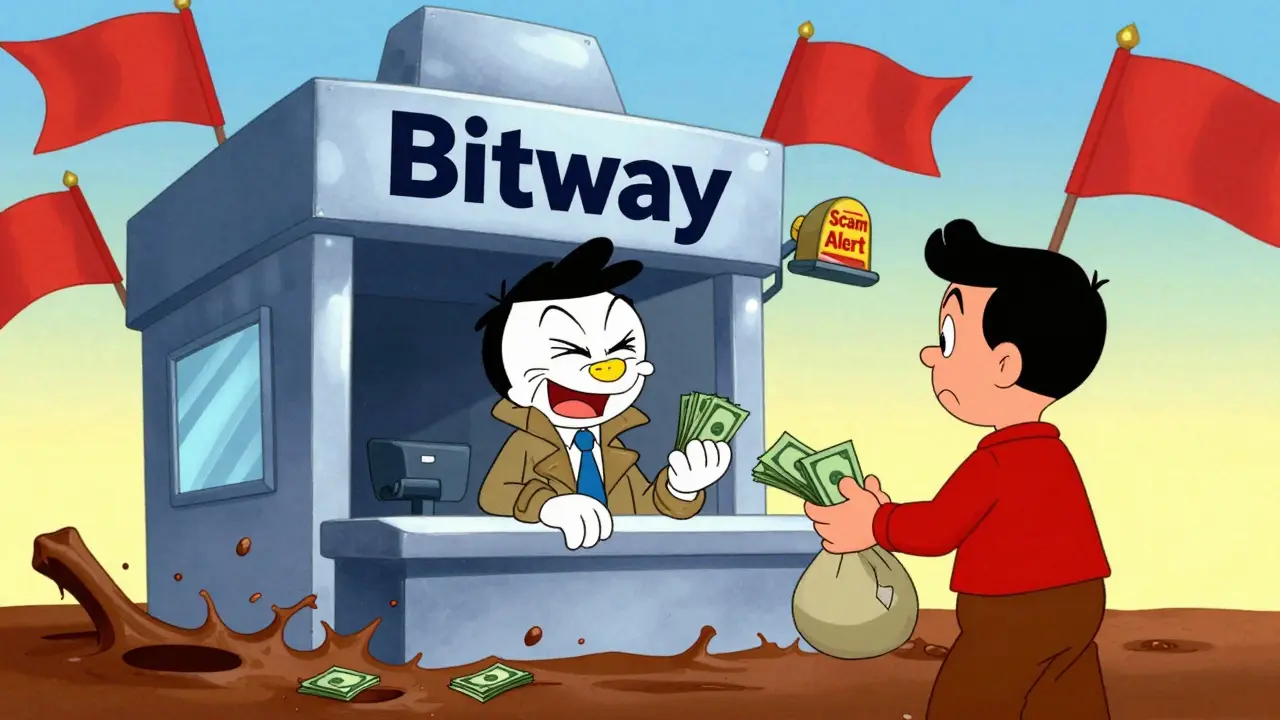
You just found a new platform promising high returns on digital currency derivatives. The name sounds professional. The website looks sleek. But before you deposit even a single dollar into Bitway Exchange, a cryptocurrency trading platform that has raised significant red flags regarding its legitimacy and operational transparency, you need to know the truth. In the world of crypto, trust is not given; it is earned through data, regulation, and community feedback. Unfortunately, Bitway Exchange fails almost every test for legitimacy.
If you are looking for a place to trade Bitcoin, Ethereum, or other altcoins in 2026, this review will save you from a potential disaster. We will break down the technical facts, the security warnings, and why major industry experts completely ignore this platform. You deserve your money to be safe, and right now, Bitway does not offer that guarantee.
The Red Flags That Should Stop You Cold
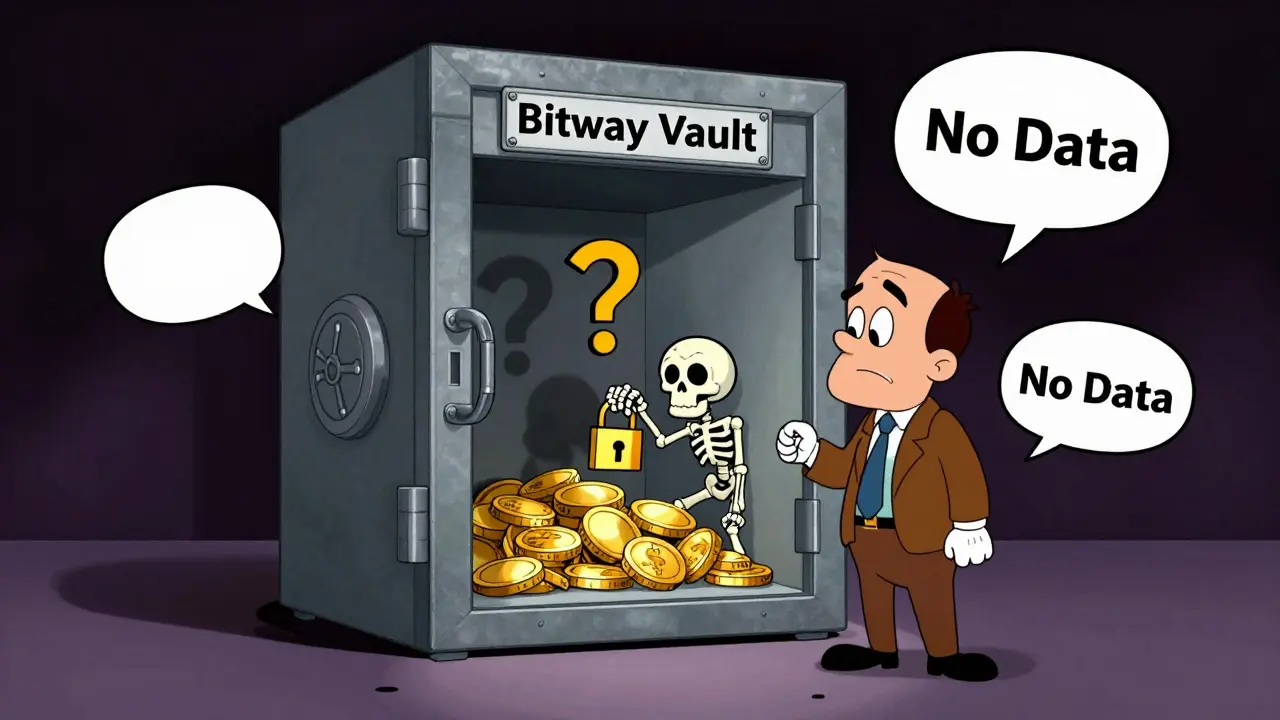
When evaluating any financial platform, we look at verifiable data. For Bitway, that data is missing. In fact, the absence of information is the biggest clue we have. CoinMarketCap, one of the most trusted sources for crypto market data, lists Bitway as an "Untracked Listing." What does that mean? It means there is no verifiable trading volume. No liquidity scores. No market pairs confirmed by independent auditors.
Let’s look at the domain itself. The website associated with the exchange, bitway.today, received an "extremely low" trust score from ScamAdviser in late 2025. This isn’t a minor warning. It is a direct alert that the site exhibits patterns commonly associated with scams. Legitimate exchanges like Coinbase or Kraken have high trust scores because they have been around for years, have physical offices, and publish regular proof-of-reserves audits. Bitway has none of these.
- No Verifiable Volume: All trading metrics show "No Data."
- Low Trust Score: Security scanners flag the domain as high-risk.
- Missing Regulatory Info: No license numbers from the SEC, FCA, or ASIC.
If a bank told you they couldn’t tell you how much money was in their vaults, would you deposit your savings? Probably not. Yet, many users overlook these signs when chasing the next big token opportunity. Don’t be one of them.
Who Is Behind Bitway Exchange?
Transparency is the backbone of finance. A legitimate exchange tells you who owns it, where it is registered, and who runs it. Bitway Exchange provides virtually nothing. There is no public record of a founding team, no LinkedIn profiles for executives, and no corporate registration documents available for public scrutiny.
This anonymity is standard practice for fraudulent operations. Scammers want to disappear once they have collected deposits. They use shell companies and obscure domains to hide their identities. Contrast this with Uphold or Gemini, both of which are publicly traded or heavily regulated entities with clear leadership teams. When you trade on those platforms, you know exactly who holds your assets. With Bitway, you are handing your funds into a black box.
The platform claims to specialize in "innovative digital currency derivatives trading." However, derivatives trading requires complex infrastructure, deep liquidity, and strict risk management protocols. Without a known operator or technical documentation, these claims are empty marketing words designed to sound impressive to beginners.
Security Risks: Where Does Your Money Go?
Security is not just about two-factor authentication (2FA). It is about custody. Who actually holds your private keys? Are your funds insured? Can you withdraw your money if you want to?
For Bitway, the answer to all these questions is unknown. There is no evidence of cold storage solutions, multi-signature wallets, or insurance policies. More importantly, there are no successful withdrawal reports from real users. In the crypto space, the ability to withdraw is the ultimate test of an exchange. If you can buy but cannot sell, you don’t own the asset; you just have a number on a screen controlled by someone else.
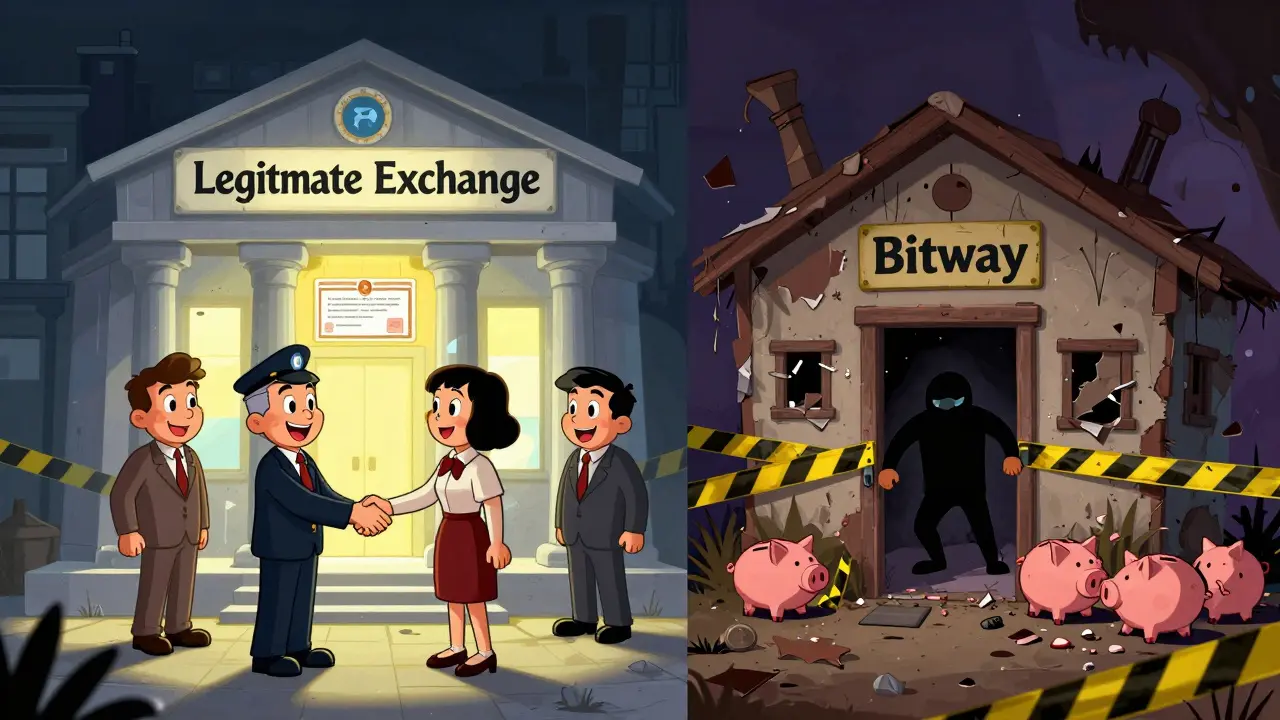
| Feature | Bitway Exchange | Legitimate Exchange (e.g., Uphold) |
|---|---|---|
| Proof of Reserves | Unavailable / None | Published regularly (e.g., every 30 seconds updates) |
| Regulatory License | None visible | Registered with global financial authorities |
| User Reviews | Non-existent | Thousands on Trustpilot, Reddit, etc. |
| Trust Score | Extremely Low | High / Verified |
| Withdrawal History | No verified data | Consistent user success stories |
The lack of security documentation is not an oversight; it is a feature of the scam model. By keeping things vague, operators can delay withdrawals indefinitely, claiming "technical issues" while they drain the pool of deposited funds.
The BITWAY (WAY) Token Connection
You might see references to a token called BITWAY (WAY). Some guides suggest this token gives you "freedom to trade on your terms." This is a classic tactic used in pump-and-dump schemes or rug pulls. The token is often created solely to inflate the perceived value of the exchange, encouraging users to buy the token to get "discounts" or "access" to the platform.
However, CoinMarketCap shows "No Data" for BITWAY’s market pairs. This means the token has no legitimate liquidity. It cannot be easily sold on other major exchanges. If you buy the WAY token, you are likely buying an asset that is worthless outside of this specific, suspicious ecosystem. This creates a closed loop where your only option is to stay within the risky environment of Bitway.
Real utility tokens are listed on dozens of reputable exchanges. They have transparent allocation models and active development communities. The WAY token lacks all of these attributes. It serves primarily as a lure to keep victims engaged with the platform.
Why Experts Ignore Bitway
In 2025 and 2026, major financial publications and crypto analysts reviewed dozens of platforms. NerdWallet tested over a dozen apps for their "Best Crypto Exchanges" guide. Ryan Scribner, a prominent YouTube analyst, reviewed the top seven exchanges. Guess what? Bitway was not on any of these lists.
This omission is telling. Professional reviewers do not accidentally miss large platforms. They exclude them because they fail basic due diligence checks. If a platform is not mentioned by experts, it is usually because it poses too high a risk to recommend. Relying on anonymous social media ads instead of expert analysis is a dangerous strategy for your portfolio.
Cryptolegal.uk, a database dedicated to tracking fraudulent crypto companies, highlights similar patterns to those seen with Bitway. While Bitway may not always be explicitly named in every update, its characteristics-untracked volume, low trust scores, and anonymous ownership-fit the profile of the scams they document. These databases exist to protect users from losing life savings to fake platforms.
Safer Alternatives for Trading in 2026
Avoiding scams is important, but finding a good exchange is equally critical. You need a platform that is secure, regulated, and user-friendly. Here are three alternatives that stand up to scrutiny:
- Uphold: Rated highly for its "anything-to-anything" trading capability. It supports over 300 cryptocurrencies and operates in 140 countries. It offers educational support for beginners and maintains transparent reserve data.
- Gemini: Known for its strong regulatory compliance and security focus. Founded by the Winklevoss twins, it has a clean reputation and clear fee structures ranging from 0.03% to 3.49%.
- Coinbase: As a publicly traded company, Coinbase offers a level of accountability that private, opaque exchanges cannot match. It is ideal for beginners who want a simple, secure interface.
These platforms invest millions in security, customer support, and legal compliance. They provide phone support, detailed FAQs, and responsive help centers. When you encounter an issue, there is a human being on the other end of the line ready to help. With Bitway, you would be shouting into the void.
How to Spot Fake Exchanges Yourself
Education is your best defense. Before signing up for any new crypto service, run through this quick checklist:
- Check the Domain Age: Use tools like Whois to see when the website was registered. New domains (less than a year old) are higher risk.
- Verify Social Proof: Search for the exchange on Reddit and Twitter. Real users complain about fees or glitches. If there are zero mentions, or only bot-like praise, walk away.
- Look for Regulation: Check the footer of the website for license numbers. Verify these numbers on the regulator’s official website (e.g., FCA Register in the UK).
- Test Withdrawals: Never deposit more than you can afford to lose initially. Try to withdraw a small amount immediately. If it gets stuck, delete your account.
- Use Trust Tools: Run the URL through ScamAdviser or Trustpilot. An "extremely low" score is a hard stop.
By following these steps, you can filter out 99% of fraudulent operations. The remaining 1% are the established, reputable platforms that have survived market cycles and regulatory scrutiny.
Conclusion: Protect Your Capital
The cryptocurrency market is volatile enough without adding the risk of fraud. Bitway Exchange presents too many unanswered questions and too many warning signs to be considered a viable option for traders in 2026. The lack of volume, the low trust score, and the absence of expert endorsements create a perfect storm for financial loss.
Your capital is hard-earned. Do not risk it on a platform that refuses to show its hand. Stick to exchanges that are transparent, regulated, and widely reviewed. The peace of mind you get from using a legitimate service is worth far more than any promised "high returns" from a shadowy operation.
Is Bitway Exchange a scam?
While it is difficult to definitively label any platform a "scam" without legal judgment, Bitway Exchange exhibits all the major warning signs of a fraudulent operation. These include an extremely low trust score from ScamAdviser, untracked trading volume on CoinMarketCap, and a complete lack of regulatory licensing or user reviews. Most experts advise avoiding it entirely.
Can I withdraw money from Bitway Exchange?
There is no verifiable evidence that users can successfully withdraw funds from Bitway Exchange. The lack of user testimonials and the platform's poor security rating suggest that withdrawals may be delayed, blocked, or impossible. This is a common tactic used by fake exchanges to trap user funds.
What is the BITWAY (WAY) token?
The BITWAY (WAY) token is associated with the Bitway Exchange platform. However, it has no verifiable market data or liquidity on major trackers like CoinMarketCap. It is likely a utility token created solely to incentivize deposits into the exchange, carrying high risk and low actual value.
Why is Bitway not listed on major exchange rankings?
Major rankings from sources like NerdWallet, CoinGecko, and CoinMarketCap require verifiable data such as trading volume, security audits, and regulatory compliance. Bitway fails to meet these criteria, resulting in an "Untracked Listing" status and exclusion from recommended lists.
What are safer alternatives to Bitway Exchange?
Safer alternatives include Uphold, Gemini, and Coinbase. These platforms are regulated, have high trust scores, offer transparent fee structures, and have thousands of positive user reviews. They also provide robust customer support and insurance for stored assets.