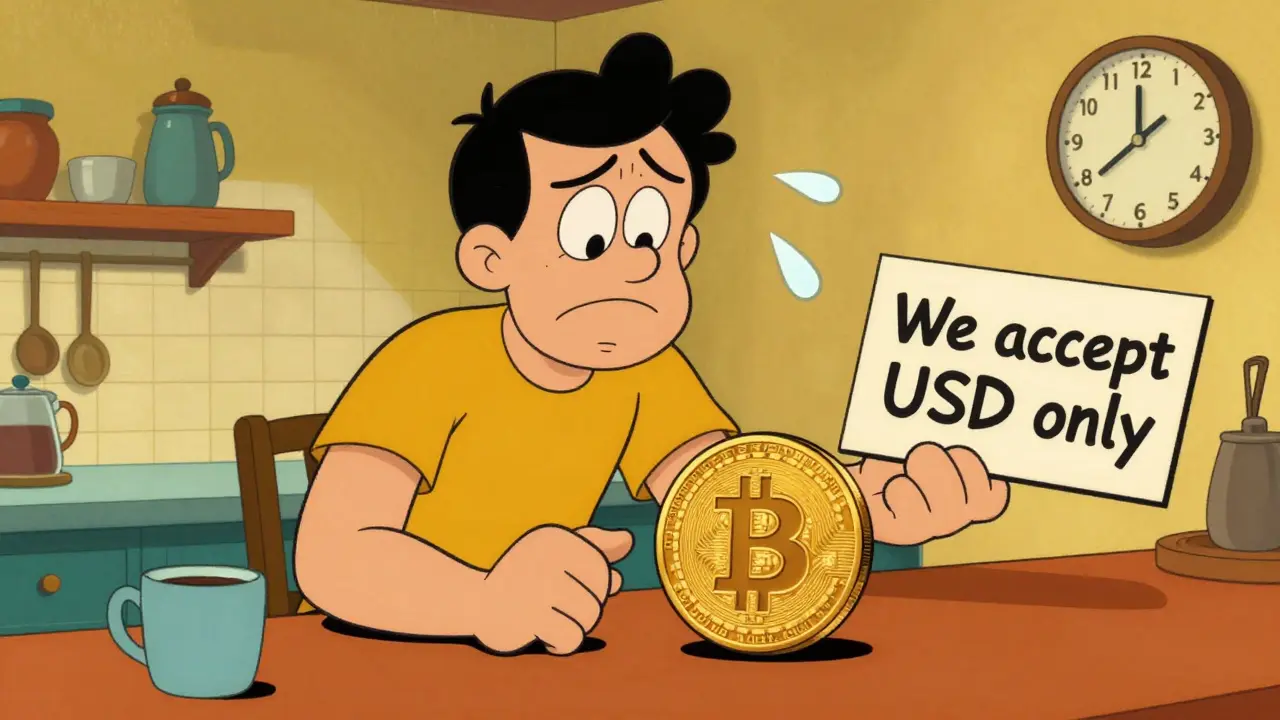
Bitcoin was meant to be digital cash. You send it to someone, they receive it, no bank in between. Simple. But if you’ve ever tried using Bitcoin to buy coffee, pay rent, or order groceries online, you know it doesn’t feel like cash at all. It’s slow. It’s expensive. And sometimes, it just doesn’t work when you need it to.
Bitcoin Was Built to Be Money - But It Became Something Else
When Satoshi Nakamoto launched Bitcoin in 2009, the goal was clear: create a peer-to-peer electronic cash system. No government. No middlemen. Just digital money you could send directly to anyone, anywhere. Early adopters used it to buy pizza, books, and even virtual goods in online games. But over time, something shifted.
By 2025, Bitcoin’s price hit over $109,000. That’s not the sign of a currency people use to buy groceries. That’s the sign of an asset people hoard. Most Bitcoin holders aren’t spending it - they’re waiting for it to go higher. In fact, over 70% of all Bitcoin ever mined is sitting untouched in wallets, not moving through the economy. That’s not payment behavior. That’s investment behavior.
Companies like Tesla bought $1.5 billion worth of Bitcoin in 2021 - not to pay employees or suppliers, but as a balance sheet asset. Wall Street followed. In January 2024, the SEC approved spot Bitcoin ETFs, letting regular investors buy Bitcoin through their 401(k)s and brokerage accounts. Suddenly, Bitcoin wasn’t just a tech experiment. It was a financial product. And that changed everything.
Why Bitcoin Is Still Terrible for Everyday Payments
Let’s say you want to pay your electric bill with Bitcoin. Here’s what happens:
- You open your wallet app and enter the recipient’s address.
- You check the current network fee - it’s $8.50 because the mempool is backed up.
- You send the transaction.
- You wait 15 minutes for the first confirmation.
- Then you wait another 45 minutes for it to be fully secure.
Meanwhile, your utility company’s system expects payment in seconds, not hours. They don’t want to wait. They don’t want to risk price swings. They don’t want to deal with irreversible transactions if you send the wrong amount.
Bitcoin’s blockchain can only process about 7 transactions per second. Visa processes over 1,700. That’s not a bug - it’s by design. Bitcoin prioritizes security and decentralization over speed. That’s great if you’re storing wealth. It’s terrible if you’re trying to buy lunch.
And then there’s volatility. If you pay $50 in Bitcoin for a meal today, and the price drops 10% by tomorrow, you just lost $5 on your lunch. If it goes up 15%, the restaurant loses money. No business can run on that kind of uncertainty.
What About the Companies That Claim to Accept Bitcoin?
You’ve seen the headlines: “Starbucks Accepts Bitcoin!” “Amazon to Launch Crypto Payments!” But those stories are misleading.
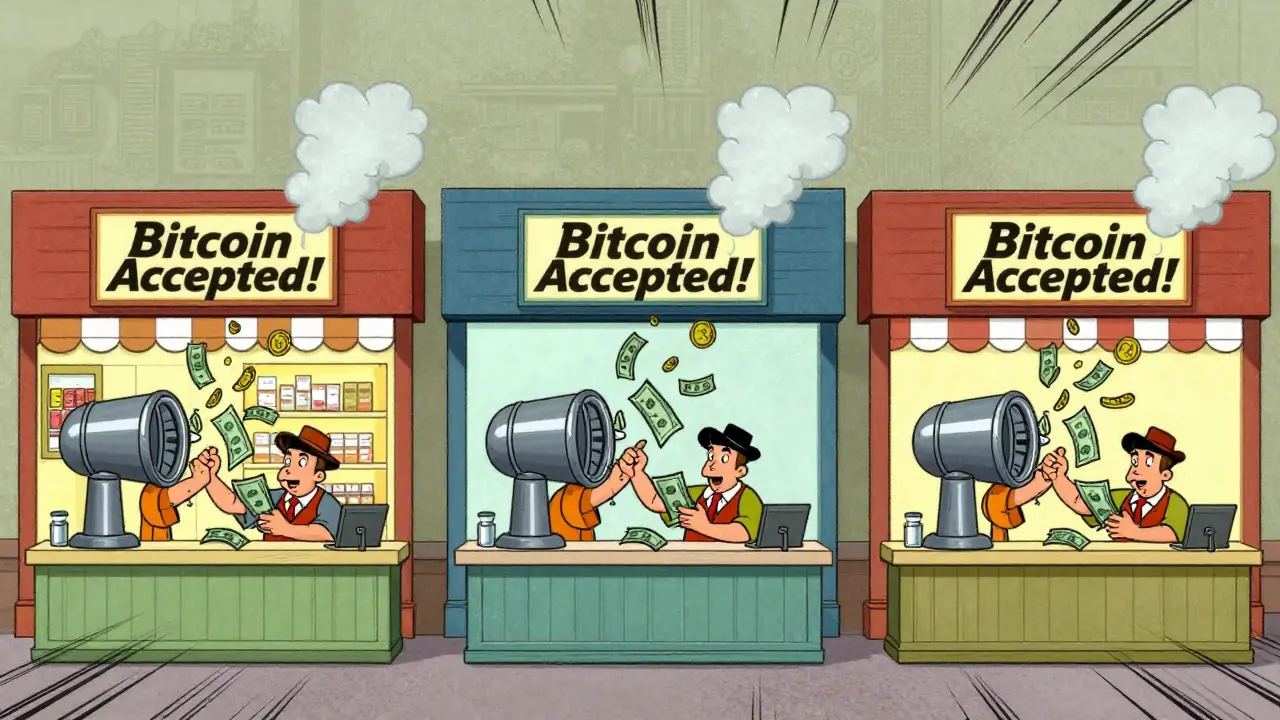
Most companies that say they accept Bitcoin don’t actually hold it. They use third-party processors like BitPay or Coinbase Commerce. These services instantly convert your Bitcoin into dollars and deposit the cash into the merchant’s bank account. The merchant never touches Bitcoin. The customer does - but only because the system hides the real friction behind the scenes.
It’s like using a credit card to buy Bitcoin. The merchant gets dollars. You get a crypto transaction. No one benefits from the “Bitcoin payment.” It’s just a middleman trick.
There are exceptions. A few small online stores, especially in places like El Salvador - where Bitcoin is legal tender - do accept it directly. But even there, most people use the government’s Chivo wallet, which automatically converts Bitcoin to dollars. The same pattern repeats: Bitcoin enters, dollars exit.
The Real Innovation Isn’t Bitcoin - It’s Blockchain Infrastructure
While Bitcoin struggles as a payment tool, the underlying technology - blockchain - is quietly transforming finance. Mastercard, J.P. Morgan, and Standard Chartered are building what they call the Multi-Token Network. This isn’t Bitcoin. It’s a private, permissioned blockchain that lets banks move tokenized dollars, euros, and other assets in seconds.
These systems don’t need thousands of miners verifying every transaction. They use trusted nodes. They settle in under a second. They’re secure. They’re efficient. And they’re already live.
Even central banks are getting in. The European Central Bank is launching its digital euro by 2025. China’s digital yuan is fully tested. These aren’t decentralized. They’re controlled. But they solve the real problems Bitcoin can’t: speed, scalability, and stability.
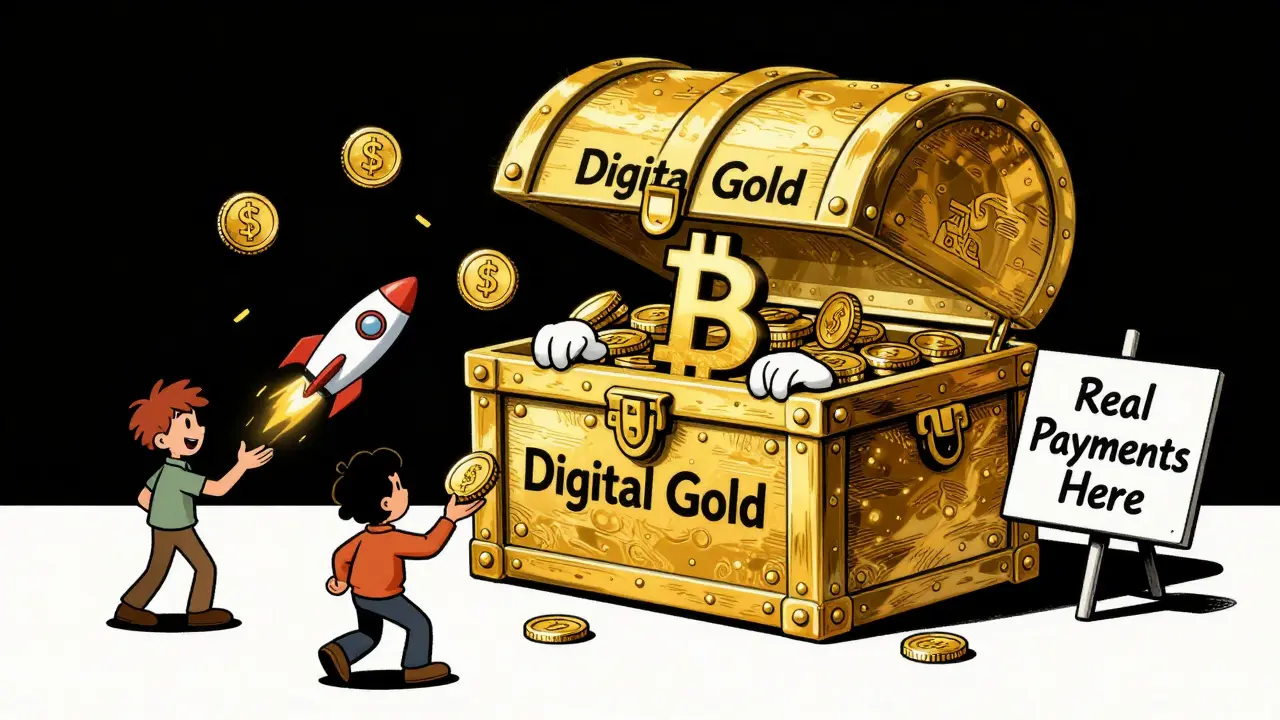
Bitcoin’s value isn’t in payments. It’s in being the first and most trusted decentralized asset. It’s digital gold. Not digital cash.
So Can Bitcoin Ever Be a Real Payment Currency?
Technically? Maybe. But practically? Unlikely.
Layer 2 solutions like the Lightning Network promise faster, cheaper Bitcoin payments. You can send $0.10 in seconds for a fraction of a cent. And yes, some people use it for tipping, micropayments, or cross-border remittances. But adoption is still tiny. Less than 5% of all Bitcoin transactions happen on Lightning. Most users still rely on the main chain - the slow, expensive one.
And even if Lightning took off tomorrow, Bitcoin’s volatility would still kill it as a currency. No one wants to be paid in something that could lose 20% of its value overnight. Businesses need predictable costs. Employees need stable paychecks. Governments need tax revenue in a known unit.
Bitcoin was never designed to be a stable currency. It was designed to be a trustless, censorship-resistant store of value. And that’s exactly what it is.
What You Should Actually Use Bitcoin For
If you’re thinking of Bitcoin as money, you’re using it wrong.
Here’s what it’s actually good for:
- Long-term savings in countries with unstable currencies (like Argentina or Nigeria).
- Hedging against inflation - especially when traditional assets are overvalued.
- Transferring wealth across borders without relying on banks or remittance services.
- Investing in a scarce digital asset with a fixed supply of 21 million coins.
Use it like you’d use gold - not like you’d use your debit card.
For everyday spending? Stick with USD, Apple Pay, or even stablecoins like USDC. They’re faster, cheaper, and don’t swing 30% in a week.
The Future of Digital Payments Isn’t Bitcoin - It’s a Mix
The future isn’t Bitcoin replacing banks. It’s banks using blockchain to make payments better. It’s stablecoins settling trades in seconds. It’s central bank digital currencies replacing cash. It’s crypto exchanges offering instant USD conversions so you can spend your Bitcoin without the risk.
Bitcoin’s role? It’s the anchor. The original. The most trusted name in digital assets. It’s the reason people believe in blockchain at all.
But it’s not the payment tool of tomorrow. It’s the foundation of it.
Can I use Bitcoin to buy things online today?
Yes, but only through third-party services like BitPay or Coinbase Commerce. These services instantly convert your Bitcoin into dollars so the merchant never holds crypto. You’re still paying with fiat - just using Bitcoin as the middle step. Very few businesses accept Bitcoin directly and hold it on their books.
Why is Bitcoin so slow for payments?
Bitcoin’s blockchain was built for security, not speed. It can only process about 7 transactions per second, compared to Visa’s 1,700+. Every transaction needs to be verified by thousands of computers worldwide, which takes time. High network demand also pushes fees up and confirmation times longer - sometimes hours. That’s not how payments work in the real world.
Is Bitcoin more secure than credit cards?
It depends. Bitcoin transactions are irreversible and don’t expose your personal info, which is good. But if you lose your private key or send Bitcoin to the wrong address, there’s no way to get it back. Credit cards offer fraud protection, chargebacks, and customer support. Bitcoin gives you control - but no safety net.
Why do people say Bitcoin is digital gold?
Because like gold, Bitcoin is scarce (only 21 million will ever exist), hard to produce, and doesn’t rely on any government. Its value comes from belief and demand, not from being used to buy coffee. Gold isn’t used in daily transactions either - it’s stored and traded as a long-term asset. Bitcoin serves the same role now.
Should I use Bitcoin to protect against inflation?
Some people do, especially in countries with high inflation or unstable banks. Bitcoin’s fixed supply makes it resistant to government money printing. But it’s still extremely volatile. Its price can swing 30% in a week. It’s not a guaranteed hedge - more like a high-risk bet. Diversify with other assets before putting serious money into Bitcoin.
What’s the difference between Bitcoin and a central bank digital currency (CBDC)?
Bitcoin is decentralized - no one controls it. A CBDC like the digital euro or e-yuan is issued and managed by a government. CBDCs are faster, more efficient, and stable in value because they’re tied to the national currency. Bitcoin is about freedom from control. CBDCs are about control and efficiency. They serve completely different purposes.

Catherine Hays
January 24, 2026 AT 07:08MICHELLE REICHARD
January 24, 2026 AT 12:36Heather Crane
January 24, 2026 AT 15:38Ryan Depew
January 26, 2026 AT 01:14Taylor Mills
January 27, 2026 AT 20:59Nathan Drake
January 29, 2026 AT 02:57Anna Topping
January 30, 2026 AT 05:52Roshmi Chatterjee
February 1, 2026 AT 05:51tim ang
February 2, 2026 AT 10:13Margaret Roberts
February 3, 2026 AT 08:08Mike Stay
February 5, 2026 AT 04:46Tammy Goodwin
February 5, 2026 AT 08:40Jonny Lindva
February 6, 2026 AT 00:09Jeffrey Dufoe
February 7, 2026 AT 00:47katie gibson
February 8, 2026 AT 15:06Deepu Verma
February 8, 2026 AT 15:57Mark Estareja
February 9, 2026 AT 14:02Ashok Sharma
February 10, 2026 AT 01:56