
You’ve probably heard the term "stablecoin" thrown around in every crypto chat. But what if you could hold a dollar-based asset that actually pays you interest, just like a savings account or a Treasury bill, while still letting you use it on-chain? That’s the core promise of Ondo USDY (US Dollar Yield Token). It’s not your typical stablecoin. It’s a yield-bearing token backed by real-world assets, specifically short-term U.S. Treasuries and bank deposits.
If you’re tired of watching your idle USDC or USDT sit there earning zero percent, USDY might be exactly what you’re looking for. But before you buy in, you need to understand how it works, who can actually own it, and where the risks lie. This isn’t just another meme coin; it’s a piece of the Real World Assets (RWA) movement trying to bridge traditional finance and DeFi.
Key Takeaways
- Not a Standard Stablecoin: USDY is a yield-bearing note, meaning its value grows over time as interest accrues, rather than staying fixed at $1.00.
- Real-World Backing: It is collateralized by short-term U.S. Treasuries and high-quality bank deposits, managed by third-party custodians.
- Non-U.S. Focus: Due to regulatory constraints (Regulation S), USDY is primarily available to non-U.S. investors.
- Multi-Chain Access: Available on Ethereum, Solana, Stellar, Sei, and other networks, allowing for broad DeFi integration.
- Liquidity Constraints: While transferable after a lock-up period, redemption to fiat cash requires specific banking setups outside the U.S.
What Exactly Is USDY?
Let’s clear up the confusion right away. Ondo Finance has two main products: ONDO, which is a governance token, and USDY, which is the yield-bearing token we are discussing here. Think of ONDO as voting rights for the protocol, while USDY is an investment product.
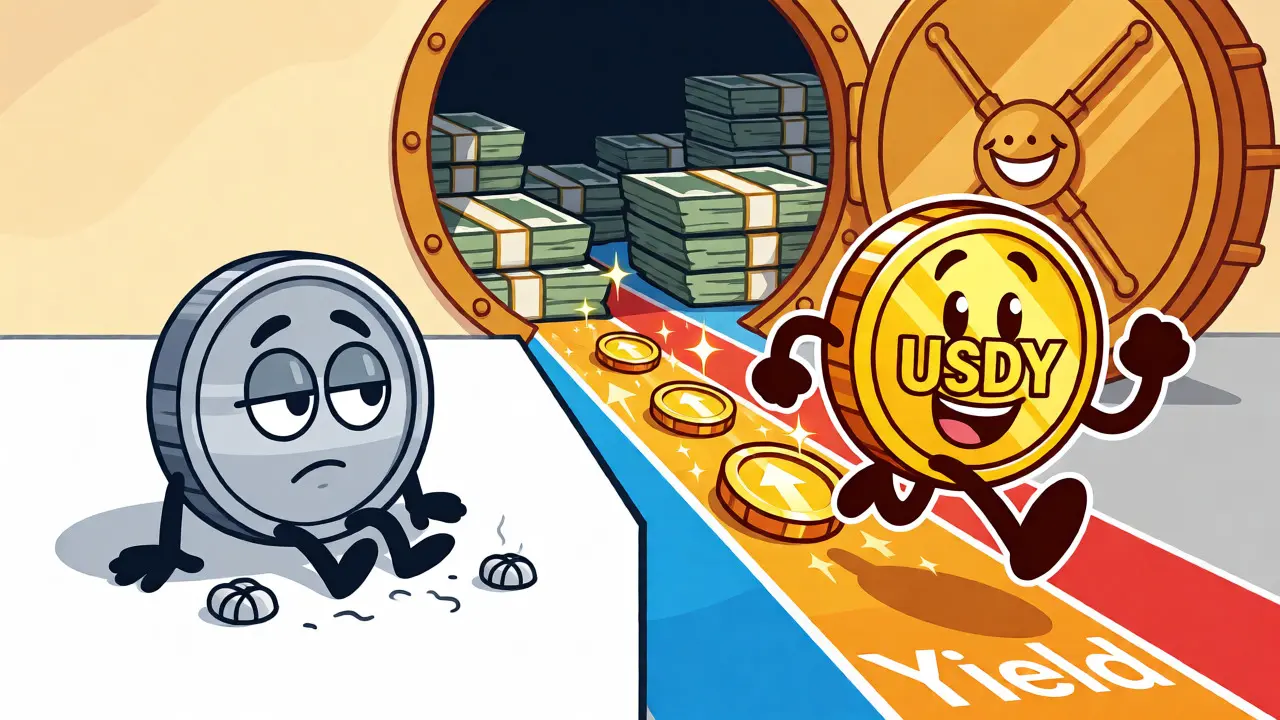
USDY stands for US Dollar Yield Token. It represents a claim on a portfolio of safe, income-generating assets. When you buy USDY, you aren’t just buying a digital representation of a dollar. You are buying a share in a pool of money invested in things like U.S. Treasury bills and bank demand deposits. Because these assets generate interest, USDY generates interest too.
Unlike USDC or USDT, which usually stay pegged to $1.00 and pay nothing to the holder, USDY appreciates in value. If the underlying Treasuries earn 5% annually, the price of one USDY token goes up slightly each day to reflect that earned yield. There is no separate coupon payment hitting your wallet; the growth is baked into the token’s price.
How Does the Yield Work?
The mechanics are surprisingly straightforward once you strip away the jargon. Ondo takes your capital-whether that’s USDC, USDT, or wire transfers-and invests it in short-duration dollar assets. The issuer sets a variable monthly rate based on the performance of these assets.
Here is the breakdown of the financial structure:
- Collateral: Short-term U.S. Treasuries, shares of ETFs like iShares Short Treasury Bond ETF, or bank demand deposits.
- Overcollateralization: Ondo maintains a buffer. For example, they might require $103 in reserves to issue $100 worth of USDY. This protects holders against minor market fluctuations.
- Custody: The assets are held by Ankura Trust Company, a regulated entity that acts as the collateral agent. This adds a layer of institutional trust.
- Accrual Method: As of late 2026, the price oracle updates continuously. Previously, it updated daily. Now, if you check your balance at any second, you see the exact accrued value down to the micro-second.
Historical yields have hovered between 4.29% and 5.30% APY depending on federal interest rates. Since the yield is tied to short-term rates, if the Federal Reserve cuts rates, USDY yields will drop. If rates rise, they go up. It tracks the macro environment closely.
Who Can Buy USDY? (The Regulatory Catch)
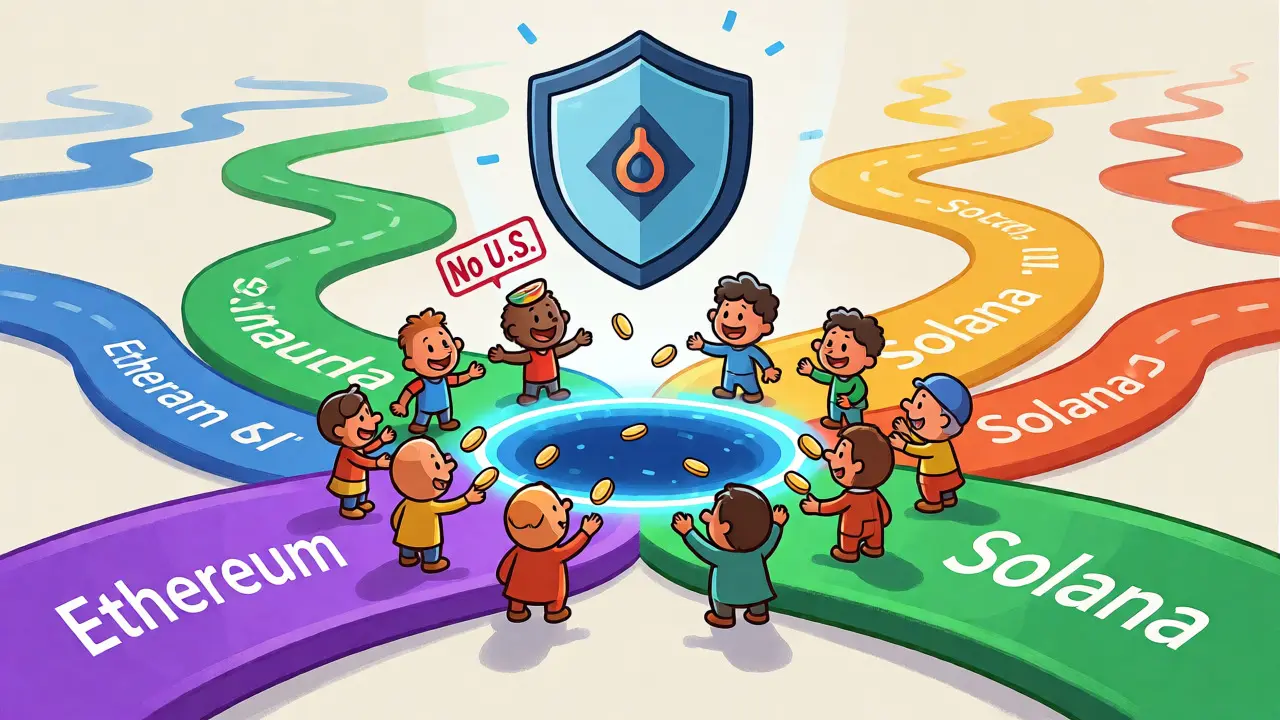
This is the most critical part for many readers. USDY is not offered to everyone. It is issued under Regulation S of the U.S. Securities Act. In plain English, this means it is sold outside the United States. If you live in the U.S., you generally cannot buy USDY directly through standard onboarding unless you qualify for specific exemptions.
For non-U.S. persons, the process involves a Know Your Customer (KYC) check. You provide identity documents, pass sanctions screening, and then receive your tokens. This makes USDY less "permissionless" than something like Bitcoin or even DAI. It is a centralized, compliant product wrapped in blockchain technology.
| Feature | USDY | USDC / USDT | BlackRock BUIDL |
|---|---|---|---|
| Yield | Variable (~4-5%) | 0% | Variable (~4-5%) |
| Minimum Investment | Low (varies by platform) | N/A | High (~$5M) |
| Accessibility | Non-U.S. only | Global | Institutional/Accredited |
| DeFi Usability | High (on supported chains) | Very High | Low (Permissioned) |
| Redemption | Fiat via Wire (Non-U.S.) | Instant Cash Out | Institutional Process |
Technology and Multi-Chain Availability
One of USDY’s strongest features is its reach. It isn’t stuck on one blockchain. Ondo has deployed USDY across major networks including Ethereum, Solana, Stellar, Sei, BNB Chain, Arbitrum, and Tempo. This allows users to choose the network with the lowest fees or best liquidity for their needs.
On Ethereum, the contract address is `0x96F6eF951840721AdBF46Ac996b59E0235CB985C`. On Solana, it uses the SPL token standard. Cross-chain bridges allow you to move USDY between these networks, though there are daily limits (around 450,000 USDY outbound per pathway). Always double-check the contract address on the chain you are using to avoid scams.
Because it exists on multiple chains, USDY integrates with various DeFi protocols. You can potentially use it as collateral on lending platforms like Aave or Morpho Blue, depending on the specific chain and market listings. This composability is what separates it from traditional closed-end funds.
Risks and Limitations
No investment is risk-free, and USDY has specific vulnerabilities you must consider.
1. Liquidity Risk: While the total supply is large (over $2 billion in late 2026), the secondary market depth on decentralized exchanges (DEXs) can be thin. Large sell orders might experience slippage. Redemption back to fiat cash is also slower than swapping USDC for dollars; it often involves wire transfers and processing times.
2. Centralization Risk: Ondo retains control. They can freeze assets in cases of theft or compliance issues. They manage the minting and burning processes. If Ondo faces legal trouble or operational failure, the system halts. It is not fully decentralized.
3. Smart Contract and Oracle Risk: Like all DeFi assets, USDY relies on code. While audited by firms like Spearbit and Cyfrin, bugs are possible. Additionally, the price oracle determines the value. If the oracle fails or lags, it could affect trading prices or liquidation triggers in lending markets.
4. Interest Rate Risk: Your yield is not guaranteed. It depends entirely on U.S. monetary policy. If interest rates crash to near zero, your USDY yield drops accordingly.
Practical Use Cases
So, who should actually use USDY?
- International Crypto Holders: If you hold significant crypto but want to park some profits in a dollar-denominated asset that earns yield without selling into volatile markets, USDY is ideal.
- DeFi Users Seeking Safe Collateral: Instead of borrowing against ETH or BTC (which are volatile), you can borrow against USDY. Since USDY grows slowly and predictably, it is less likely to trigger liquidations during normal market noise compared to highly volatile assets.
- Treasury Yield Seekers: If you want exposure to U.S. debt markets but don’t have access to traditional brokerage accounts or find them cumbersome, USDY offers a frictionless on-chain alternative.
Next Steps and Troubleshooting
If you decide to proceed, follow this checklist:
- Verify Eligibility: Confirm you are not a U.S. person or that you meet the exemption criteria.
- Choose Your Network: Decide whether you want Ethereum (high security, higher gas) or Solana/Stellar (low cost, fast).
- Check Current APY: Visit the official Ondo website for the live rate. Do not rely on old articles.
- Understand Lock-ups: Be aware that newly minted tokens may have a short holding period (often ~40 days) before they become freely transferable on secondary markets.
- Plan Exit Strategy: Know how you will redeem. Will you swap on a DEX or request a fiat wire? Have a non-U.S. bank account ready if you choose the latter.
Is USDY a stablecoin?
Technically, no. While it is dollar-denominated, it does not maintain a fixed $1.00 peg like USDC or USDT. Instead, its price increases continuously as yield accrues. There is a variant called rUSDY that rebases to keep the nominal price at $1.00, but standard USDY appreciates.
Can U.S. residents buy USDY?
Generally, no. USDY is issued under Regulation S, which restricts sales to non-U.S. persons. U.S. residents typically look at OUSG (another Ondo product) or other qualified investor products, but standard USDY access is blocked for most Americans due to SEC regulations.
How do I redeem USDY for cash?
You can redeem USDY for fiat currency via wire transfer. However, this usually requires a non-U.S. bank account. Alternatively, you can swap USDY for other cryptocurrencies like USDC on decentralized exchanges, effectively converting to a more liquid stablecoin before cashing out.
Is USDY insured like a bank deposit?
No. USDY is not FDIC-insured. It is backed by assets held in custody, but if the issuer or custodian fails, or if the underlying assets lose value significantly, you could face losses. It carries credit and operational risks similar to a money market fund.
Which blockchains support USDY?
As of late 2026, USDY is available on Ethereum, Solana, Stellar, Sei, BNB Chain, Arbitrum, and Tempo. Support may vary by region and specific exchange integrations, so always verify availability on your preferred platform.