Think swapping Bitcoin for Ethereum is free? Think again. In the UK, that swap is a taxable event. If you missed this detail in previous years, you might have been lucky. But with HMRC tightening its grip and new reporting rules kicking in, luck won't save your wallet in 2026. The landscape has shifted dramatically since the Autumn Budget of late 2024, making it crucial to understand exactly how HMRC treats your digital assets.
The Big Shift: Why 2026 Is Different
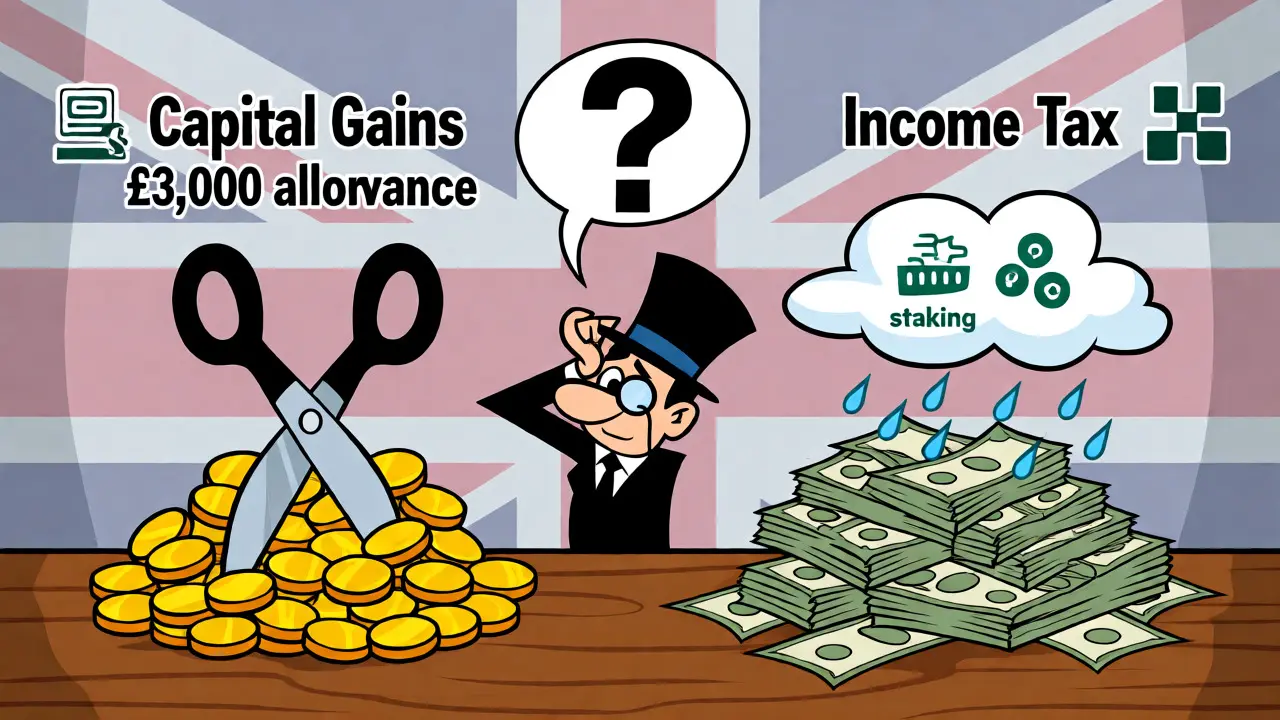
If you thought crypto taxes were a distant worry, wake up. The rules changed significantly on October 30, 2024. The government slashed the Capital Gains Tax (CGT) annual exemption from £6,000 down to just £3,000. That’s right-your tax-free headroom vanished by half overnight. Simultaneously, the rates jumped. Basic-rate taxpayers now pay 18% on gains, while higher-rate payers face 24%. This isn't a minor tweak; it’s a fundamental change in how much profit you get to keep.
Why does this matter? Because more investors are falling into the taxable bracket. Previously, small traders could hide under the radar. Now, even modest profits trigger a liability. HMRC Senior Tax Advisor James Maclennan warned that these changes could double the tax bill for many average investors. It’s no longer about whether you owe tax; it’s about how quickly you can calculate it before the January 31 deadline.
Capital Gains vs. Income: Know Your Category
Not all crypto activity hits your tax return the same way. You need to distinguish between two main buckets: Capital Gains and Income. Confusing them is the fastest way to overpay or get audited.
Capital Gains Tax applies when you 'dispose' of an asset. A disposal isn’t just selling for cash. It includes:
- Selling crypto for GBP, USD, or EUR.
- Swapping one cryptocurrency for another (e.g., BTC to ETH).
- Using crypto to buy goods or services.
- Gifting crypto to anyone other than a spouse or civil partner.
On the flip side, Income Tax kicks in when you receive crypto as earnings. This covers mining rewards, staking payouts, airdrops, and payments for freelance work. These aren't investments yet; they are income at the moment of receipt. The value is calculated based on the GBP exchange rate at that exact time. Then, if you sell later at a higher price, you also pay Capital Gains Tax on the difference. Double taxation? Yes, but only on the growth after the initial receipt.
| Tax Type | Basic Rate Taxpayer | Higher/Additional Rate | Annual Exemption / Allowance |
|---|---|---|---|
| Capital Gains Tax | 18% | 24% | £3,000 |
| Income Tax | 20% | 40-45% | £12,570 Personal Allowance |
The Trap of 'Disposals': Swaps Count Too
Here is where most people trip up. They think trading is neutral. It’s not. Every time you swap Token A for Token B, HMRC views it as selling Token A and buying Token B. You must calculate the gain or loss on Token A at the moment of the swap.
Imagine you bought 1 ETH for £1,000. Later, ETH rises to £2,000, and you swap it for SOL. You’ve realized a £1,000 gain. Even though you didn’t touch fiat currency, that £1,000 counts toward your £3,000 CGT allowance. If you make ten such swaps in a year, each generating £500 in profit, you’ve hit £5,000 in gains. You’ll owe tax on the £2,000 exceeding the allowance. Multiply that by 18% or 24%, and suddenly your "paper gains" become real cash bills.
Reddit user 'ETH_Hodler88' shared a cautionary tale: gifting £4,000 worth of ETH to a brother resulted in a £240 CGT bill because it exceeded the allowance. Gifts to non-spouses are disposals. Plan accordingly.
Tracking Transactions: The Headache Factor
You cannot rely on memory. HMRC requires precise records: acquisition date, cost, disposal date, proceeds, and fees. For active traders, this is a nightmare. Blockpit’s survey found that 87% of UK investors struggle with manual tracking. One user reported spending 40 hours logging 500 transactions across three exchanges.
Manual spreadsheets fail when you use multiple platforms like Coinbase, Binance, and DeFi wallets. The cost basis calculation gets messy fast. Which coins did you sell first? Did you use FIFO (First-In, First-Out) or LIFO? HMRC generally accepts specific identification if you can prove which coins were sold, but default methods often apply otherwise.
Pro Tip: Use specialized software. Tools like Koinly or CoinLedger integrate with major exchanges via API. They automate the matching of buys and sells, applying the correct tax rules automatically. With 62% of UK investors now using such tools, staying manual puts you at a disadvantage. The average time to prepare a return drops from 42 hours (for 200+ trades) to mere minutes with automation.
Losses and Offsets: Don’t Waste Them
Good news: losses offset gains. If you sold Bitcoin at a loss in March, you can use that loss to reduce the tax on gains made in December. However, there are strict rules.
- Same-Day Rule: If you buy and sell the same asset on the same day, HMRC matches them immediately. No netting against other days.
- Bed and Breakfasting: You cannot sell and buy back the same asset within 30 days to realize a loss without triggering this rule. If you do, the sale and repurchase are matched, negating the loss benefit.
- Carry Forward: Unused capital losses can be carried forward indefinitely to offset future gains. They cannot, however, offset income tax.
Be careful with timing. Selling in December and buying back in January avoids the 30-day window. But remember, you still need to report the disposal. Hiding losses doesn’t help; claiming them properly reduces your overall liability.
Upcoming Changes: Mandatory Reporting in 2026
Keep an eye on the horizon. Starting January 2026, HMRC will mandate transaction reporting from all UK-based crypto service providers. This mirrors the FATF Travel Rule. Exchanges will send your data directly to HMRC. Gone are the days of voluntary compliance.
This shift means discrepancies between what you declare and what your exchange reports will trigger automatic audits. Ensure your self-assessment matches your exchange statements. If you used DeFi protocols not covered by direct reporting, you remain fully responsible for accurate record-keeping. The FCA’s recent approval of crypto ETNs also opens doors for tax-efficient investing via ISAs, potentially allowing tax-free growth up to the £20,000 ISA limit. While this doesn’t change current CGT rules, it offers a strategic path for long-term holders.
Key Takeaways for Compliance
- Allowance Drop: CGT exemption is now £3,000. Plan trades to stay under this if possible.
- Rate Increase: Expect to pay 18% or 24% on gains above the allowance.
- Swaps are Sales: Every token-to-token trade is a taxable disposal.
- Record Keeping: Keep every receipt. Date, amount, GBP value, and fees.
- Deadline: File your Self-Assessment by January 31 following the tax year end (April 5).
Do I pay tax if I just hold crypto?
No. Holding crypto without selling, swapping, or spending it triggers no immediate tax liability. You only pay tax when you dispose of the asset, realizing a gain or loss. Unrealized gains are not taxed in the UK.
Is staking income taxed differently than trading profits?
Yes. Staking rewards are treated as miscellaneous income, subject to Income Tax at your marginal rate (20-45%). Trading profits from selling crypto are subject to Capital Gains Tax (18-24%) after deducting the annual exempt amount. You may pay both if you stake then sell the reward later at a profit.
What happens if I exceed the £3,000 CGT allowance?
You pay Capital Gains Tax on the amount exceeding £3,000. If you are a basic-rate taxpayer, you pay 18% on the excess. If you are a higher-rate taxpayer, you pay 24%. Note that if your total taxable income plus gains pushes you into a higher band, part of your gains may be taxed at the higher rate.
Can I gift crypto to family members tax-free?
Only to a spouse or civil partner. Transfers between spouses are treated as occurring at a 'no gain/no loss' value, meaning no immediate CGT. Gifts to children, siblings, or friends are considered disposals. You must calculate the market value at the time of the gift and pay CGT if the value exceeds your original cost basis and uses up your annual allowance.
How do I calculate my tax bill if I have losses?
Offset your capital losses against your capital gains in the same tax year. If your losses exceed your gains, you can carry the remaining loss forward to future years indefinitely. Losses cannot be used to reduce your Income Tax liability, only Capital Gains Tax.
Will HMRC know if I don't report my crypto gains?
Likely yes. From January 2026, UK exchanges must report transaction data directly to HMRC. Even before this, HMRC uses data-matching programs and requests information from exchanges during audits. Non-compliance can lead to penalties, interest charges, and potential investigations.