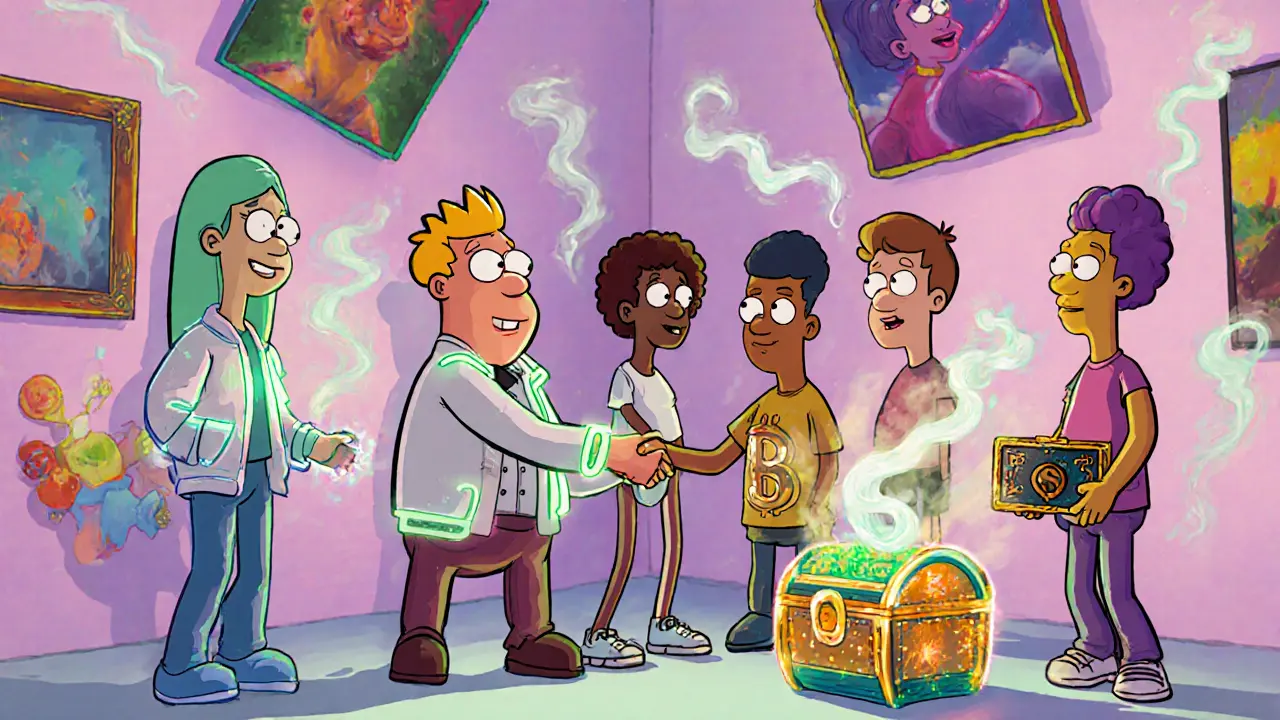
Virtual Economy: How Crypto and Digital Assets Are Reshaping Real-World Value
When you think of a virtual economy, a system where value is created, traded, and stored entirely in digital environments. Also known as digital economy, it's no longer just about in-game currencies or pixel art—it's where people earn real income, buy property, and even pay taxes using tokens, NFTs, and decentralized platforms. This isn’t science fiction anymore. It’s happening right now on blockchains like Ethereum, Meter, and Alephium, where users trade tokens with zero supply, mine crypto using hard drive space, or earn royalties every time their digital art sells.
What makes the virtual economy different from traditional finance? It doesn’t need banks. You don’t need permission. A digital artist in Nairobi can sell an NFT and get paid in crypto, with royalties built into the code so they earn every time it changes hands. A gamer in Vietnam can mine Spacemesh using their old laptop, turning unused storage into SMH tokens. Meanwhile, platforms like VoltSwap let traders avoid bot manipulation with front-running resistant tech—all while avoiding KYC. These aren’t side projects. They’re core parts of a new economic layer that’s growing faster than most governments can regulate.
And it’s not all smooth sailing. The same system that lets artists earn forever also lets fake tokens like Margaritis (MARGA) appear on price trackers with zero supply. Scams like LocalTrade and Decoin mimic real exchanges but have no team, no audits, and no safety nets. Even legitimate projects like Carrieverse and HappyFans vanish after a splashy launch, leaving users with worthless tokens. That’s why understanding the decentralized finance, a financial system built on open blockchains without middlemen matters—you need to know what’s real, what’s rigged, and what’s just noise. Regulations are catching up too. Vietnam’s new crypto rules demand $379 million in capital just to operate, while Switzerland taxes crypto as wealth, not income. These aren’t random policies—they’re responses to how fast the digital currency, money that exists only in electronic form and is often blockchain-based is moving.
What you’ll find below isn’t a list of random crypto reviews. It’s a map of the virtual economy’s real landscape: the platforms that work, the tokens that don’t, the airdrops that are scams, and the rules that actually matter. You’ll see how NFT royalties turn art into lifelong income, how zk-STARKs protect privacy, and why privacy coins are being kicked off exchanges. You’ll learn what’s happening in Turkey, Nepal, and Switzerland—not because they’re exotic, but because they’re telling us where this is headed. This isn’t about speculation. It’s about understanding the rules of a new world where value lives online, and you’re either learning it—or getting left behind.
The blockchain metaverse transforms online social interaction by letting users own their avatars, earn crypto through virtual activities, and connect in persistent 3D spaces - without corporate control or ads.
View More