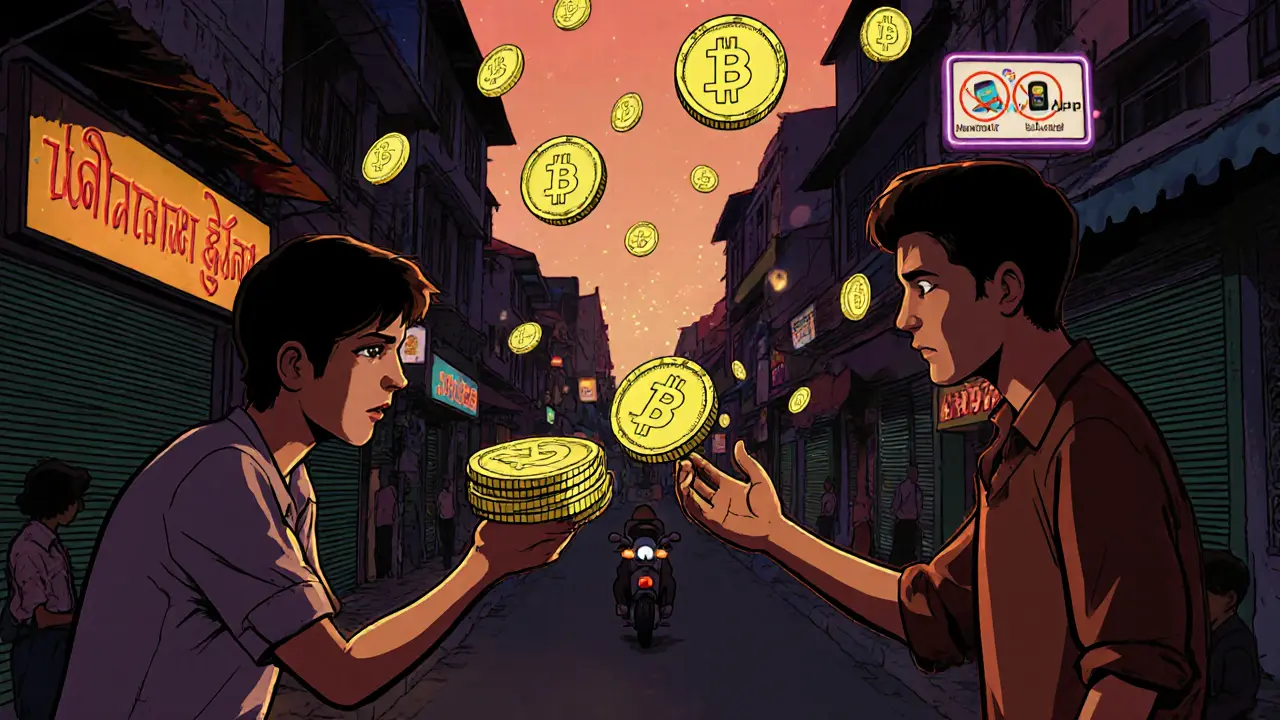
Underground Cryptocurrency: What It Is and Why It Keeps Growing
When people talk about underground cryptocurrency, crypto activity that operates outside official监管 and mainstream platforms. Also known as dark market crypto, it’s not just about illegal trades—it’s about survival, privacy, and access when banks and governments say no. This isn’t sci-fi. It’s happening right now in Nepal, Vietnam, and places where owning Bitcoin could land you in jail. People aren’t using it because they want to break the law—they’re using it because they have no other choice.
Think of unregulated crypto exchange, platforms that don’t verify users, report transactions, or follow AML rules. Also known as P2P crypto hubs, these are the hidden marketplaces where you can trade without KYC, even if your country bans crypto entirely. Platforms like LocalTrade and Decoin show up on price trackers but have no team, no audits, and no real users. They’re ghosts with fake volume—designed to trap the curious. Meanwhile, privacy coin delisting, the removal of Monero, Zcash, and similar coins from major exchanges due to regulatory pressure. Also known as financial censorship in crypto, this forced millions into decentralized, non-KYC networks where anonymity isn’t a feature—it’s the only option left. When exchanges drop privacy coins, the trade doesn’t stop. It just moves underground.
And then there’s the crypto ban, government laws that make owning, trading, or mining crypto illegal. Also known as crypto prohibition, these bans don’t kill crypto—they drive it deeper underground. Nepal’s Foreign Exchange Act of 1962 punishes crypto users with jail time. Vietnam’s 2025 rules require $379 million in capital just to apply for a license—and no one has applied yet. So what happens? People still trade. They use LocalTrade. They buy MARGA, even though it has zero supply. They chase fake airdrops like BABYDB and LEOS because they’ve been told there’s no other way in. And they lose money. A lot of it.
But here’s the truth: underground cryptocurrency isn’t a glitch in the system. It’s the system’s shadow. Every time a country cracks down, every time an exchange delists a privacy coin, every time a scammer launches a zero-supply token, the underground grows stronger. It’s not glamorous. It’s not safe. But it’s real. And the posts below show you exactly how it works—where the scams hide, who’s still trading, and what you need to watch out for if you’re caught in the gray zone.
Despite a total government ban, Myanmar's underground crypto market thrives through peer-to-peer trading, cash dealers, and encrypted apps. People use crypto to survive, send remittances, and resist oppression.
View More