Privacy Coin Exchange: Where to Trade Anonymous Crypto and Why It's Getting Harder
When you trade on a privacy coin exchange, a platform that supports cryptocurrencies designed to hide transaction details like sender, receiver, and amount. Also known as anonymous crypto exchanges, it lets users preserve financial privacy by avoiding the public ledger tracking common on Bitcoin and Ethereum. This isn’t about hiding illegal activity—it’s about protecting your right to control who sees your financial history. Just like you don’t want strangers reading your bank statements, many people don’t want their crypto transactions exposed to advertisers, governments, or hackers.
But here’s the problem: Monero, a privacy-focused cryptocurrency that uses ring signatures and stealth addresses to obfuscate transaction trails and Zcash, a coin that lets users choose between transparent and shielded transactions using zero-knowledge proofs are being kicked off major exchanges. Why? Because of global pressure from the FATF and regulators who claim these coins enable money laundering. The truth? Most illicit crypto activity still happens on Bitcoin. But Monero and Zcash are easier to hide, so they’re the ones getting targeted. This crypto regulatory crackdown, a global trend where governments force exchanges to delist privacy coins to meet AML compliance standards is shrinking your options fast.
That doesn’t mean privacy coins are dead. It just means you need to know where to look. Smaller, decentralized exchanges like VoltSwap on the Meter blockchain still support them because they don’t answer to regulators. Sidechains like Liquid Network offer confidential Bitcoin transactions without touching Monero at all. And while KYC requirements are now standard on most platforms, some non-KYC exchanges still operate in legal gray zones—though they come with serious risk. The trade-off is simple: convenience vs. control. Big exchanges make it easy but take away your privacy. Smaller ones give you anonymity but demand more caution.
What you’ll find below are real reviews of platforms that still support privacy coin trading—or tried to, and failed. Some are scams pretending to offer anonymity. Others are legitimate but risky. A few are quietly building the next generation of private DeFi tools. You’ll see why Monero got delisted from Coinbase, how Zcash still trades on obscure DEXs, and what happens when a project like LocalTrade claims to be private but is actually a fraud. This isn’t theory. It’s what’s happening right now, on the ground, in the corners of crypto where privacy still matters.
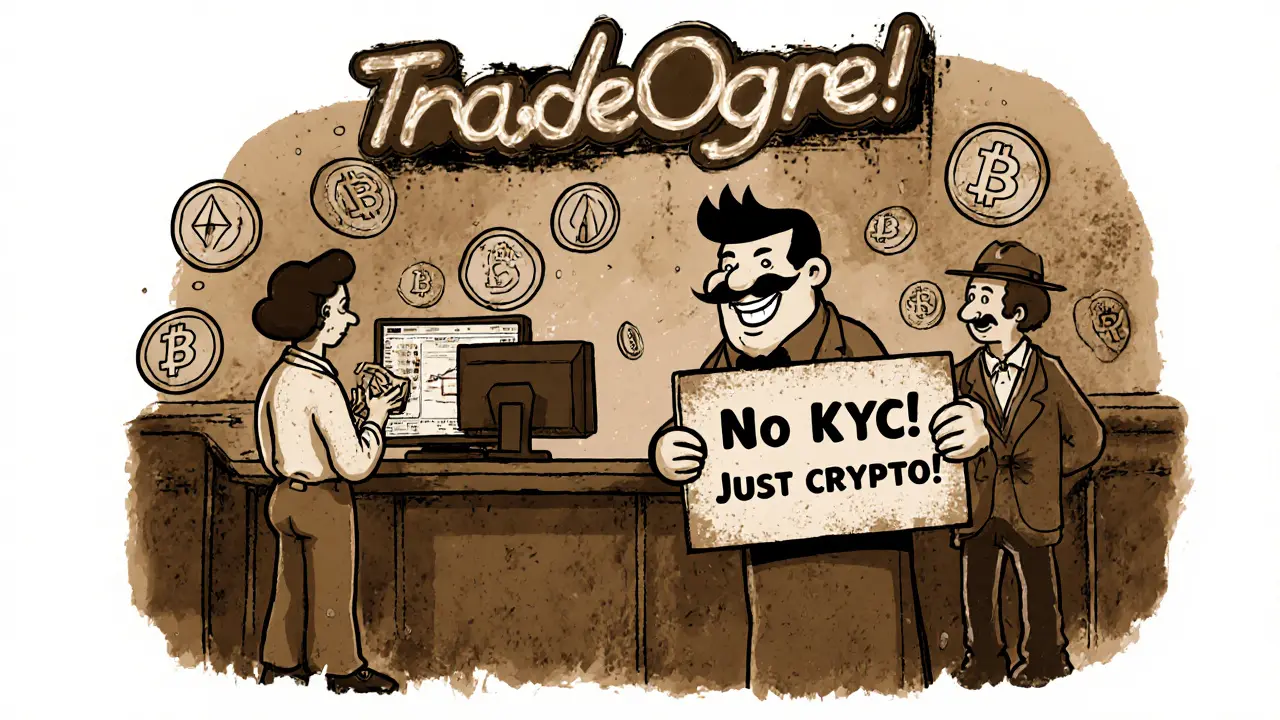
TradeOgre was a no-KYC crypto exchange shut down in 2025 after Canadian authorities seized $40M in assets. Learn why it failed, who used it, and what to use instead for privacy-focused trading.
View More