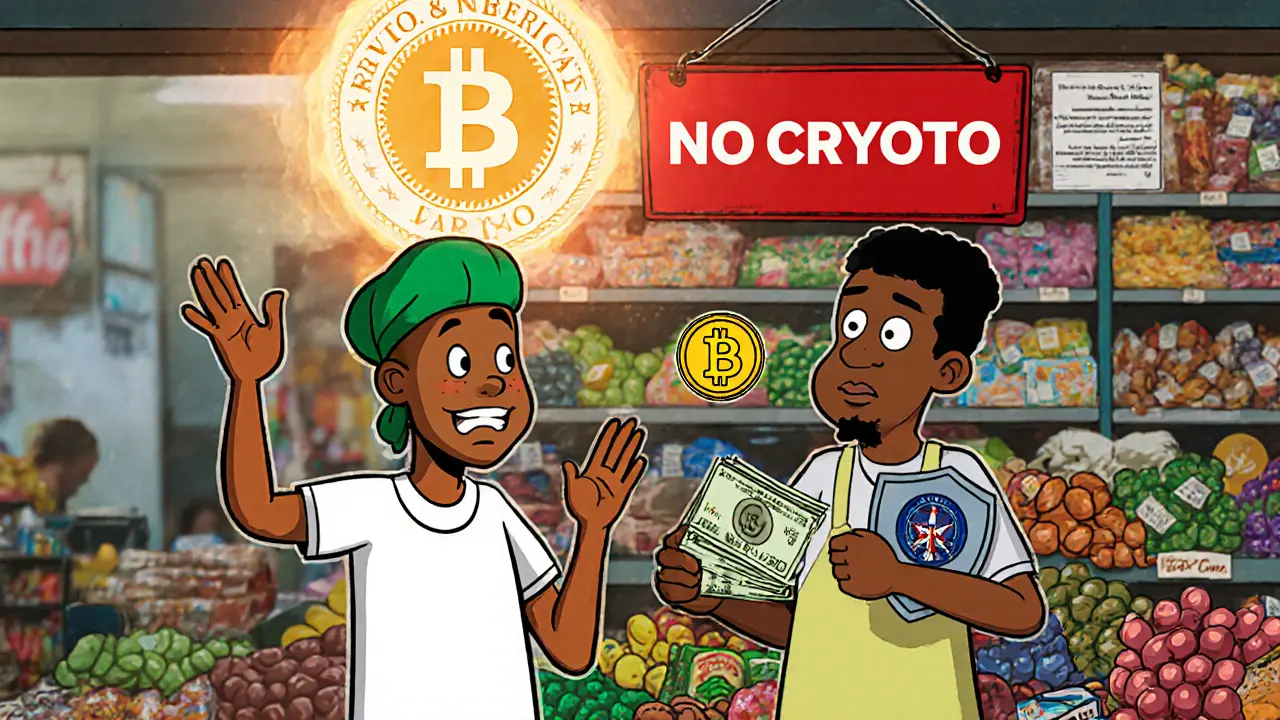
Nigeria Crypto Legality: What’s Allowed, What’s Banned, and How It Affects You
When it comes to Nigeria crypto legality, the legal status of cryptocurrency use and trading in Nigeria, shaped by government policy and central bank directives. Also known as crypto regulation in Nigeria, it’s not a simple yes or no—it’s a messy, shifting landscape where millions trade daily despite official warnings. The Central Bank of Nigeria, the nation’s financial regulator that issued a 2021 directive banning banks from servicing crypto businesses. Also known as CBN, it never made crypto illegal for individuals—but it made it nearly impossible to use banks to buy or sell it. That forced traders into peer-to-peer markets, WhatsApp groups, and mobile apps, turning Nigeria into one of the world’s top crypto-adopting nations.
Here’s the catch: the crypto ban Nigeria, the 2021 CBN directive that prohibited financial institutions from facilitating crypto transactions. Also known as CBN crypto ban, it still stands. Banks can freeze accounts linked to Binance, Paxful, or LocalBitcoins. Fines or account closures happen. But the law doesn’t say you can’t own Bitcoin or send it to a friend. That’s why over 30% of Nigerian adults have used crypto—more than in the U.S. or U.K. They use it to send money home, buy dollars, or protect savings from inflation. The government knows this. The CBN has floated ideas for a digital naira, but no clear rules for private crypto have followed.
So what does this mean for you? If you’re in Nigeria, you can still trade crypto—but you’re on your own. No bank protection. No legal recourse if a platform vanishes. No KYC on many P2P apps. That’s why so many stories in this collection focus on scams like Satowallet or LocalTrade—people got burned because they trusted platforms that didn’t exist. Meanwhile, global exchanges like Kraken or Coinbase still let Nigerians trade, but withdrawals to local banks are blocked. The real action is on P2P. And that’s where the risk lives.
You’ll find posts here about how traders bypass restrictions, what happens when your bank flags your wallet, and why some Nigerian crypto projects vanish overnight. There’s also coverage of how other countries like Vietnam and Turkey are handling similar tensions between public demand and regulation. This isn’t about theory. It’s about survival. If you’re trading crypto in Nigeria, you need to know the risks, the loopholes, and the real players—not the ones on paper, but the ones on the ground.
In 2025, Nigerian businesses can't legally accept crypto as direct payment. Only SEC-licensed VASPs can handle crypto transactions. Learn how to use approved platforms to accept crypto payments safely and legally.
View More