Meter Blockchain: What It Is, How It Works, and Why It Matters
When you hear about Meter blockchain, a high-throughput, proof-of-stake blockchain designed for fast and cheap DeFi transactions. Also known as Meter Network, it’s built to solve the speed and cost problems that plague Ethereum and other major chains. Unlike most blockchains that slow down when traffic spikes, Meter keeps transaction fees under a penny and processes thousands of transactions per second—no congestion, no waiting.
What makes Meter stand out isn’t just speed—it’s how it connects to other chains. It’s not another isolated network. Meter blockchain, uses a dual-chain architecture with a consensus chain and a governance chain. This design lets it act as a bridge between Ethereum, BSC, Polygon, and more, without relying on risky third-party bridges. That’s why traders and DeFi builders care. If you’re swapping tokens across chains, Meter gives you a direct, secure path. And because it’s built for DeFi from the ground up, it’s already home to native DEXs, lending platforms, and yield farms that don’t need layers of wrappers or intermediaries.
Behind Meter is a team focused on real utility, not hype. Its native token, Meter coin (MTR), powers gas fees, staking, and governance on the network. Unlike tokens that sit idle, MTR is actively used every time someone trades, stakes, or locks liquidity on Meter’s ecosystem. You won’t find Meter in every wallet yet—but you will find it where it counts: in the hands of traders who need fast, cheap swaps and developers who refuse to compromise on performance.
The posts below dive into exactly what’s happening on Meter blockchain right now. You’ll find deep dives into its native DEXs, how staking works, what’s new with MTR, and how it compares to other scalable chains. Some posts even show you how to spot fake Meter tokens or avoid scams pretending to be part of the network. Whether you’re new to DeFi or you’ve been trading for years, this collection gives you the facts—not the fluff.
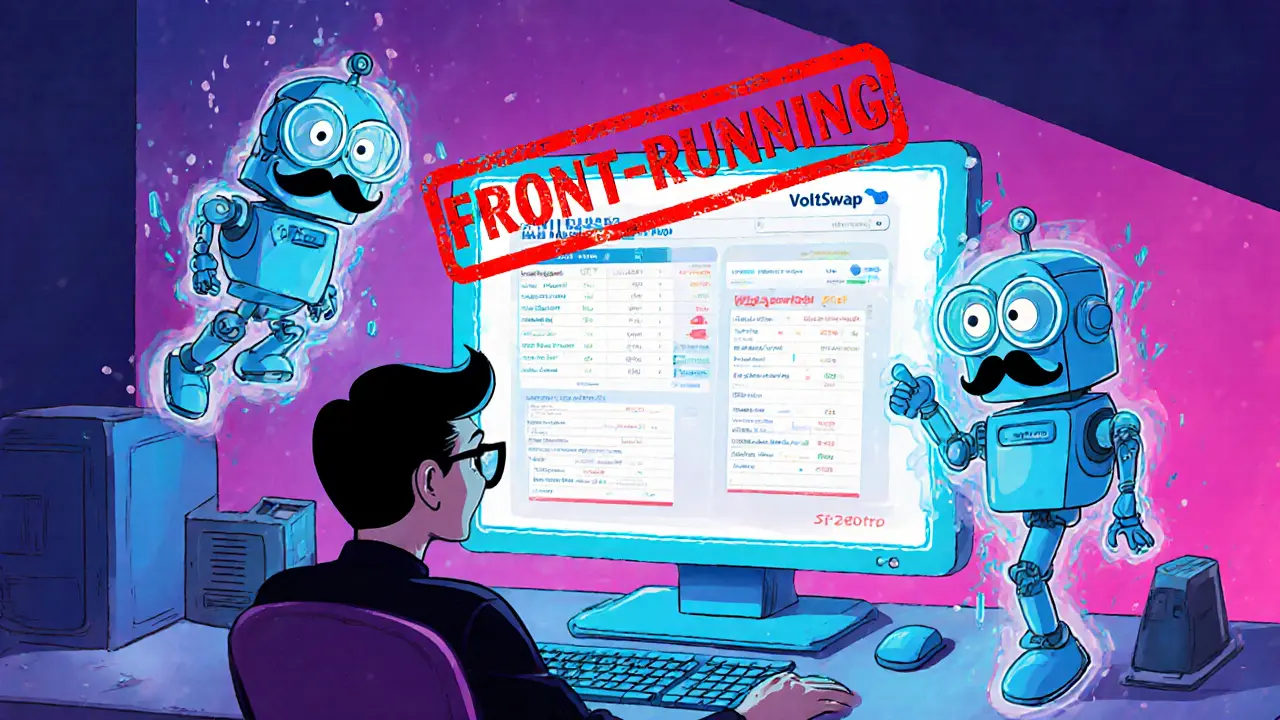
VoltSwap is a front-running resistant DEX on the Meter blockchain with low fees and single-sided VOLT staking. Though volume is tiny, its unique tech makes it worth exploring for privacy-focused traders tired of bot manipulation.
View More