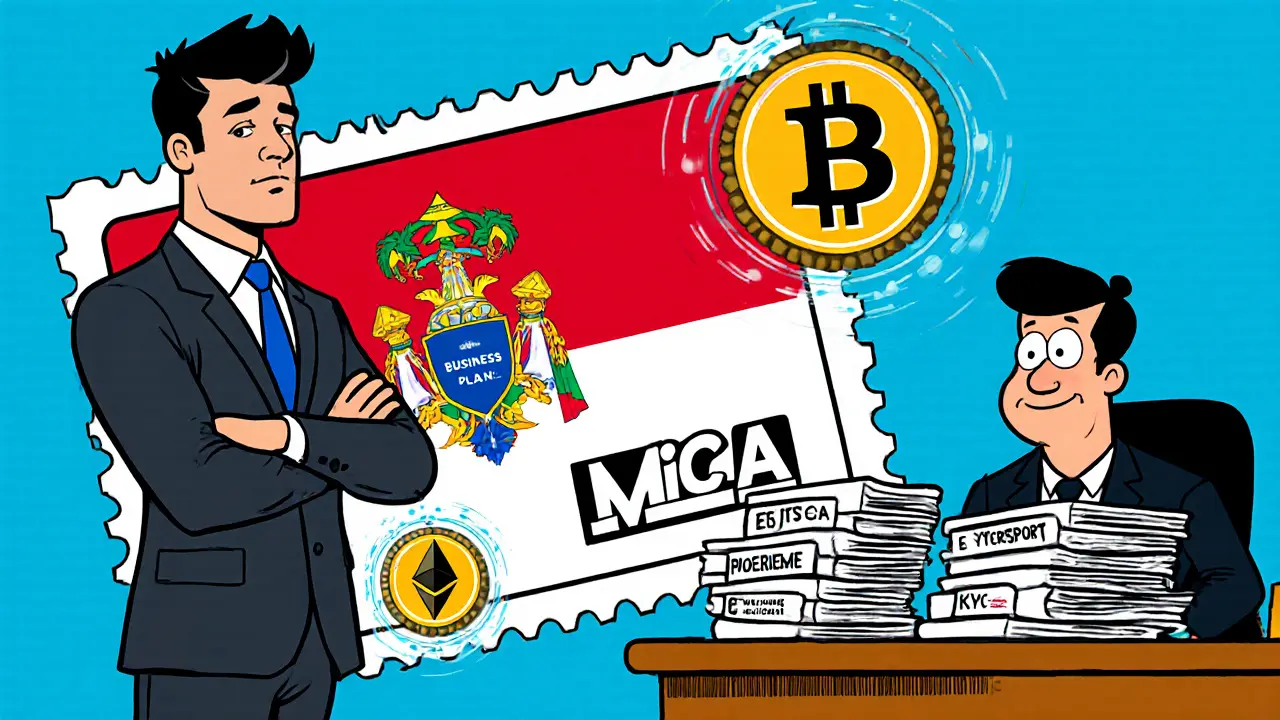
EU Crypto Licensing: What You Need to Know About Regulation and Compliance
When it comes to EU crypto licensing, the set of legal requirements crypto businesses must meet to operate legally within the European Union. Also known as MiCA compliance, it's not just paperwork—it’s the new baseline for any exchange, wallet, or token project aiming to serve EU users. If you’re trading crypto in Europe, this isn’t something you can ignore. The rules are here, they’re strict, and they’re enforced.
Under MiCA, the Markets in Crypto-Assets Regulation, the EU’s first unified crypto framework, every crypto service provider must get licensed. That means exchanges like LocalTrade or Decoin, which operate without oversight, are now illegal in the EU. The same goes for platforms that skip KYC, the process of verifying a user’s identity to prevent fraud and money laundering. You can’t just sign up and start trading anymore—you’ll need to prove who you are. And if you’re running a business? You need capital reserves, audit trails, and a clear anti-money laundering plan. This isn’t optional. It’s the law.
But here’s the catch: not all crypto projects are treated the same. Stablecoins backed by euros or other fiat currencies face tighter controls than decentralized tokens. Privacy coins like Monero? They’re being pushed out of major EU exchanges entirely. And if you thought you could dodge the rules by using a non-EU platform? Think again. The FATF travel rule, a global standard requiring exchanges to share sender and receiver data for transactions over €1,000 means even offshore platforms must comply if they serve EU customers. That’s why you’re seeing so many projects vanish from European markets—they can’t—or won’t—meet the bar.
What does this mean for you? If you’re a trader, you’ll see fewer shady platforms, but also fewer gimmicks and fake airdrops. You’ll have to deal with more verification steps, but your funds will be safer. If you’re a developer or startup, you’ll need to plan for compliance from day one—no more launching a token and hoping no one notices. The EU isn’t trying to kill crypto. It’s trying to clean it up. And that’s why you’ll find posts here about real compliance issues, not just hype. You’ll see breakdowns of what licenses actually require, how KYC works under MiCA, and which projects got shut down for cutting corners. No fluff. No guesses. Just what’s happening on the ground.
Below, you’ll find real reviews and deep dives into platforms that tried to fly under the radar—and what happened when the regulators came knocking. Some posts show you how to spot a fake license. Others explain how to protect your assets under the new rules. There’s no sugarcoating: if you’re trading in Europe, you’re now part of a system that demands transparency. The question isn’t whether you like it. It’s whether you’re ready to play by the new rules.
Setting up a crypto exchange in Malta requires a MiCA license from the MFSA, offering EU-wide access but demanding high compliance, capital, and operational standards. Only serious, well-funded operators succeed.
View More