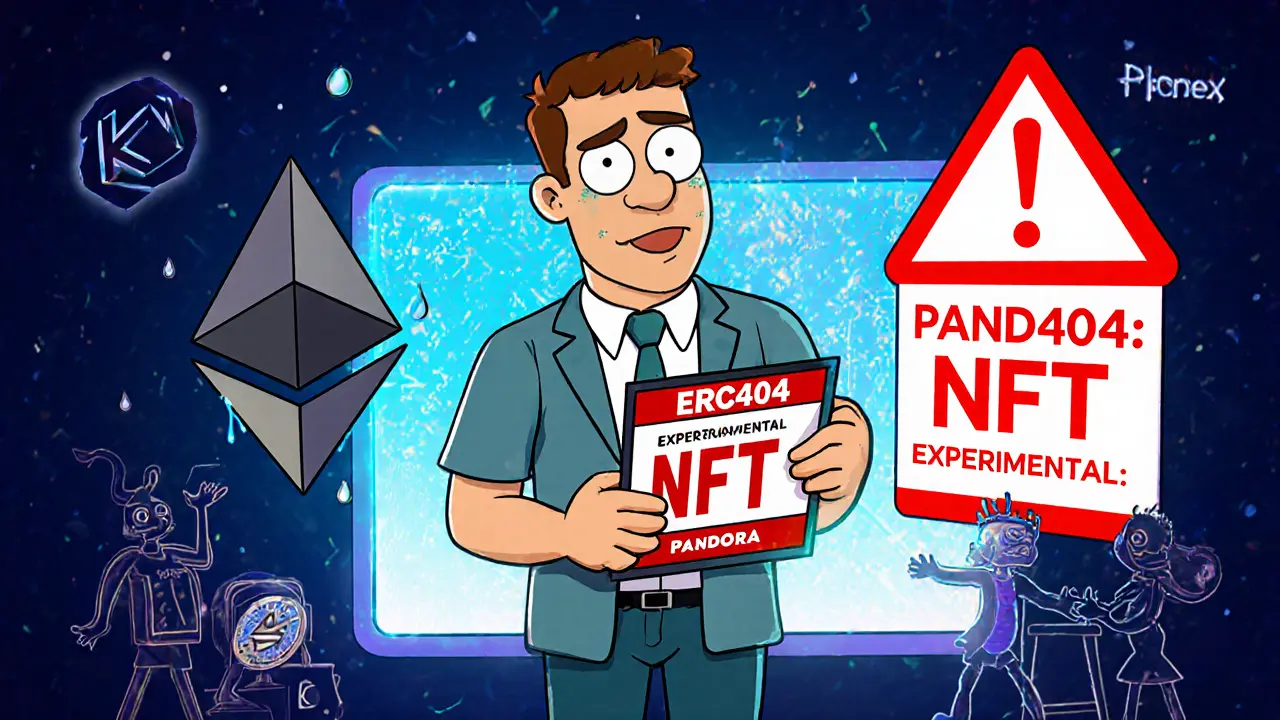
ERC404 Token: What It Is, Why It Matters, and What You Need to Know
When you hear ERC404 token, a hybrid token standard that combines properties of ERC20 fungible tokens and ERC721 non-fungible tokens. Also known as NFT hybrid, it lets you own part of a unique digital asset while still being able to trade fractions of it—like owning half a rare digital baseball card that you can sell separately. This isn’t just a technical tweak; it’s a shift in how people think about ownership in crypto. Unlike traditional ERC20 tokens, where every unit is identical, or ERC721 NFTs, where each one is completely unique and indivisible, ERC404 tries to do both. You can buy a whole NFT, sell a piece of it, or even split ownership across multiple wallets—all on the same contract.
This blending creates real use cases. Imagine a digital artwork where 100 people each own 1% of the NFT. One person can sell their 1% without needing to sell the whole piece. Or think of a game item—a sword with special traits—that you can lend out as a full NFT, but also sell off its enchantment stats as separate fungible tokens. The flexibility is there, but the execution? Messy. Many ERC404 projects launch with hype, then vanish. Some have zero liquidity. Others are just rebranded scams using the buzzword to attract buyers. That’s why you’ll see posts here about tokens with zero supply, fake airdrops, or exchanges with no transparency. The same risks that plague other crypto niches hit ERC404 harder because it’s still new, poorly understood, and rarely audited.
What makes ERC404 different from other token standards isn’t just the tech—it’s the people behind it. Most projects are anonymous teams with no roadmap, no team members, and no real utility. That’s why you’ll find articles here about Margaritis (MARGA), a token with zero circulating supply and no working contract, or Carrieverse (CVTX), a metaverse project that collapsed after a price spike. These aren’t exceptions—they’re the norm in the ERC404 space. Even when a project seems legit, like VoltSwap, a DEX on Meter blockchain with low fees and unique anti-bot tech, the underlying tokens might still carry hidden risks. If you’re exploring ERC404, you’re not just buying a token—you’re betting on whether the community will stick around long enough to make it useful.
There’s no central authority overseeing ERC404, no official standard body, and no widely accepted best practices. That’s why you need to dig deeper than the price chart. Check the contract. Look for audits. See if the team has a history. And always ask: Is this just a clever way to pump and dump, or does it solve a real problem? The posts below show you exactly what to look for—whether it’s a dead project with no supply, a fake airdrop pretending to be ERC404-based, or a real DEX where these tokens actually trade. You’ll see what works, what fails, and how to avoid losing money on the next shiny new token that promises to change everything.
PANDORA is not an exchange - it's a risky hybrid crypto token that gives you an NFT with every purchase. Learn how it works, where to buy it, and why most people lose money on it.
View More