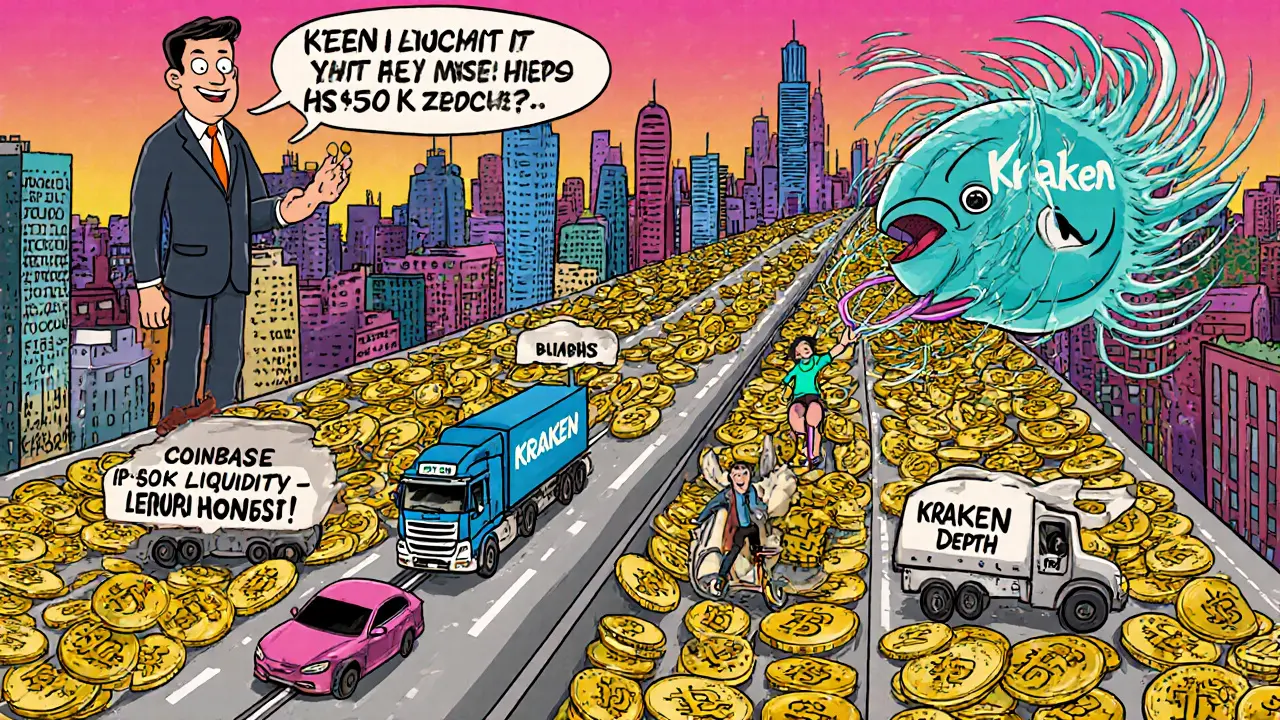
Depth Crypto Exchange: What It Means and Why It Matters for Traders
When you hear depth crypto exchange, the measure of buy and sell orders stacked at different price levels in a trading market. It’s not just about how many people are trading—it’s about how much they’re willing to trade at each price. A deep exchange means big orders can be filled without crashing or spikes. A shallow one? Even a small trade can move the price hard. That’s why depth matters more than volume when you’re trying to get in or out without losing money.
Think of it like a supermarket. If everyone’s buying milk and there’s only one carton left, the price jumps. But if there are 500 cartons stacked in the back, you can buy 20 without anyone noticing. That’s order book depth, the visible list of pending buy and sell orders at different prices. On a decentralized exchange, a crypto trading platform that runs without a central company controlling it. like VoltSwap or Uniswap, depth is often thin because there’s no market maker stepping in to fill gaps. That’s why you see wild price swings on small trades—there’s not enough liquidity to absorb them.
And liquidity? That’s the hidden engine behind depth. crypto liquidity, how easily an asset can be bought or sold without changing its price. High liquidity means tight spreads, fast fills, and less slippage. Low liquidity? You pay more to buy and get less when you sell. That’s why big players avoid thin markets. They don’t want to be the one who moves the price and gets stuck.
On centralized exchanges, depth looks clean because institutions and bots stack orders to keep things smooth. On decentralized ones? It’s messy. You might see a $10,000 buy order at $0.002, then nothing until $0.0015. That’s not depth—that’s a trap. Many new traders think high trading volume means a safe market. But volume can be faked. Depth can’t. You can’t fake a real buy wall with 500 BTC stacked at one price.
That’s why checking depth before you trade isn’t optional—it’s survival. If you’re buying a meme coin with zero depth, you’re not trading. You’re gambling. If you’re selling into a shallow order book, you’re not exiting. You’re dumping. The best traders don’t chase pumps. They look at the order book first. They wait for the depth to show real demand. They avoid coins where the top buy order is smaller than their trade size.
What you’ll find below isn’t just a list of exchanges. It’s a collection of real cases—platforms with fake depth, hidden liquidity, and scams hiding behind fake volume. You’ll see how LocalTrade and Decoin look active but collapse under real trading pressure. You’ll learn why VoltSwap’s tiny volume still matters because its depth is clean. And you’ll see how regulatory pressure, like Vietnam’s $379M capital rule, forces exchanges to actually hold liquidity instead of pretending.
Discover which crypto exchange offers the deepest order books, lowest fees, and strongest security in 2025. Kraken leads in liquidity for professional traders, while Coinbase and Gemini cater to beginners and security-focused users.
View More