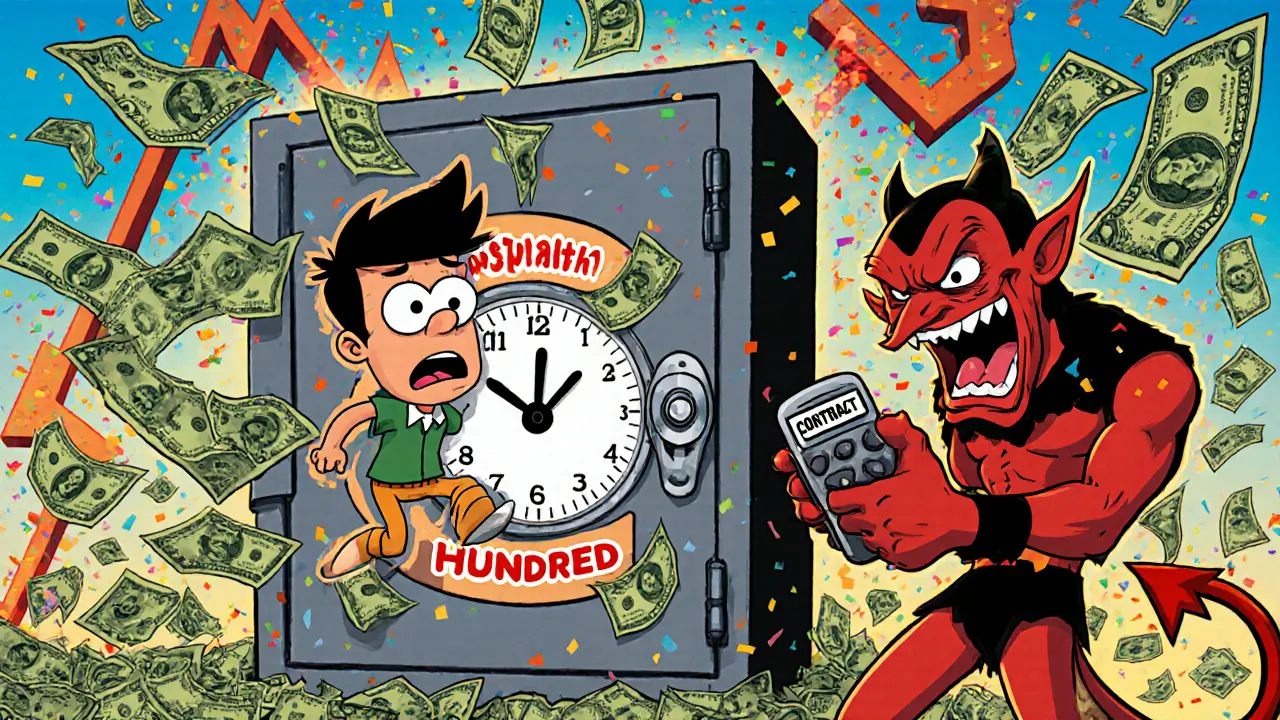
Crypto with No-Sell Lock: What It Is and Why It’s a Red Flag
When you hear crypto with no-sell lock, a token that prevents holders from selling for a set period, often used to fake long-term commitment, it sounds like a good thing. But in practice, it’s one of the most common tricks used to lure investors into dead projects. These tokens are locked not to protect you, but to give scammers time to dump their own holdings after hype builds. Once the lock expires, the price crashes—and you’re left holding worthless coins. This isn’t just risky—it’s a classic rug pull, a scam where developers abandon a project and steal investor funds. And it’s everywhere in new DeFi launches, especially on obscure DEXs like VoltSwap or unregulated platforms like LocalTrade.
Real projects don’t need a no-sell lock to prove they’re legit. They use token lockup, a transparent, time-bound restriction on team tokens, often verified by third-party audits. You can check these locks on platforms like TokenSniffer or through public smart contract audits. But when a project hides the lock details, or the lock is only on your tokens—not the team’s—it’s a warning sign. Look at MARGA: zero supply, no team, yet it shows up on price trackers. Or HappyFans: raised $1.45 million, then vanished. Both had fake locks. Even Metahero’s recent "airdrop" was just noise—no real tokens, no real utility. These aren’t anomalies. They’re the rule.
Why does this keep working? Because people confuse lockups with security. A lock doesn’t mean a project has value—it just means you can’t sell yet. Meanwhile, the team is quietly accumulating more tokens, bribing influencers, and pumping volume on fake exchanges. The real danger isn’t the lock. It’s the silence after it. When a project doesn’t release updates, doesn’t fix bugs, and doesn’t even respond to questions, the lock is just a cage. And you’re the one inside it. That’s why projects like Carrieverse and LEOS airdrops disappear: the lock was never about trust. It was about delay.
So what should you look for instead? Real transparency. Public team identities. Verified lock contracts. And most of all—proof that the team has skin in the game. If the team’s tokens are locked for 2 years and yours are locked for 6 months? That’s a red flag. If the project has no code updates, no community growth, and no real use case? It’s already dead. The crypto with no-sell lock isn’t a feature. It’s a filter. And if you’re reading this, you’re already one step ahead. Below, you’ll find real reviews of projects that used this trick—and why they failed. No fluff. Just facts.
HUNDRED (HUNDRED) is a memecoin that forces users to hold coins for 100 hours after purchase. With no real community, minimal trading volume, and a centralized contract, it's a high-risk novelty with no long-term value.
View More