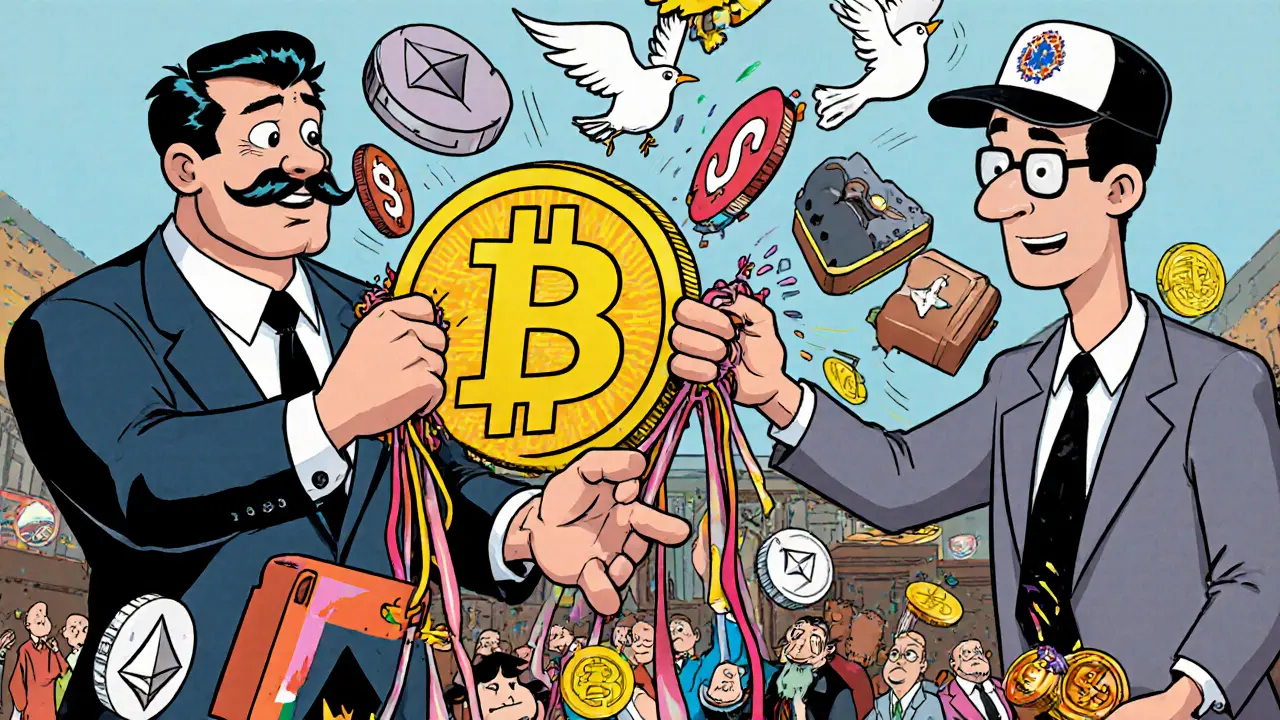
Crypto Regulatory Uncertainty: What It Means for Your Trades and Wallet
When you hear crypto regulatory uncertainty, the unpredictable, shifting legal landscape that governs how cryptocurrencies can be bought, sold, and used. Also known as crypto compliance risk, it’s not just a buzzword—it’s the reason your favorite exchange vanished, your airdrop turned out to be fake, or your privacy coin got delisted. This isn’t about future laws. It’s about what’s happening right now: governments are cracking down, exchanges are scrambling, and traders are left guessing if their assets are legal tomorrow.
Look at privacy coin delisting, the mass removal of coins like Monero and Zcash from major exchanges due to pressure from global financial watchdogs. Also known as FATF privacy coin crackdown, it’s a direct result of crypto regulatory uncertainty. Regulators don’t want anonymous transactions, so exchanges pick safety over user choice. Then there’s unregulated crypto exchange, a platform with no oversight, no license, and no accountability. Also known as offshore crypto platform, these are the exact places where scams like LocalTrade and Decoin thrive—because no one’s watching. And when regulators finally act, your funds disappear with them.
It’s not just about exchanges. crypto compliance, the set of rules exchanges and wallets must follow to avoid fines or shutdowns. Also known as AML/KYC requirements, it’s why you now need to send your passport just to trade. Countries like Vietnam and Turkey have gone from ignoring crypto to locking it down with million-dollar licensing fees and fiat-only rules. Meanwhile, projects with zero supply like MARGA or abandoned metaverses like CVTX keep showing up on price trackers because there’s no global authority to shut them down. That’s crypto regulatory uncertainty in action: a patchwork of conflicting rules that lets fraud slip through the cracks while punishing honest users.
What does this mean for you? If you’re trading on an exchange without a clear license, you’re gambling. If you’re holding a privacy coin that’s been delisted, your options are shrinking. If you’re chasing an airdrop from a project with no team or website, you’re already scammed. The market doesn’t reward speculation anymore—it rewards awareness. Below, you’ll find real case studies of failed exchanges, banned coins, and fake airdrops. Each one shows how regulatory uncertainty doesn’t just affect big firms—it decides whether your wallet stays safe or gets wiped out.
The SEC and CFTC are locked in a battle over who regulates crypto in the U.S. One calls tokens securities, the other calls them commodities. The confusion is costing businesses billions-and leaving investors in the dark.
View More