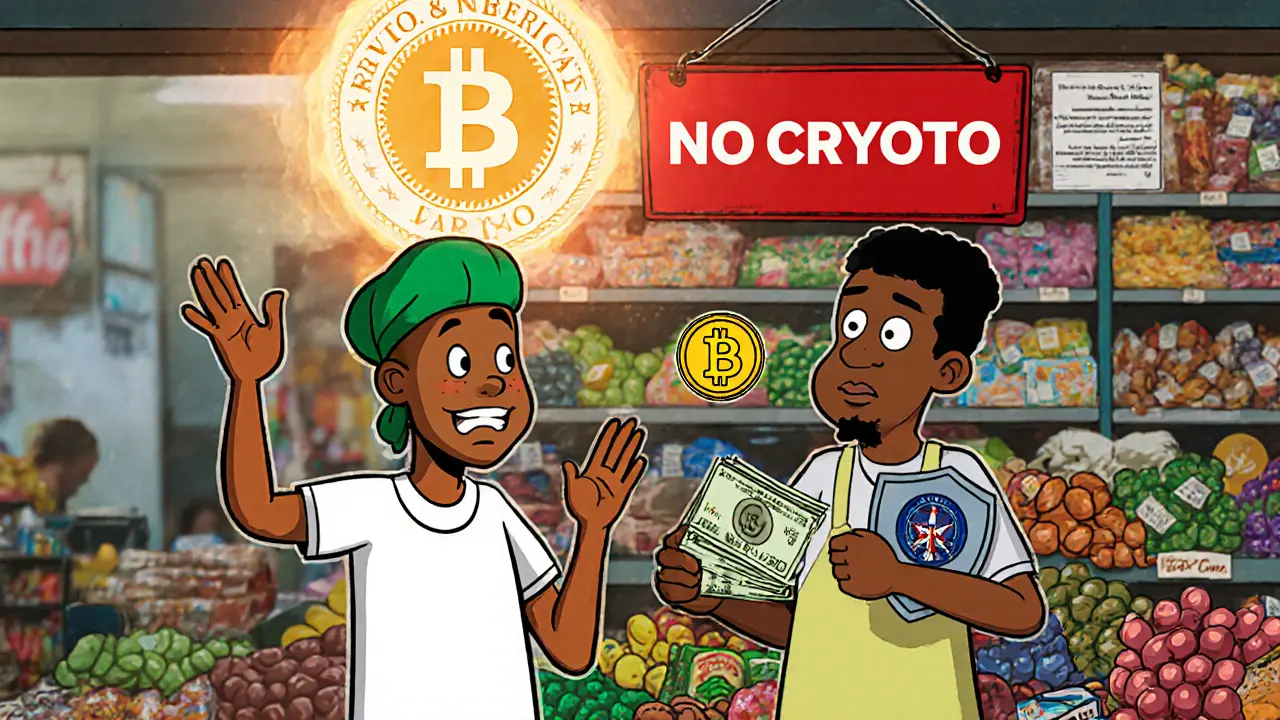
Crypto Payments Nigeria: How Nigerians Use Bitcoin and Stablecoins to Bypass Traditional Banking
When it comes to crypto payments Nigeria, the widespread use of digital currencies to buy goods, send money, and store value without banks. Also known as peer-to-peer crypto, it’s not a trend—it’s a daily reality for millions of Nigerians who can’t rely on traditional banks to move money quickly or affordably. In a country where bank transfers take days, fees eat into small incomes, and inflation hits 30%+, Bitcoin and USDT have become the new cash.
Why? Because Bitcoin, a decentralized digital currency that lets users send value directly without intermediaries. Also known as BTC, it’s the backbone of Nigeria’s crypto economy. You’ll find market vendors in Lagos accepting Bitcoin for yams and phone credit. Students in Abuja use USDT to pay for online courses without waiting for international wire approvals. And families in Port Harcourt send remittances from the UK or US directly to mobile wallets—no middlemen, no $50 fees.
Then there’s stablecoin Nigeria, digital tokens pegged to the US dollar that protect savings from naira devaluation. Also known as USDT or USDC, they’re the quiet heroes of everyday finance. You don’t need a bank account to hold them. You don’t need approval. Just a phone and a WhatsApp group with a trusted seller. People trade them over P2P platforms like Paxful and Binance P2P, swapping naira for USDT in minutes. It’s not perfect—scams exist, and the Central Bank has tried to block access—but people keep using it because the alternative is worse.
This isn’t speculation. It’s backed by data from Chainalysis and the World Bank: Nigeria ranks among the top five countries globally for crypto adoption. Why? Because the system failed them. Banks froze accounts. ATMs ran out of cash. Inflation erased savings. Crypto didn’t promise to fix everything—but it gave people control. And that’s powerful.
What you’ll find below are real stories and warnings from people who’ve been through it. You’ll learn about exchanges that vanished, wallets that got hacked, and platforms that promised easy money but delivered nothing. You’ll also see how real Nigerians are using crypto every day—not as investors, but as users. Whether you’re trying to send money home, pay for services, or just protect your savings, this collection gives you what you need: no fluff, no hype, just what works and what to avoid.
In 2025, Nigerian businesses can't legally accept crypto as direct payment. Only SEC-licensed VASPs can handle crypto transactions. Learn how to use approved platforms to accept crypto payments safely and legally.
View More