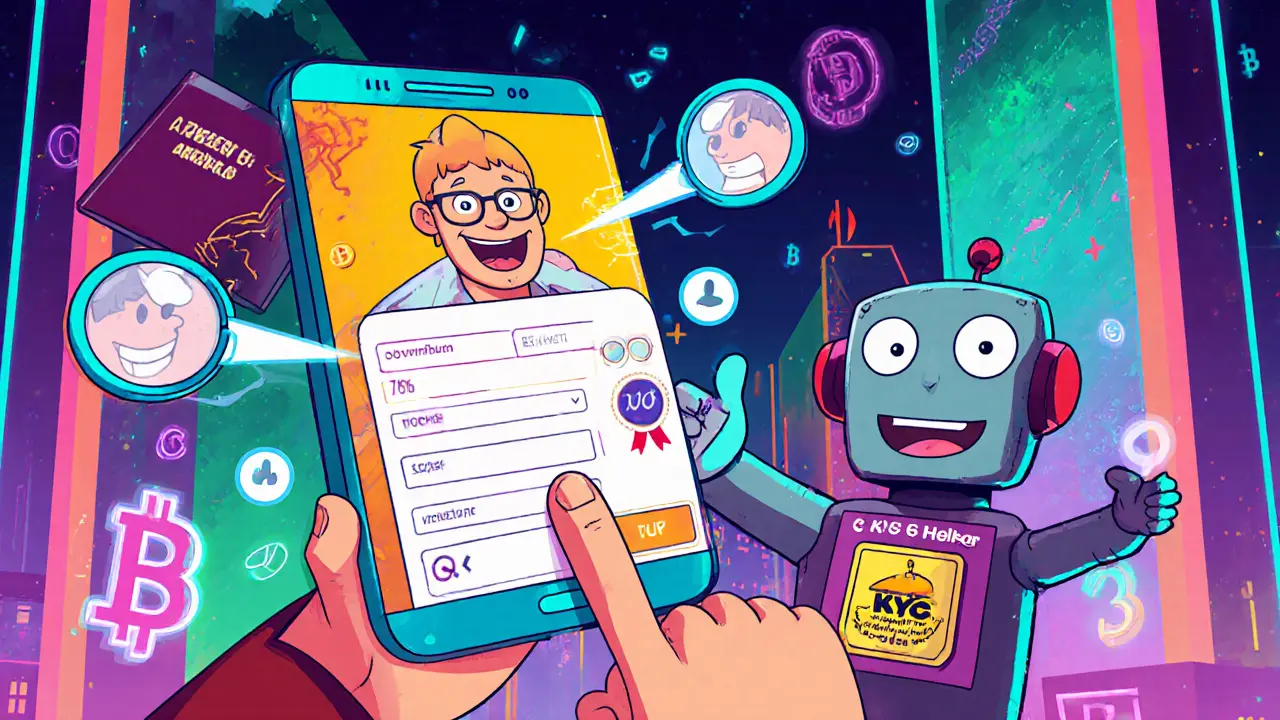
Crypto KYC Process: What It Is, Why It Matters, and How It Affects Your Trades
When you sign up for a crypto exchange, you’re often asked to submit your ID, a selfie, or even a utility bill. That’s the crypto KYC process, a mandatory identity verification step used by exchanges to confirm who you are before letting you trade. Also known as Know Your Customer, it’s not optional on most platforms — and it’s changing how crypto works for everyone.
The crypto KYC process exists because of global rules like the FATF travel rule and AML crypto laws. These aren’t suggestions — they’re legal requirements. Exchanges that ignore them risk fines, shutdowns, or being blocked from banking partners. That’s why even decentralized platforms like LocalTrade or Decoin, which claim to be "unregulated," still get flagged by regulators when they try to connect with traditional finance. If you’ve ever wondered why some exchanges let you trade instantly while others take days to verify you, it’s because of how strictly they follow these rules.
It’s not just about stopping criminals. The crypto KYC process also protects you. When an exchange has verified users, it’s harder for scammers to run fake airdrops or pump-and-dump schemes. Look at the Metahero or HappyFans airdrops — both vanished because they had no identity checks, no team accountability, and no way to trace who was really behind them. Meanwhile, platforms that enforce KYC, even if they’re strict, are more likely to survive long-term. Countries like Vietnam and Turkey are now forcing exchanges to hold millions in capital and verify every user — and those that can’t comply simply disappear.
But here’s the catch: KYC doesn’t mean safety. It just means paperwork. You can still get hacked, scammed, or lose funds on a KYC-compliant exchange. What KYC does is make it harder for anonymous fraudsters to operate at scale. It’s why privacy coins like Monero and Zcash are being delisted — regulators see them as tools to bypass the very system KYC was built to enforce. If you value anonymity, you’ll need to use non-KYC platforms, but you’ll also accept higher risk. There’s no middle ground.
What you’ll find below are real reviews of platforms that either ignored KYC and got burned, or followed it too rigidly and lost users. You’ll see how Vietnam’s new crypto law forces exchanges to verify identities at a national level, how Turkey’s license requirements tie KYC to multi-million-dollar compliance, and why projects like AdEx or Leonicorn Swap had airdrops that turned out to be scams — because they skipped the basics of accountability. This isn’t about trust. It’s about proof. And in crypto, proof often comes with a photo ID.
KYC on crypto exchanges is now mandatory for most users in 2025. Learn what documents you need, how long it takes, why it's here to stay, and how it protects you from fraud and scams.
View More