Crypto Exchange Scam: How to Spot and Avoid Fake Platforms
When you hear crypto exchange scam, a fraudulent platform designed to steal user funds by pretending to be a legitimate trading service. Also known as exit scam, it’s when a platform takes your money and disappears—no warning, no explanation, just gone. These aren’t rare mistakes. They’re organized schemes, often built in days, marketed with fake testimonials, and promoted by influencers paid in tokens no one can cash out.
Most fake crypto exchange, a platform that looks real but has no backend infrastructure, no licensed operators, and no way to withdraw funds shares the same DNA: promises of high returns, no KYC (or fake KYC), and zero public team info. Look at Satowallet or LocalTrade—both promised big dividends and vanished. They weren’t glitches. They were designed to fail. And they’re still being copied today, with new names, new logos, and the same empty wallets.
You’ll see them in Telegram groups, on TikTok ads, or as sponsored posts with fake trading volume. They use real-looking interfaces but run on scripts that lock your funds. If you can’t withdraw after depositing—even a small amount—it’s not a glitch. It’s a trap. crypto fraud, the intentional deception to gain unauthorized access to crypto assets doesn’t need hackers. It just needs a website, a whitepaper full of buzzwords, and a social media push.
And it’s not just about losing money. These scams drain trust from the whole space. People who get burned stop using crypto altogether. That’s what the scammers count on. They don’t care about blockchain. They care about your wallet.
How do you avoid them? Check for audits, real team members with LinkedIn profiles, and verified exchange listings. If a platform isn’t on CoinGecko or CoinMarketCap, walk away. If it claims to be "regulated" but can’t name the regulator, it’s fake. If it pushes you to deposit fast before a "limited-time bonus," that’s a classic red flag.
Some of the posts below expose exactly how these scams work—like Satowallet’s $1 million disappearance, or how PEPE MAGA traps buyers with honeypot code that blocks sells. Others show you what a real, dead project looks like versus a full-on fraud. You’ll see how VVS Finance and Margaritis aren’t just inactive—they’re ghost towns with fake price tags. And you’ll learn why platforms like Decoin and LocalTrade have no business being touched.
This isn’t a list of warnings. It’s a survival guide. The next scam might have a slick website, a catchy name, and a video from someone in a hoodie saying "trust me." But if you know what to look for, you’ll see through it before you even click "Deposit."
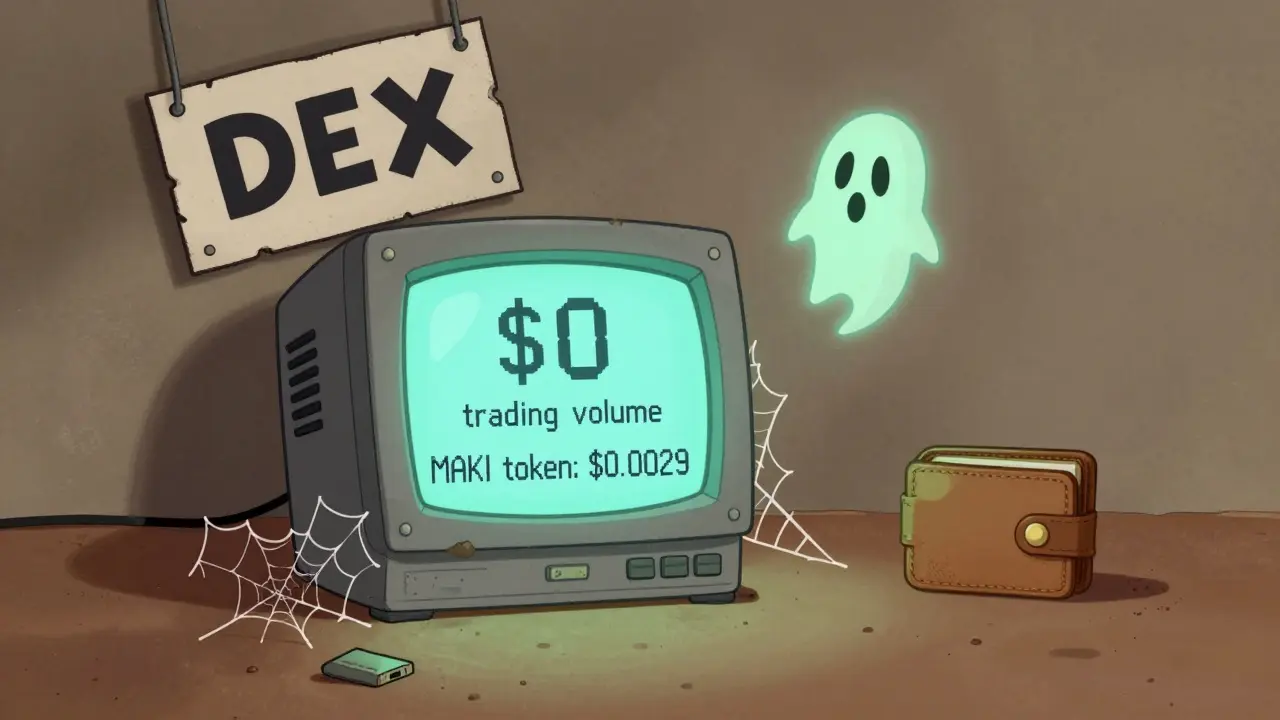
MakiSwap is a dead crypto exchange with zero trading volume and a collapsing token. Learn why this HECO-based DEX is flagged as a potential scam and what safer alternatives to use instead.
View More