Crypto Exchange Fees: What You Really Pay to Trade
When you trade crypto, crypto exchange fees, the charges platforms apply to buy, sell, or move digital assets. Also known as trading fees, they’re not just a small line item—they directly impact how much you keep or lose. Many new traders think the price of Bitcoin or Ethereum is the only cost, but if you’re paying 0.5% per trade and trading often, that’s 5% gone in just 10 trades. And that’s before withdrawal fees, network gas costs, or hidden spreads.
Not all exchanges charge the same. Centralized platforms like Binance or Coinbase often have tiered fee structures based on volume or token holdings, while decentralized exchange, a peer-to-peer trading platform that runs on blockchain without a middleman. Also known as DEX, it typically charges lower trading fees but higher transaction fees, the cost to confirm a trade on the blockchain itself, paid to miners or validators. For example, swapping tokens on Uniswap might cost $2 in trading fee but $15 in Ethereum gas. That’s why tools like transaction fee estimation tools matter—they help you pick the right time to trade so you’re not overpaying for network congestion.
Some platforms hide fees in plain sight. A 0% trading fee? Maybe they’re making money by routing your order through a liquidity provider that gives them a cut. Or they might charge you extra to withdraw your coins. And if you’re using a lesser-known exchange like Decoin or LocalTrade—both flagged in our posts for lacking transparency—you could be paying hidden fees or worse, losing funds to fraud. The best traders don’t just compare prices; they compare total cost of ownership: trading fee + withdrawal fee + gas + slippage + risk.
What you’ll find below are real reviews and breakdowns of platforms where fees matter—whether it’s VoltSwap’s low-cost Meter blockchain trades, or why you should avoid exchanges with fake volume and no audits. We’ve dug into how KYC requirements, regulatory pressure, and even privacy coin delistings affect fee structures. You’ll see how some tokens like VOLT or ABX tie into fee discounts, and how airdrop hunters avoid platforms that charge to claim free tokens. No fluff. Just what you pay, why, and how to pay less.
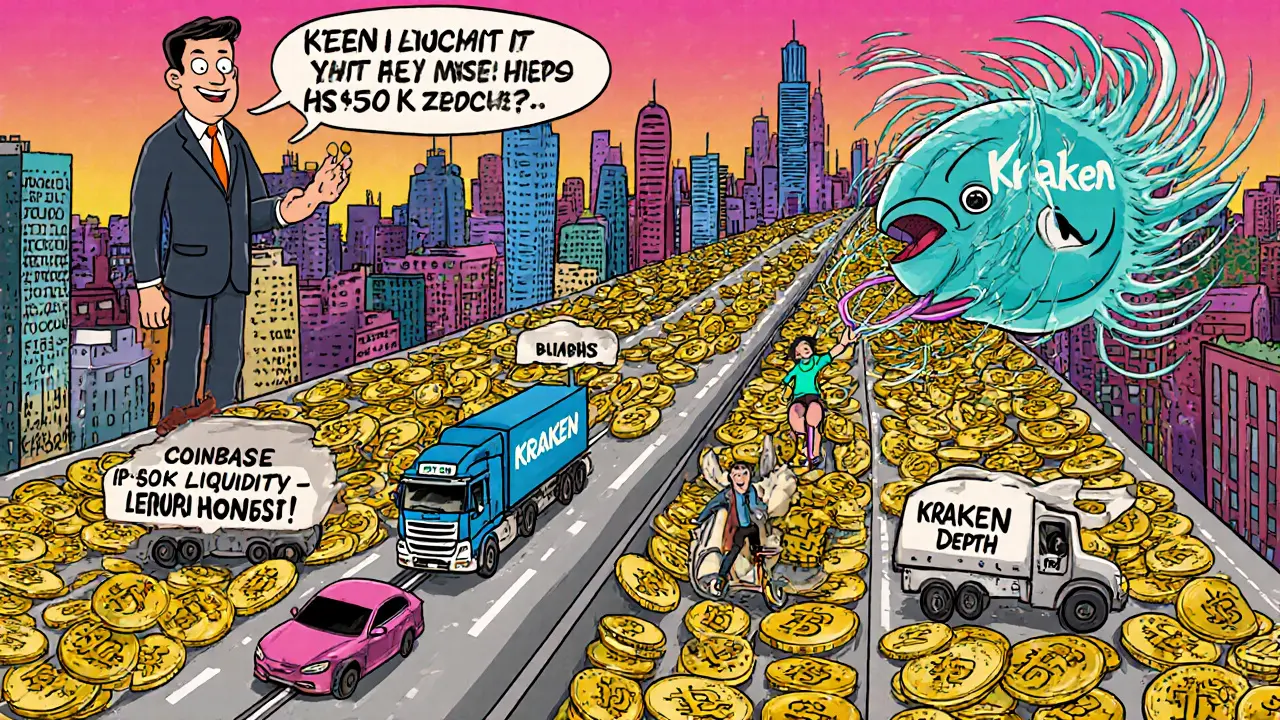
Discover which crypto exchange offers the deepest order books, lowest fees, and strongest security in 2025. Kraken leads in liquidity for professional traders, while Coinbase and Gemini cater to beginners and security-focused users.
View More