Blockchain Royalties: How Creators Earn from Smart Contracts
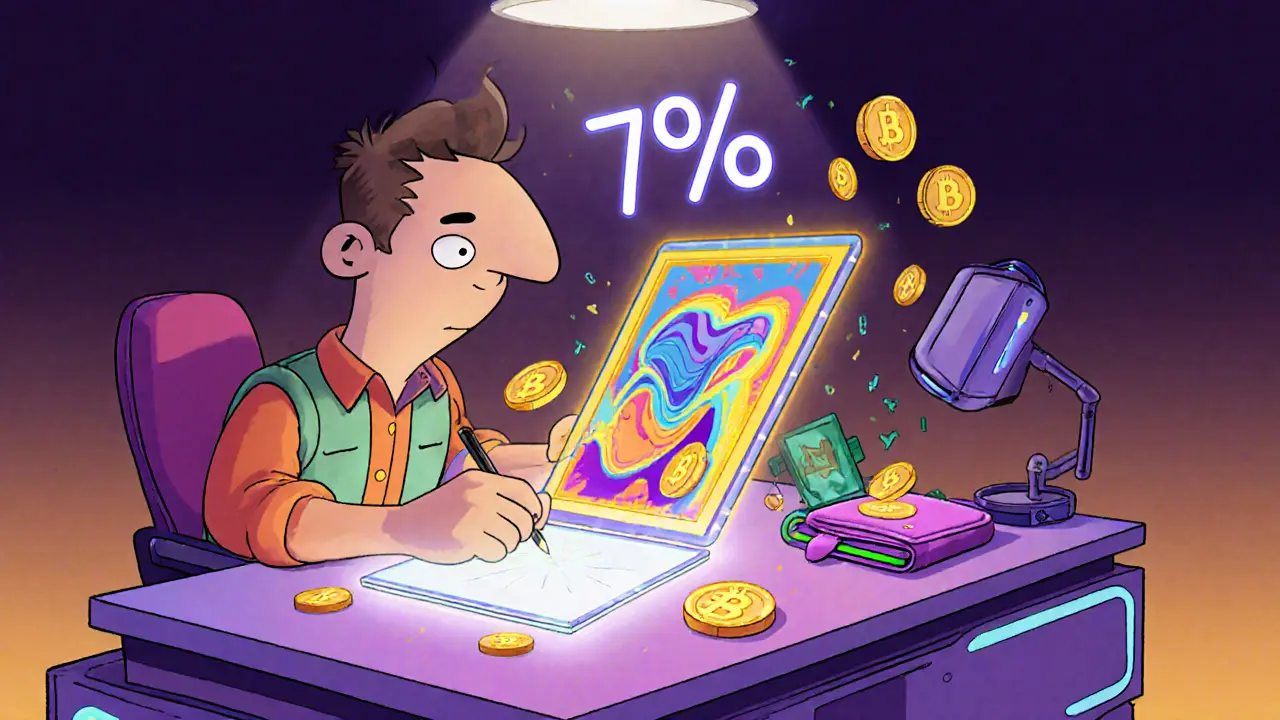
When you buy an NFT or use a digital asset on the blockchain, blockchain royalties, automatic payments built into smart contracts that give creators a cut of future sales. Also known as crypto royalties, they let artists, musicians, and developers keep earning long after their first sale—without middlemen. Unlike traditional systems where you sell once and walk away, blockchain royalties are coded to trigger every time the asset changes hands. This isn’t theoretical—it’s happening right now on platforms like OpenSea, Blur, and LooksRare, where creators get 5% to 10% on every resale.
These royalties rely on smart contract royalties, self-executing code on blockchains like Ethereum and Solana that enforce payment rules. They’re not perfect. Some exchanges ignore them, and newer chains like Base and Polygon are still sorting out enforcement. But when they work, they turn one-time sales into lifelong income. A musician who drops a track as an NFT can keep earning every time someone resells it—even years later. That’s the power of trustless, automated payments.
Many people confuse blockchain royalties with NFT royalties, the specific application of royalties to non-fungible tokens. While all NFT royalties are blockchain royalties, not all blockchain royalties are tied to NFTs. Some DeFi protocols pay royalties to liquidity providers. Some gaming tokens give creators a cut of in-game item trades. The core idea is the same: code enforces payment, and creators stay in the loop.
But here’s the catch: not all royalties are real. Some projects fake royalty rates to look profitable. Others list royalties that never get paid because the platform doesn’t support them. That’s why you’ll see posts below digging into real cases—like how a single artist earned $200,000 from resale royalties on a 2021 NFT drop, and how another lost everything because the marketplace ignored the contract. You’ll also find breakdowns of platforms that honor royalties and those that don’t, plus how to check if a token’s royalty code is actually active.
What you’ll find here isn’t hype. It’s the truth behind the numbers. From abandoned NFT collections with zero royalty payouts to DeFi protocols that quietly pay creators without fanfare, this collection cuts through the noise. Whether you’re a creator trying to set up royalties or a buyer wondering if you’re paying fair fees, you’ll walk away knowing what’s real, what’s broken, and how to protect yourself.
NFT royalties let digital artists earn a percentage of every resale of their work, creating lifelong income without middlemen. Learn how it works, real earnings, and how to start.
View More