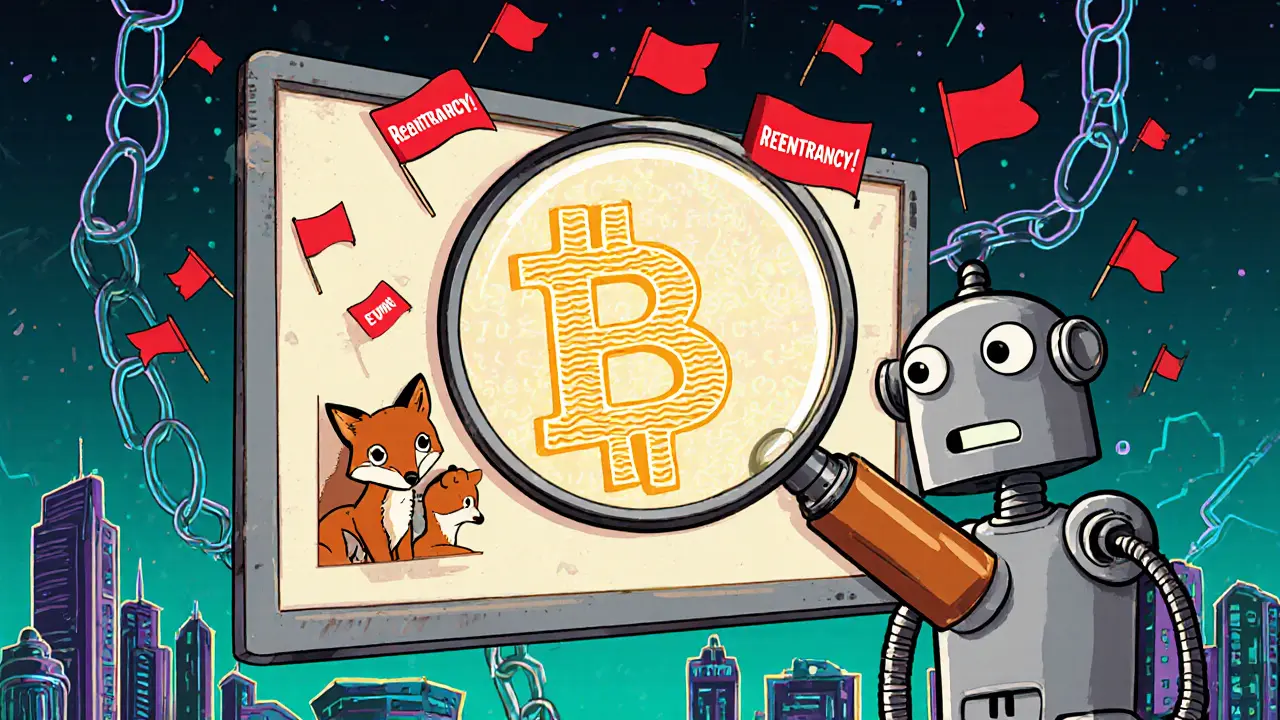
Automated Security Auditing in Crypto: What Works and What Doesn't
When you hear about automated security auditing, a process that uses software to scan blockchain code for bugs and backdoors before launch. It's not just a checklist—it's the difference between your funds staying safe or vanishing overnight. Most crypto projects today claim to be "audited," but only a fraction use real automated tools. The rest pay a freelancer to slap on a logo and call it done. That’s why you see so many projects like LocalTrade, Decoin, and MARGA vanish after a few weeks—no one checked their code for hidden backdoors or fake balances.
Real smart contract audit, a detailed review of blockchain code to find exploits before deployment. Also known as code vulnerability scanning, it's what separates legit DeFi platforms like VoltSwap from the rest. Tools like Slither, MythX, and CertiK’s AI engines scan for reentrancy bugs, overflow errors, and unauthorized access paths. But here’s the catch: these tools only find what they’re trained to look for. If a project uses a custom token standard or a weird staking mechanism, the audit might miss it. That’s why the best audits combine automated scans with human review. Projects like ABX and FLUX use this hybrid approach—and you can tell because they publish full audit reports, not just a PDF with a logo.
Automated security auditing isn’t just for big exchanges. It’s the first line of defense against fake airdrops, dead tokens, and rug pulls. Look at HERO, HAPPY, or CVTX—all had flashy launches, zero audits, and vanished fast. Meanwhile, platforms that do audits openly, like the ones using zk-STARKs for privacy or Liquid Network for secure Bitcoin transfers, build trust by showing their work. If a project won’t share its audit results, assume it’s hiding something. The DeFi security, the practice of protecting decentralized finance protocols from exploits and theft. It relies on blockchain security tools and transparent code. isn’t optional anymore. In 2025, every serious project runs automated scans before launch—and you should too. Below, you’ll find real examples of what happens when audits are skipped, done poorly, or ignored entirely. These aren’t hypotheticals. These are the projects that lost users’ money. Learn from them.
Automated and manual security auditing both play critical roles in blockchain security. Automated tools catch code flaws fast, but humans spot logic risks machines miss. The smartest teams use both.
View More