
Imagine buying a slice of Solana without ever touching a private key. For years, that was the dream for Canadian investors who wanted exposure to high-growth altcoins but feared the chaos of crypto exchanges. That reality arrived on April 16, 2025, when the Solana ETF officially hit the Toronto Stock Exchange. This wasn't just another product launch; it marked North America's first publicly traded investment vehicle offering direct exposure to Solana (SOL) with the added bonus of staking rewards. If you've been waiting for a regulated way to hold SOL in your Tax-Free Savings Account (TFSA), this is the shift you were looking for.
Why Canada Beat the US to the Punch
You might wonder why Canada is leading the charge while the United States still debates altcoin ETFs. The answer lies in regulatory agility. The Ontario Securities Commission (OSC) approved four major asset managers-Purpose Investments, Evolve Funds Group, CI Financial, and 3iQ Corp-to launch these products in early 2025. This move followed their successful rollout of Bitcoin and Ethereum ETFs, cementing Canada's status as a global pioneer in digital asset regulation. While the US Securities and Exchange Commission (SEC) has remained cautious, approving only Bitcoin and Ethereum spot ETFs so far, Canadian regulators recognized that institutional demand for diversified crypto exposure couldn't wait. As Bloomberg analyst Eric Balchunas noted, this launch gave us "our first look at the alt coin race" in institutional products, signaling that the era of Bitcoin-only dominance in regulated funds is ending.
The Staking Advantage: More Than Just Price Tracking
Here is where things get interesting for your portfolio. Unlike most US-based cryptocurrency ETFs, which are often restricted from engaging in staking due to complex securities laws, Canadian Solana ETFs can stake their holdings. Staking involves locking up SOL tokens to help secure the network, earning new tokens as rewards in return. Because Solana uses a Proof-of-Stake consensus mechanism, this isn't just a technicality-it's a core feature of the blockchain. By allowing staking, Canadian ETFs generate additional yield beyond simple price appreciation. For example, the 3iQ Solana Staking ETF (QSLN) emphasizes daily yield accretion directly into its Net Asset Value (NAV). This means if you hold QSLN, you're effectively earning interest on your crypto exposure, a feature prohibited in many US equivalents.
Comparing the Major Players
With four different funds hitting the market, how do you choose? It comes down to fees, structure, and track record. Purpose Investments and Evolve Funds Group have deep roots in the Canadian crypto ETF space, having launched the world's first Bitcoin ETF back in 2021. Their experience matters when navigating custody and compliance. On the other hand, 3iQ Corp entered the fray with an aggressive strategy: a 0% management fee for the first 12 months. This low-cost entry point drove massive early adoption, with assets under management skyrocketing from $10 million at inception to over $258 million CAD within six months.
| Feature | Purpose (PSOL) | Evolve (ESOL) | 3iQ (QSLN) |
|---|---|---|---|
| Ticker | PSOL.TO | ESOL.TO | QSLN.TO |
| Staking Enabled | Yes | Yes | Yes |
| Intro Fees | Standard | Standard | 0% for 12 months |
| Custody Model | Institutional Cold Storage | Institutional Cold Storage | Segregated Cold Storage |
| Account Eligibility | TFSA / RRSP | TFSA / RRSP | TFSA / RRSP |

Why Investors Are Making the Switch
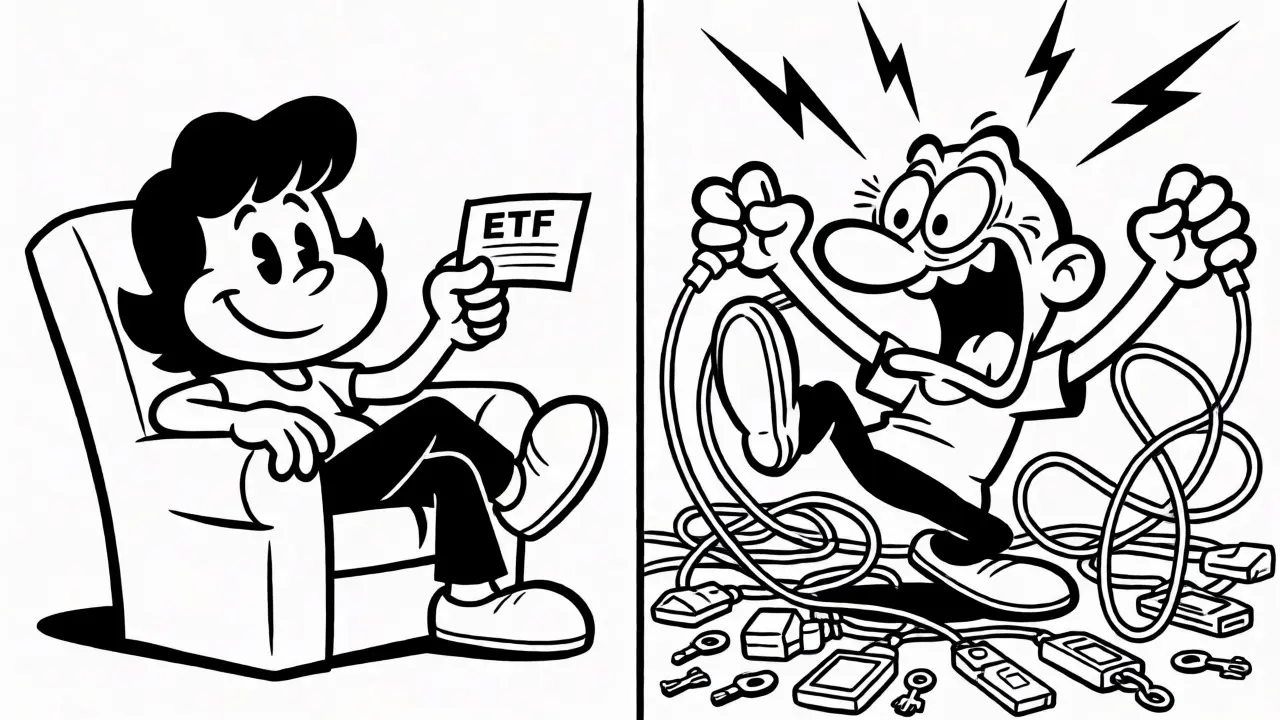
Let's talk about the practical benefits. Holding crypto directly requires managing hardware wallets, remembering seed phrases, and dealing with exchange hacks. With a Solana ETF, you buy shares through your regular brokerage account, just like you would buy Apple stock. But the biggest win for Canadians is tax efficiency. These ETFs are eligible for TFSA and RRSP accounts. In a TFSA, any gains from Solana's price rise or staking rewards are completely tax-free. Compare that to holding SOL directly, where every trade could trigger a taxable event depending on your country's rules. Retail investors on forums like r/CryptoCanada have echoed this sentiment, with one user noting they could "finally hold SOL in my TFSA without worrying about exchange risks."
Risks You Should Not Ignore
Is this all sunshine and rainbows? Not quite. Solana remains a volatile asset. Even with the ETF wrapper, the underlying price of SOL can swing wildly. In late October 2025, SOL traded in the $194-$203 range, reminding traders that volatility hasn't disappeared just because you bought an ETF. Additionally, infrastructure risks remain. Critics point to Solana's history of network outages, including a notable 11-hour downtime in December 2024. If the network halts, your ETF's performance could be impacted by broader market sentiment, even if the fund itself continues to trade. Furthermore, while staking generates yield, it also introduces validator risk. If a validator misbehaves, there can be penalties, though reputable providers like those used by 3iQ and Purpose mitigate this by using experienced operators and segregated custody.
What’s Next for Crypto ETFs?
The success of Solana ETFs has opened the floodgates. Analysts predict that XRP ETFs will follow soon, especially given increased clarity around XRP's regulatory status in the US. We might also see staking-enabled products for other Proof-of-Stake chains like Cardano or Polkadot. Meanwhile, pressure is mounting on the US SEC. Some experts suggest that US Ether ETFs might begin staking by mid-2025, which would narrow the feature gap between Canadian and American products. For now, however, Canada remains the go-to jurisdiction for innovative crypto investment vehicles, making the Toronto Stock Exchange a critical hub for anyone serious about regulated digital asset exposure.
Frequently Asked Questions
Can I buy a Solana ETF in a TFSA?
Yes, Canadian Solana ETFs are eligible for Tax-Free Savings Accounts (TFSAs) and Registered Retirement Savings Plans (RRSPs). This allows investors to gain exposure to Solana without triggering immediate capital gains taxes on profits or staking rewards.
Do Canadian Solana ETFs pay staking rewards?
Yes, unlike many US counterparts, Canadian Solana ETFs are permitted to stake their SOL holdings. These rewards are typically accrued into the fund's Net Asset Value (NAV), meaning the share price reflects both price appreciation and earned staking yields.
Which Solana ETF has the lowest fees?
As of late 2025, the 3iQ Solana Staking ETF (QSLN) offered a 0% management fee for its first 12 months, making it the most cost-effective option for new investors during that promotional period. Always check current prospectuses for updated fee structures.
Is investing in a Solana ETF safer than holding SOL directly?
It reduces operational risk. You don't need to manage private keys or worry about exchange hacks. However, you are still exposed to market volatility and potential smart contract or network issues inherent to the Solana blockchain itself.
Why did the US not approve Solana ETFs yet?
The US SEC has historically been stricter regarding whether altcoins qualify as commodities or securities. While Bitcoin and Ethereum ETFs were approved, the classification of Solana remains under review, delaying similar approvals compared to Canada's more permissive provincial framework.