Chasing free crypto is exciting, but it’s also risky. You’ve likely seen headlines or social media posts about the PureFi Protocol a decentralized finance compliance protocol founded in 2021 with the mission to bridge traditional finance and DeFi through verifiable credentials. The promise of free UFI tokens sounds great. But here is the hard truth: PureFi’s airdrop history is messy, communication is sparse, and scams are rampant. Before you spend hours on quests or risk your wallet security, you need to know exactly what this project offers, who actually qualifies, and how to spot a fake.
This guide cuts through the noise. We will look at the real data behind the PureFi airdrop program, explain how their unique compliance model changes the rules for participants, and give you a clear checklist to stay safe. Whether you are an early adopter from 2021 or a new user seeing buzz today, understanding these details is crucial before you take any action.
What Is PureFi Protocol and Why Does It Matter?
To understand the airdrop, you first need to understand the product. PureFi isn’t just another meme coin or simple yield farm. It positions itself as a bridge between Traditional Finance (TradFi) and Decentralized Finance (DeFi). Their core technology relies on Zero-Knowledge Proofs, which allow users to prove they meet certain criteria-like being over 18 or not being on a sanctions list-without revealing their actual identity.
This focus on DeFi compliance sets them apart. Most airdrops are permissionless; anyone with a wallet can claim. PureFi often requires some level of verification. This is because their target audience includes institutions and regulated entities, not just retail traders. They raised $1.07 million across seven funding rounds, including support from the Hacken Foundation, to build this infrastructure. However, this niche focus means their community engagement has always been lower than mainstream DeFi giants like Aave or Uniswap.
The History of PureFi Airdrops: What Actually Happened?
If you search online, you’ll find conflicting information. Some sites claim there are massive ongoing campaigns. Others say nothing is happening. The reality lies somewhere in between, buried in historical data.
Between August 2021 and March 2022, PureFi ran three documented airdrop campaigns. These were relatively small-scale efforts. Participants had to complete specific tasks:
- Join their Telegram channel.
- Complete educational quizzes about KYC (Know Your Customer) and AML (Anti-Money Laundering).
- Follow their social media accounts.
- Refer friends to the platform.
Verified distributions during this period ranged from 25 to 100 UFI tokens per participant. Etherscan transaction records confirm these drops occurred. However, since April 2022, there have been no major, widely publicized airdrop events. GitHub activity related to airdrop smart contracts went dormant after that date. If you see a post claiming a "new" airdrop is live right now without official confirmation from their primary channels, treat it with extreme skepticism.
How the Current Reward System Works
While large-scale "free token" drops have paused, PureFi still mentions "community rewards" and challenges. Bitget’s analysis noted that users could receive free UFI by joining ongoing promotions. Here is how these modern iterations typically function compared to old-school airdrops:
- KYC Verification: Unlike typical airdrops where anonymity is key, PureFi may require you to undergo identity verification through their Self-Sovereign Identity system. This filters out bots but raises privacy concerns for some users.
- Vesting Schedules: Even if you earn tokens, you might not get them all at once. PureFi uses multi-stage vesting. For example, some allocations unlock 33% immediately, with the rest vesting daily over months. This prevents immediate dumping of the token price.
- Task-Based Rewards: Recent hints suggest rewards are tied to specific actions, such as testing their compliance tools or participating in governance discussions, rather than just clicking buttons.
The catch? Liquidity. As of late 2023, trading volume for UFI was extremely low, often below $5,000 in 24 hours. This means even if you win an airdrop, selling those tokens without crashing the price can be difficult. Always check current liquidity on DEXs like Uniswap or PancakeSwap before committing time.
Safety First: How to Spot PureFi Scams
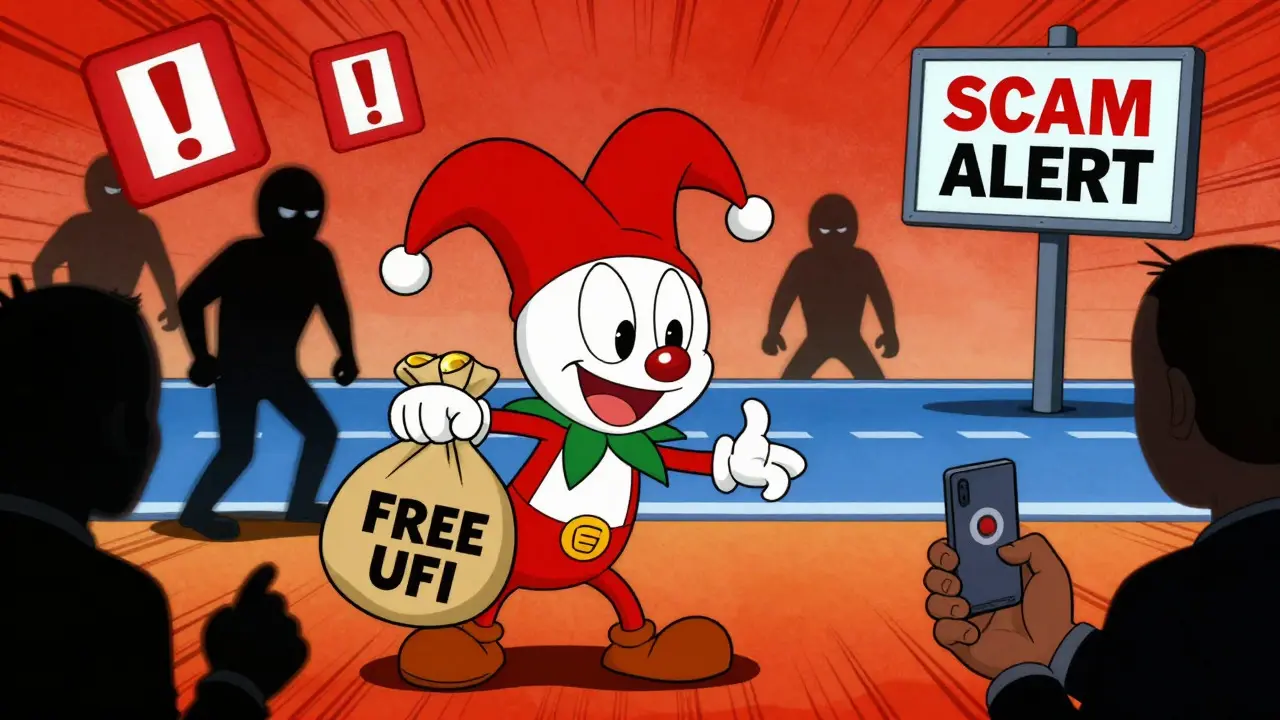
This is the most important section. Because legitimate updates are rare, scammers fill the void. They create fake websites, impersonate team members on Twitter, and send DMs promising huge payouts. Here is how to protect yourself:
| Feature | Legitimate Source | Scam Red Flag |
|---|---|---|
| Website URL | purefi.io (official domain) | purefi-airdrop.com, purefi-claim.net, or slight misspellings |
| Contact Method | Official Twitter (@Purefi_Protocol) or Discord announcements | Direct Messages (DMs) from "support" or random users |
| Requirement | Task completion, quiz answers, or optional KYC | Asking for your seed phrase, private key, or upfront payment |
| Token Amount | Small amounts (e.g., 25-100 UFI) historically | Unrealistic promises like "10,000 USDT worth of UFI" |
Never connect your main wallet to an unverified contract. Use a burner wallet with minimal funds if you decide to participate in any web3 interactions. And remember: if it sounds too good to be true, it almost certainly is.
Market Reality: Is UFI Worth Chasing?
Let’s talk numbers. PureFi’s market capitalization has fluctuated significantly, hovering around $721,000 in recent reports, down from peaks of over $2 million in early 2022. The price per token has also dropped, trading fractions of a cent. Expert analysts have pointed out that projects with sub-$1 million market caps often struggle to generate meaningful community engagement for airdrops.
Dr. Elena Rodriguez from Stanford University noted that PureFi’s compliance-focused approach limits retail participation. While this makes sense for institutional adoption, it hurts the viral growth needed for successful airdrop marketing. Meanwhile, competitors in the DeFi compliance space are gaining traction. If you are investing time here, ask yourself: does the potential reward justify the opportunity cost? Could that time be better spent on protocols with higher liquidity and clearer roadmaps?

Step-by-Step: How to Participate Safely (If Active)
If you believe an active campaign is running, follow these steps to minimize risk:
- Verify the Source: Go directly to purefi.io. Do not click links from emails or DMs. Check their official Twitter account for pinned posts regarding "community rewards."
- Prepare Your Wallet: Set up a separate MetaMask or Trust Wallet dedicated to experimental projects. Ensure you have enough ETH or BNB for gas fees.
- Check Requirements: Read the terms carefully. Does it require KYC? If so, ensure you trust their data handling practices. Look for mentions of Zero-Knowledge Proof usage to ensure your data stays private.
- Complete Tasks: Follow the instructions precisely. Screenshots are your friend-save proof of every completed task in case of disputes.
- Wait for Vesting: Understand that tokens may not arrive instantly. Check the vesting schedule in their whitepaper. Patience is required.
- Monitor Liquidity: Before selling, check Uniswap or PancakeSwap. Low liquidity means high slippage. You might sell your tokens for far less than the listed price.
Final Thoughts on PureFi’s Future
PureFi occupies a unique but challenging niche. Their technology addresses a real problem in DeFi: regulation. However, their execution of community-facing initiatives like airdrops has been inconsistent. With limited developer activity on GitHub and low social media engagement, the project faces headwinds. That said, partnerships with EU-based fintech firms hint at a pivot toward institutional clients, which might mean fewer retail airdrops in the future.
For now, proceed with caution. Treat any potential UFI rewards as a speculative bonus, not a guaranteed income stream. Keep your expectations realistic, your security tight, and your eyes open for red flags.
Is the PureFi airdrop still active in 2026?
There is no widespread evidence of a major, active airdrop campaign as of late 2023, with silence continuing into subsequent years. Historical drops ended around mid-2022. Any current opportunities are likely small-scale, task-based rewards announced only on their official social channels. Always verify via purefi.io before participating.
Do I need to do KYC to get PureFi tokens?
Unlike many DeFi projects, PureFi focuses on compliance. Past campaigns and their general structure suggest that identity verification (KYC) or at least a form of verifiable credential check may be required to receive or trade tokens. This is due to their Zero-Knowledge Proof architecture designed for regulatory adherence.
How much is 1 UFI token worth?
The value of UFI is highly volatile and has generally trended downward. In late 2023, it traded for approximately $0.00695 USD. Given its low market cap and limited liquidity on decentralized exchanges, the price can fluctuate wildly with small trades. Always check real-time prices on CoinGecko or CoinMarketCap.
Where can I buy or sell UFI tokens?
UFI is primarily traded on decentralized exchanges (DEXs) such as Uniswap (on Ethereum) and PancakeSwap (on Binance Smart Chain). It is not listed on major centralized exchanges like Coinbase or Binance, which limits accessibility and liquidity for average users.
Are PureFi airdrops safe from scams?
The official program aims to be secure, but the ecosystem around it is rife with scams. Phishing sites and fake Twitter accounts are common. To stay safe, never share your seed phrase, use a burner wallet, and only interact with contracts verified on the official purefi.io website. If a deal seems too generous, it is likely a scam.