You clicked on MarketExchange.io because you saw a promise of high returns, instant trades, or a new platform that looked too good to be true. Maybe an influencer hyped it up, or a friend swore by their "secret" strategy. But before you deposit your hard-earned Bitcoin or USDT, you need to know the uncomfortable truth: MarketExchange.io is almost certainly a scam.
This isn't just a hunch. As of late 2025 and early 2026, comprehensive investigations reveal that this platform lacks the basic pillars of legitimacy-regulatory licenses, verifiable volume, and transparent ownership. If you are looking for a safe place to trade, this review breaks down exactly why you should keep your wallet closed and your eyes open.
The Red Flags You Can’t Ignore
Legitimate cryptocurrency exchanges operate in the light. They publish audits, hold licenses, and have massive user bases. MarketExchange.io operates in the shadows. According to data from INDSPN.org and Chainalysis, this platform fails every major verification test used by industry experts.
First, look at its absence from trusted databases. You won't find MarketExchange.io on CoinGecko, CoinMarketCap, or the U.S. Financial Crimes Enforcement Network (FinCEN) registry. If a major player like Coinbase (founded in 2012) or Kraken (established in 2011) were operating under this name, they would be listed everywhere. The fact that it’s missing from these authoritative sources suggests it has no real market presence. It’s a ghost town with a pretty website.
Second, the marketing language is a dead giveaway. The site promises "competitive rates," "security," and an "instant trading experience." These are generic buzzwords. Real exchanges provide specifics. Binance, for instance, publishes exact API response times (averaging 10ms) and detailed fee schedules (0.1% maker/taker for spot trading). MarketExchange.io offers vague claims without the technical specs to back them up. When a platform says "transparent fee structure" but doesn’t show you the numbers, they’re hiding something.
No Regulation Means No Safety Net
If you send money to a bank and something goes wrong, you have protections. If you send money to a regulated crypto exchange like Coinbase or Kraken, you still have some recourse. With MarketExchange.io, you have none.
The platform holds zero regulatory licenses. Compare this to the industry standards:
| Platform | Regulatory Status | Licenses/Jurisdictions | Audit/Proof of Reserves |
|---|---|---|---|
| Coinbase | Fully Regulated | 47 U.S. states + 12 international jurisdictions | Yes, quarterly reports |
| Kraken | Fully Regulated | VASP registrations in 28 countries | Monthly proof-of-reserves since 2023 |
| Binance | Partially Regulated | Licenses in multiple regions (varies by entity) | Merkle Tree proofs published regularly |
| MarketExchange.io | Unregulated | None found | None |
The lack of regulation means there is no government body watching over your funds. There is no requirement for customer asset segregation, meaning your money could be mixed with the company’s operational cash. In the wake of the FTX collapse in 2022, proof-of-reserves became an industry standard. MarketExchange.io provides none. You are trusting a faceless entity with your life savings based solely on a promise.
The "Too Good to Be True" Yield Trap
One of the biggest lures for new investors is high yield. MarketExchange.io recently introduced staking features promising up to 24.7% APY on USDT deposits. Let’s put that in perspective. Coinbase, one of the largest and most secure platforms, averages about 2.97% for similar assets. Even aggressive decentralized finance (DeFi) protocols rarely sustain double-digit yields without significant risk.
A 24.7% return is not just high; it’s unsustainable for a simple exchange service. Where does that money come from? In legitimate markets, yield comes from lending fees, trading fees, or protocol rewards. In scam operations, it often comes from new deposits paying off old ones-a classic Ponzi scheme structure. If you see returns that are 8x higher than the market average, ask yourself: who is losing money so I can win?

User Experience: The Withdrawal Nightmare
The most damning evidence against MarketExchange.io comes from actual user reports. On Reddit’s r/CryptoScams and other forums, a pattern emerges. Users report successful small withdrawals initially. This is a psychological trick known as "giving a taste." You deposit $100, withdraw $50, and think, "This works!" So you deposit $1,000.
Then, the trap springs. When you try to withdraw larger amounts, your account gets "flagged for AML (Anti-Money Laundering) review." Support demands a "compliance fee" or "verification deposit," often around 10-15% of your balance. Once you pay that fee, the support team disappears, or they invent a new reason why you can’t withdraw. One verified user reported depositing $500, making a profit, and then being asked for a $186 compliance fee to unlock their $620 withdrawal. After paying, the money was gone.
Contrast this with legitimate exchanges. Coinbase maintains an A+ rating with the Better Business Bureau, resolving thousands of complaints annually. They have phone support, ticket systems, and clear terms of service. MarketExchange.io relies on automated chatbots with no human escalation path. If you get stuck, you’re alone.
Technical and Operational Flaws
Beyond the financial risks, the platform’s infrastructure raises eyebrows. Technical analysis shows MarketExchange.io runs on basic shared hosting, lacking the enterprise-grade security architecture of real exchanges. Reputable platforms use cold wallet storage for 95% of funds and carry insurance policies worth hundreds of millions of dollars. Coinbase, for example, has insurance coverage through Lloyds of London. MarketExchange.io offers no such protection.
Furthermore, the domain registration itself tells a story. The domain was registered in February 2025 with a short one-year term. Legitimate businesses usually secure domains for 5-10 years to signal stability. Short-term registrations are common among "pump and dump" schemes, where operators plan to run the site for a few months, collect deposits, and vanish before renewal fees hit.
What Should You Do Instead?
If you are serious about trading crypto, stick to platforms with proven track records. Here is a quick checklist for vetting any exchange:
- Check Regulatory Licenses: Look for FinCEN, FCA, or MiCA compliance.
- Verify Volume: Ensure the exchange appears on CoinGecko or CoinMarketCap with consistent daily volume.
- Read Reviews Carefully: Ignore five-star reviews on obscure sites. Check Trustpilot and Reddit for verified user experiences.
- Test Withdrawals: Before depositing large sums, make a small deposit and attempt a withdrawal to ensure the process works smoothly.
- Look for Proof of Reserves: Only trust exchanges that publicly verify they hold customer assets.
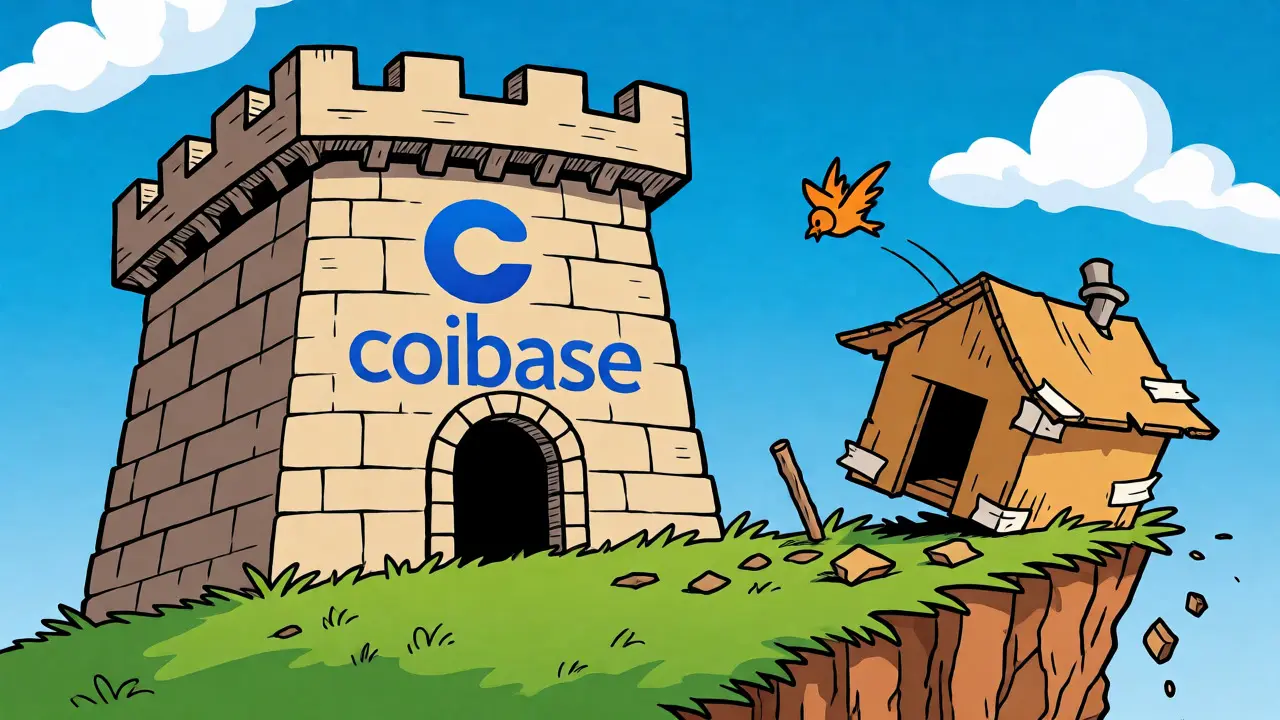
Platforms like Coinbase, Kraken, and Binance dominate the market for a reason. They have survived crashes, faced regulators, and built systems that handle billions in volume. MarketExchange.io has done none of this. It is a shiny facade with no foundation.
Frequently Asked Questions
Is MarketExchange.io a legitimate crypto exchange?
No, current evidence strongly suggests it is a fraudulent operation. It lacks regulatory licenses, does not appear on major tracking sites like CoinGecko or CoinMarketCap, and has no verifiable corporate history. Industry experts classify it as high-risk.
Why does MarketExchange.io offer such high APY?
The high APY (up to 24.7%) is likely a lure to attract deposits. Legitimate exchanges typically offer much lower yields (around 2-5% for stablecoins). Such high returns are often unsustainable and may indicate a Ponzi-like structure where new investor funds pay earlier participants.
Can I withdraw my money from MarketExchange.io?
Small initial withdrawals often succeed to build trust. However, users frequently report issues when attempting larger withdrawals, citing unexpected "compliance fees" or account freezes. Many users lose access to their funds after paying these additional charges.
Does MarketExchange.io have regulatory oversight?
No. Unlike Coinbase or Kraken, which hold licenses in dozens of jurisdictions, MarketExchange.io has no public record of regulatory approval from bodies like the SEC, FCA, or FinCEN. This means there is no external authority protecting your interests.
What are safer alternatives to MarketExchange.io?
Stick to well-known, regulated exchanges such as Coinbase, Kraken, Binance, or Bybit. These platforms have transparent fee structures, proof-of-reserves, and established customer support channels. Always verify a platform's status on independent aggregators before signing up.