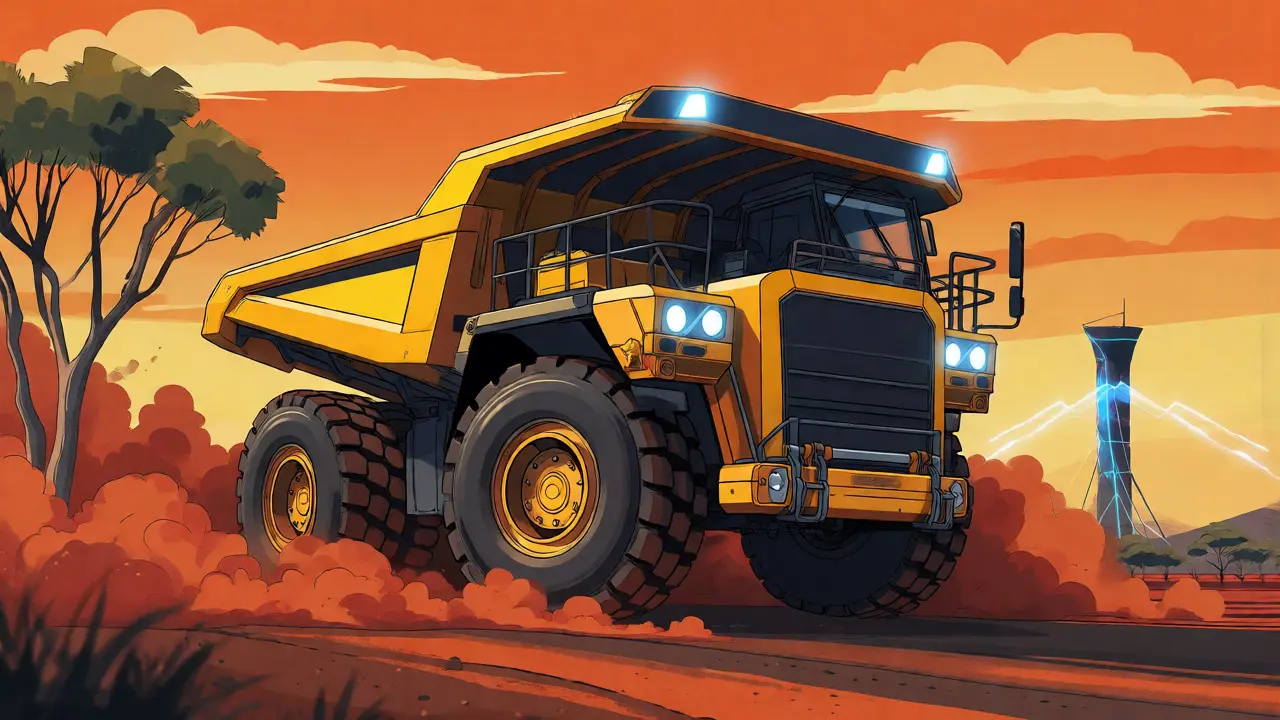
Imagine a haul truck the size of a two-story house driving itself through a dust storm in Western Australia, making split-second decisions without a human driver in sight. That isn't science fiction; it's the current reality of autonomous mining equipment. The industry is undergoing a seismic shift, moving away from brute-force mechanical power toward intelligent, connected systems that process data as fast as they move earth. If you think mining is just about shovels and trucks, you're missing the real story. The future of mining hardware is defined by how well machines talk to each other, how smart their brains are, and how securely they store the massive amounts of data they generate.
The Rise of Autonomous Fleets
Let's start with the most visible change: robots taking over the heavy lifting. The market for autonomous mining gear is exploding, projected to double from $3.1 billion to $6.2 billion by 2026. Why? Because humans get tired, distracted, and need breaks. Machines don't. Companies are deploying fleets of driverless trucks and robotic drilling rigs that operate 24/7. This isn't just about speed; it's about safety. By removing workers from hazardous environments like unstable pit walls or deep underground tunnels, accident rates drop significantly.
But autonomy requires more than just GPS. It demands real-time decision-making. Modern driverless haul trucks use LiDAR, radar, and cameras to navigate complex terrains. They communicate with a central control room, allowing one operator to supervise multiple vehicles simultaneously. This shift transforms the miner's role from steering a wheel to managing a digital dashboard, requiring new skills in data analysis and remote supervision.
AI and Edge Computing at the Mine Site
Data is the new gold, but only if you can process it quickly. Traditional cloud computing has latency issues-sending data miles away for analysis takes time. In mining, seconds matter. Enter AI-optimized edge storage nodes. These devices sit right on the mine site, processing data locally. They integrate analytic processors that assess ore grade in situ, meaning they determine the quality of the rock before it even leaves the drill site.
This local processing boosts efficiency by up to 40%. Instead of waiting for lab results, operators can adjust drilling patterns instantly. Machine learning algorithms analyze geological data with remarkable accuracy, improving mineral discovery rates by 20 to 30%. It’s like having a geologist in every drill bit, constantly refining the search for valuable minerals.
Ruggedized Storage Solutions for Harsh Environments
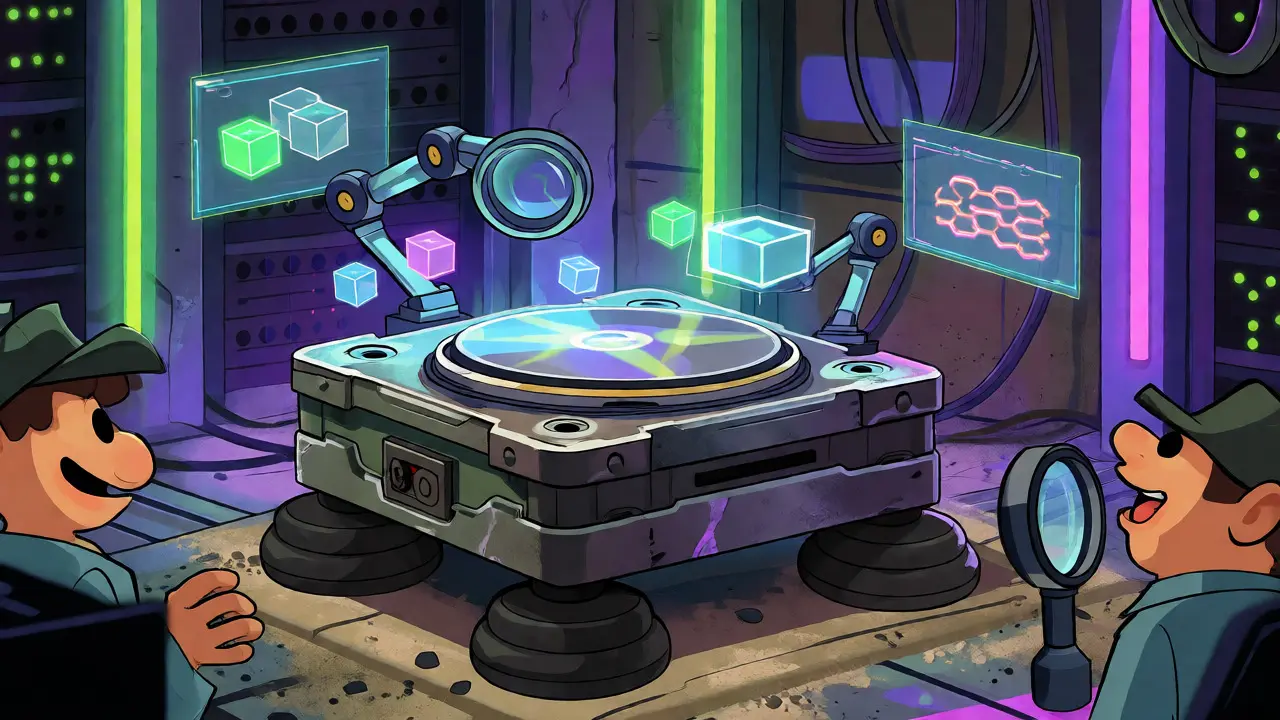
Mine sites are brutal places. Dust, vibration, extreme temperatures, and moisture destroy standard electronics. Standard hard drives fail under these conditions. That’s why ruggedized HDD mining systems are becoming essential. These drives are built to withstand shock, temperature fluctuations, and dust ingress, offering 35% better efficiency in remote drilling data logging applications.
Hybrid architectures are also gaining traction. Combining HDDs for bulk storage with SSDs for quick access creates a tiered system that supports long-term survey data while enabling instant reporting. For green data centers on mining camps, energy-efficient HDD devices reduce power consumption by 32% through advanced thermal management. This matters because energy costs are a huge line item, and sustainability pressures are mounting.
Blockchain for Data Integrity and Traceability
Here’s where crypto tech meets traditional industry. How do you prove where a specific ton of copper came from? Or verify that environmental compliance data hasn’t been tampered with? Blockchain integration provides a solution. By using blockchain ledger modules, mining companies ensure data integrity and traceability. Every piece of operational data-from sensor readings to maintenance logs-is recorded on an immutable chain.
This isn't about cryptocurrency speculation; it's about trust. Investors and regulators want proof of sustainable practices. Blockchain offers a transparent audit trail, improving compliance efficiency by 30%. It connects the physical act of mining with digital verification, creating a seamless link between the ground truth and the boardroom report.
Additive Manufacturing and On-Demand Parts
When a part breaks in a remote location, waiting weeks for a shipment means lost revenue. Additive manufacturing, or industrial 3D printing, solves this. Companies can now fabricate strong, lightweight parts on demand using metal 3D printing, laser cladding, and continuous fiber filament printing. Startups like Arcobo are leading the charge, manufacturing custom parts from steel, titanium alloys, and bronze within days.
This reduces reliance on global supply chains. Instead of stocking thousands of spare parts, mines keep raw materials and print what they need, when they need it. It minimizes downtime and allows for rapid prototyping of new tools tailored to specific geological conditions.
| Feature | Traditional Hardware | Future Mining Hardware | Efficiency Gain |
|---|---|---|---|
| Operation Mode | Manual, human-driven | Autonomous, AI-supervised | +Double-digit productivity |
| Data Processing | Batch processing, delayed analysis | Real-time edge computing | +40% speed |
| Storage Durability | Standard consumer-grade | Ruggedized, IoT-embedded | +35% reliability |
| Data Security | Centralized databases | Blockchain-ledger verified | +30% traceability |
| Maintenance | Reactive (fix after break) | Predictive (AI-driven checks) | -Significant downtime reduction |
Sustainability and Energy Efficiency
Environmental concerns are no longer optional; they’re regulatory requirements. Future hardware focuses heavily on energy efficiency. Electric and hybrid mining equipment cuts emissions and fuel consumption. But it goes deeper into the IT infrastructure. Self-healing storage platforms use AI to detect errors and correct them automatically, ensuring continuous data archiving without manual intervention. This reduces waste and extends the lifespan of hardware, aligning with circular economy goals.
Digital twins-virtual replicas of physical assets-allow engineers to simulate scenarios before implementing changes. This precision mining reduces waste generation and optimizes resource use. It’s not just about digging faster; it’s about digging smarter and cleaner.
The Workforce Transformation
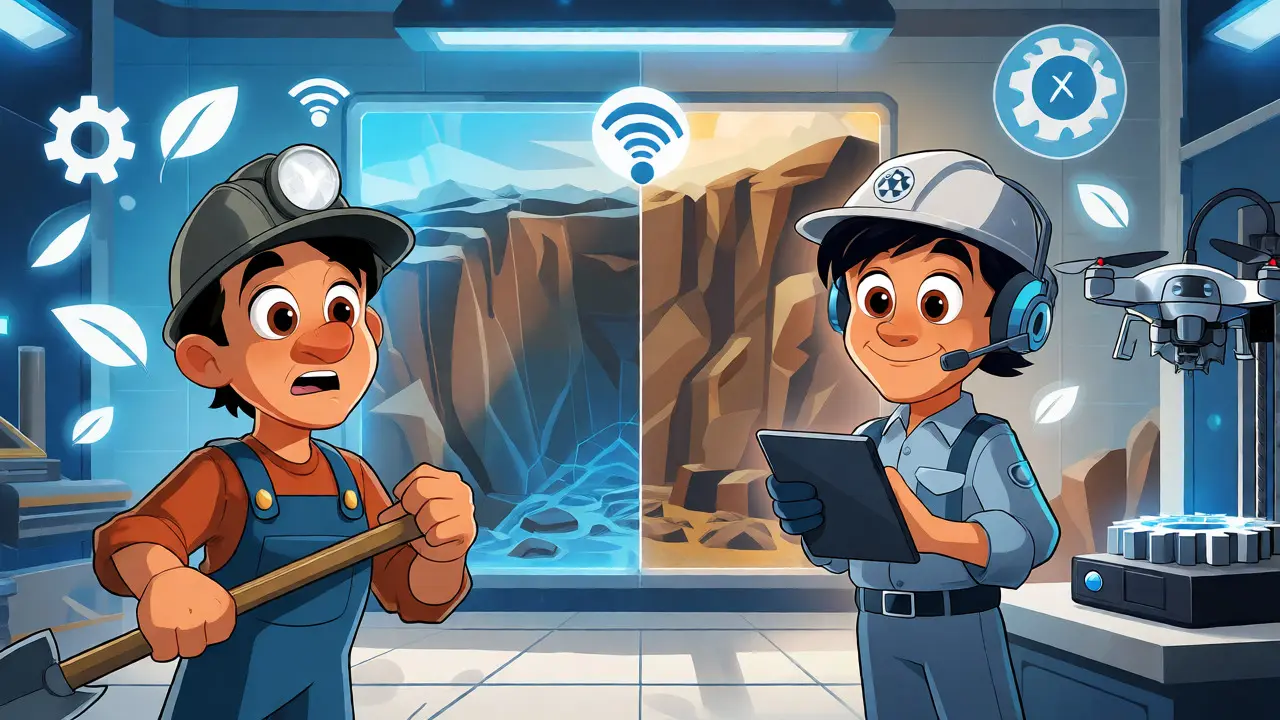
With all this automation, will miners lose their jobs? Not exactly. The nature of the work is changing. Physical labor is giving way to technology management. Miners are becoming data analysts, remote supervisors, and robot technicians. This shift attracts diverse talent who might have avoided mining due to its tough physical reputation. However, it requires significant reskilling. Companies investing in training programs position themselves to retain staff and leverage the full potential of their new hardware.
Cybersecurity is another critical concern. As mines become more connected, they become targets for cyberattacks. Protecting these digital assets is as important as protecting the physical ones. Robust security protocols must be embedded in every device, from the smallest sensor to the largest server.
Key Takeaways
- Autonomy is mainstream: Driverless trucks and drills are moving from pilots to standard operations, doubling the market value by 2026.
- Edge computing wins: Processing data on-site reduces latency and improves decision-making speed by up to 40%.
- Hardware must be rugged: Standard electronics fail in mines; specialized ruggedized and IoT-embedded storage is essential.
- Blockchain adds trust: Immutable ledgers provide verifiable data for compliance and supply chain transparency.
- Workforce evolution: Jobs are shifting from manual operation to digital management and remote supervision.
Why is edge computing critical for mining hardware?
Mining sites often have limited connectivity and require immediate responses. Edge computing processes data locally on the mine site, reducing latency and allowing for real-time adjustments to drilling and hauling operations without waiting for cloud servers to respond.
How does blockchain improve mining operations?
Blockchain ensures data integrity and traceability. It creates an immutable record of operational data, which helps in verifying environmental compliance, tracking provenance of minerals, and preventing data tampering during audits.
What makes mining hardware different from standard IT hardware?
Mining hardware must withstand extreme conditions such as high vibrations, dust, moisture, and temperature fluctuations. Ruggedized HDDs and solid-state drives are specifically engineered with shock resistance and sealed enclosures to survive these harsh environments.
Will autonomous mining eliminate human jobs?
It transforms them rather than eliminating them. While fewer people are needed for manual driving and drilling, there is increased demand for roles in remote supervision, data analysis, cybersecurity, and maintenance of automated systems.
What role does additive manufacturing play in mining?
Additive manufacturing (3D printing) allows mines to produce replacement parts on-demand at remote sites. This reduces downtime associated with waiting for shipments and lowers inventory costs by minimizing the need to stockpile spare parts.