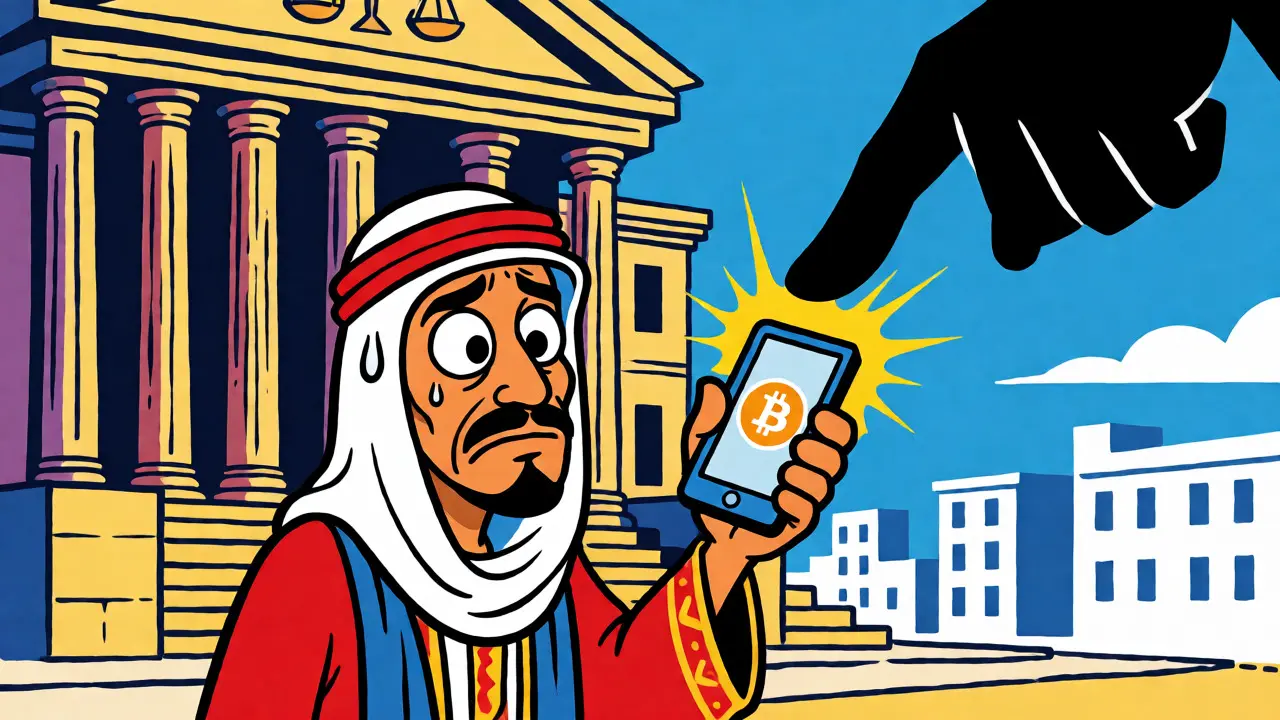
Imagine holding a Bitcoin wallet on your phone and suddenly facing up to a year in prison. That isn't a dystopian novel plot; it is the current reality for anyone living in Algeria. Since July 24, 2025, the country has enforced one of the world's strictest bans on digital assets, turning what was once a booming peer-to-peer market into a legal minefield.
You might wonder why a nation that saw its crypto adoption rank among the top five fastest-growing in the Middle East and North Africa (MENA) just a year prior would slam the brakes so hard. The answer lies in Law No. 25-10, which didn't just restrict trading-it criminalized possession, mining, promotion, and even talking about cryptocurrencies publicly. This shift from the vague 2018 Financial Law to explicit criminal penalties marks a dramatic pivot in how the Algerian state views money, sovereignty, and technology.
The Scope of Law No. 25-10
If you thought banning exchanges was enough, think again. Article 6 bis of Law No. 25-10 leaves almost no stone unturned. It explicitly outlaws the issuance, purchase, sale, storage, and use of any digital asset. But here is where it gets tricky for the average person: simple possession is now a crime. If you bought Ethereum three years ago and forgot about it, you are technically in violation of the law today.
The legislation also targets the ecosystem around the coins themselves. Mining operations, which had been gaining traction due to Algeria's subsidized energy costs, are now illegal. So are crypto wallets and exchanges operating within the country. Perhaps most surprisingly, the law criminalizes "promotion." This means influencers, content creators, and educators who discuss blockchain technology or advertise crypto services can face prosecution. It’s not just about stopping money flow; it’s about silencing the narrative.
| Activity | Status | Potential Penalty |
|---|---|---|
| Buying/Selling Crypto | Illegal | 2 months - 1 year prison; 200k - 1M DZD fine |
| Holding/Possession | Illegal | 2 months - 1 year prison; 200k - 1M DZD fine |
| Mining Operations | Illegal | 2 months - 1 year prison; 200k - 1M DZD fine |
| Promotion/Advertising | Illegal | 2 months - 1 year prison; 200k - 1M DZD fine |
| Using Crypto Wallets | Illegal | Service providers liable |
Why Did Algeria Go This Far?
The government’s primary argument rests on national security. Officials cite the need to prevent money laundering and counter-terrorism financing (CTF). By aligning with guidance from the Financial Action Task Force (FATF), Algeria positions itself as a guardian of financial integrity. They argue that unregulated digital assets create loopholes that criminals exploit to move value without oversight.
There is also a strong element of monetary sovereignty at play. The Bank of Algeria views the Algerian Dinar as the sole legitimate medium of exchange. Allowing decentralized currencies to compete threatens the central bank's control over monetary policy. In their view, protecting the Dinar isn't just economic policy; it's a matter of state authority. They fear that widespread crypto adoption could lead to "uncontrolled speculation," destabilizing an economy already navigating complex global pressures.
Who Enforces the Ban?
Enforcement isn't handled by a single agency. It’s a coordinated effort involving several branches of the state. The Banking Commission ensures traditional banks do not facilitate crypto transactions. If a bank processes a transfer linked to a known exchange, they face regulatory scrutiny. Meanwhile, judicial authorities handle the actual prosecutions, turning violations into court cases.
Security authorities play a crucial role too. They monitor both digital footprints and physical activities. This dual approach allows them to catch organized crime rings using crypto for illicit flows while also targeting individual users. The involvement of security forces suggests that the state treats crypto violations not just as financial infractions, but as potential threats to public order. This comprehensive net makes evasion difficult, especially as digital surveillance tools become more sophisticated.
Impact on Users and Businesses
For individuals, the stakes have never been higher. Previously, many Algerians used peer-to-peer platforms to hedge against inflation or send remittances. Now, those same actions carry criminal liability. A student buying NFTs online or a freelancer receiving payment in stablecoins risks fines ranging from approximately $1,540 to $7,700 USD, plus potential jail time. For a country where average wages are modest, these fines are significant deterrents.
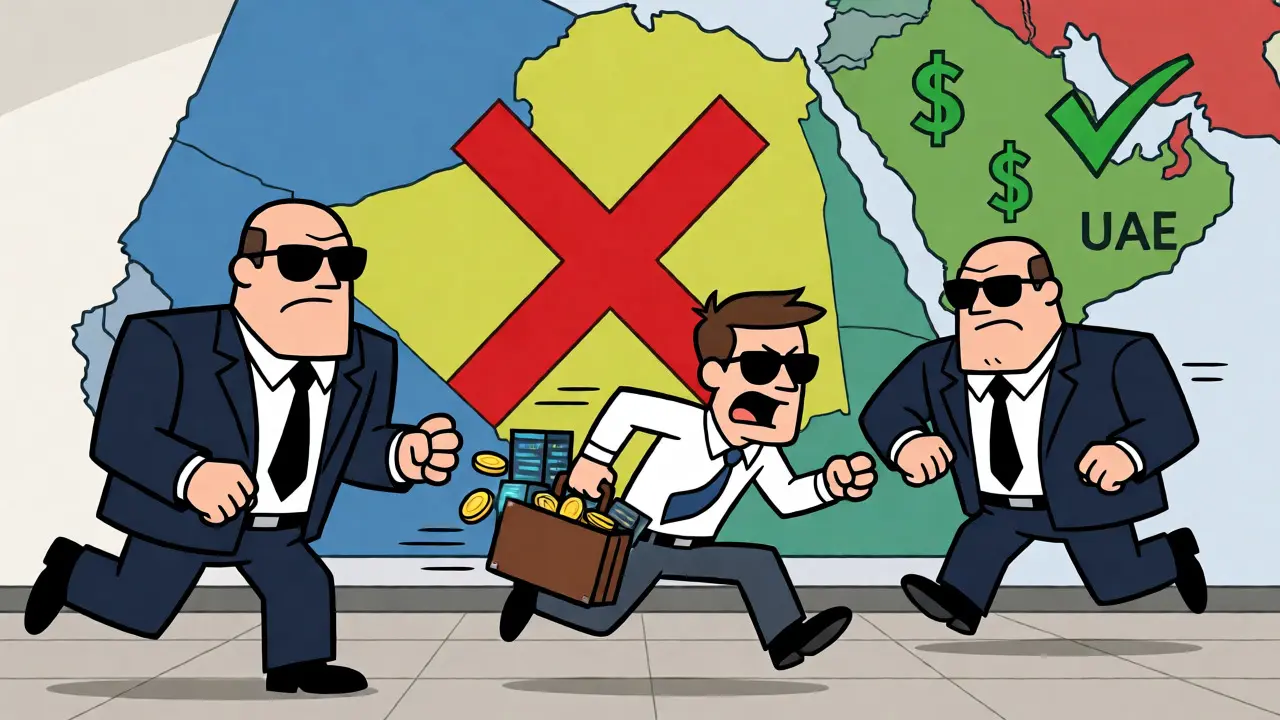
Businesses face an even harsher reality. Startups that built products on blockchain infrastructure have effectively lost their domestic market. Tech talent is fleeing. We are seeing a "blockchain brain drain" as developers and entrepreneurs migrate to jurisdictions like the UAE or Bahrain, which offer regulated frameworks. This exodus hurts Algeria’s long-term competitiveness in fintech innovation. When skilled workers leave because their profession is criminalized, the local tech ecosystem stagnates.
Global Context and Regional Contrast
Algeria’s stance puts it in a small club of restrictive jurisdictions, alongside China and Egypt. While this might seem extreme, it contrasts sharply with neighbors like the United Arab Emirates, which has embraced crypto with clear licensing regimes. The European Union is implementing MiCA (Markets in Crypto-Assets) to integrate digital assets into mainstream finance. Algeria, however, chose total prohibition over regulation.
This divergence creates friction. Global investors looking at the MENA region see diverse approaches. Some countries attract capital with clarity; others repel it with uncertainty. Algeria’s decision removes a previously vibrant market from the regional map. For multinational companies, this means skipping Algeria in expansion plans or treating it as a high-risk zone where standard compliance protocols don’t apply.

Practical Implications for Residents
If you live in Algeria or plan to visit, caution is essential. Do not assume that because you hold crypto abroad, you are safe. The law covers possession, which implies that having keys to a wallet accessible in Algeria could be problematic. Avoid discussing crypto investments openly on social media if you are based there, given the promotion clauses. Travelers should be aware that bringing hardware wallets into the country might raise questions during customs checks, although specific seizure protocols vary.
For businesses, the rule is simple: stay away. Do not accept crypto payments. Do not offer crypto-related services. The cost of non-compliance-legal fees, fines, and reputational damage-far outweighs any potential revenue from early adopters. Until the political climate shifts or new legislation emerges, the safest strategy is complete avoidance.
Frequently Asked Questions
Is it illegal to own Bitcoin in Algeria?
Yes. Under Law No. 25-10, enacted in July 2025, the possession of any digital asset is explicitly prohibited. Violators face prison sentences of two months to one year and fines between 200,000 and 1,000,000 Algerian dinars.
Can I mine cryptocurrency in Algeria?
No. Mining operations are banned under the same law. Despite favorable energy subsidies, the computational validation of transactions for profit is considered an illegal activity subject to criminal penalties.
Are influencers penalized for talking about crypto?
Yes. The law criminalizes the promotion of cryptocurrencies. Content creators, advertisers, and educators who disseminate information or advocate for digital assets can face prosecution under the promotion clauses of Law No. 25-10.
How does this compare to other African nations?
Algeria has one of the strictest bans on the continent. While countries like Nigeria and South Africa have varying degrees of regulation or acceptance, Algeria’s comprehensive criminalization of possession and promotion sets it apart as a highly restrictive jurisdiction.
What are the fines for violating the crypto ban?
Fines range from 200,000 to 1,000,000 Algerian dinars (approximately $1,540 to $7,700 USD). Additionally, violators may face imprisonment ranging from two months to one year, depending on the severity and context of the offense.